
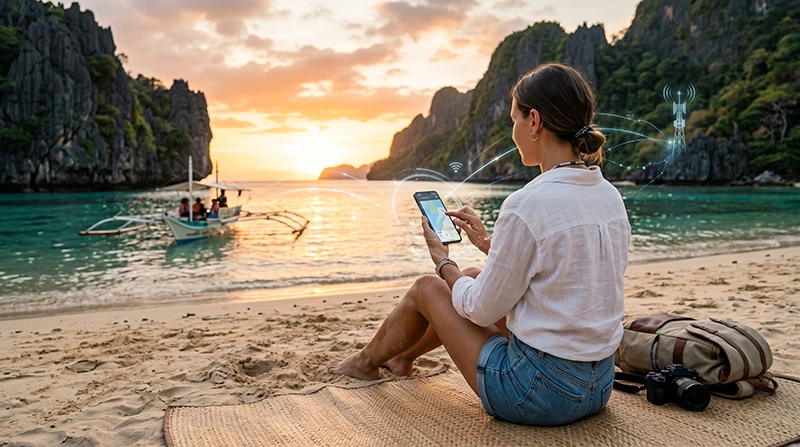

Traveler using a smartphone in the Philippines with Philippines eSIM mobile data to avoid roaming charges.

Roaming Charges in the Philippines: How to Avoid Expensive Mobile Data Fees

Traveling to the Philippines is an unforgettable experience, whether you are visiting Manila, Cebu, Palawan, Boracay, Bohol, Siargao, or island hopping across Southeast Asia. But using your normal mobile plan abroad can quickly become expensive if international roaming is not included in your package.

For most travelers, the safest way to avoid unexpected roaming charges in the Philippines is to use a prepaid Philippines eSIM instead of relying on your home mobile operator’s roaming rates.

Quick answer: roaming in the Philippines can become expensive depending on your home carrier, especially if you use mobile data for maps, bookings, messaging, social media, video calls, or island travel planning. A Philippines eSIM gives you prepaid mobile data, so you know your travel internet cost before your trip starts.

Top Philippines eSIMs

Why Roaming Charges in the Philippines Can Be Expensive

The Philippines is outside most standard roaming zones, which means your home mobile operator may charge international roaming fees when you use mobile data, calls, or SMS there.

The actual roaming cost depends on your mobile provider, your country, and your mobile plan. Some operators offer Philippines roaming packages, while others charge per megabyte or require expensive international roaming add-ons.

The problem is that modern travel in the Philippines depends heavily on mobile internet, especially during island hopping, airport transfers, ferry travel, and multi-city trips.

  • Google Maps and navigation in Manila, Cebu, and tourist islands
  • Ride apps, airport transfers, and transport bookings
  • WhatsApp, Messenger, iMessage, and video calls
  • Instagram, TikTok, YouTube, and social media uploads
  • Hotel bookings, restaurant search, and activity reservations
  • Uploading photos and videos from beaches, islands, lagoons, and tropical destinations

Best Way to Avoid Roaming Charges in the Philippines

The best way to avoid roaming charges in the Philippines is to turn off data roaming on your primary SIM and use a prepaid Philippines eSIM for mobile data.

This setup allows you to keep your regular SIM active for calls or SMS if needed, while your mobile internet comes from the eSIM.

Recommended setup for travelers

  • Keep your primary SIM active for calls and SMS if needed.
  • Turn off data roaming on your primary SIM.
  • Install your Philippines eSIM before or during your trip.
  • Use the Philippines eSIM as your mobile data line.
  • Enable data roaming only for the eSIM line if required.

You can browse available Philippines travel data plans here: Philippines eSIM plans.

Roaming vs Philippines eSIM: Which Is Better?

Option How it works Best for Main risk
International roaming You use your home mobile operator in the Philippines. Travelers with roaming already included in their plan. High or unclear roaming costs.
Philippines eSIM You install a prepaid digital SIM and use it for mobile data. Tourists and island travelers who want predictable costs. You need an eSIM-compatible unlocked phone.
Local physical SIM You buy a physical SIM card after arrival. Travelers who prefer buying locally. Registration requirements and physical SIM swapping.
Public WiFi You rely on hotel or cafe WiFi. Very light users. Limited coverage while traveling between islands.

Why a Philippines eSIM Is Safer Than Roaming

A Philippines eSIM is prepaid. That means you choose your plan before using mobile data, instead of waiting for your mobile bill after the trip.

This is especially useful because travelers in the Philippines often rely on mobile internet throughout the day for maps, communication, bookings, transport, and social media.

  • No surprise roaming bill after your trip
  • No need to search for a SIM card store after arrival
  • No physical SIM card swap
  • Works on compatible iPhone and Android devices
  • Useful for Manila, Cebu, Palawan, Boracay, Bohol, and island travel across the Philippines

Top Philippines eSIMs

Should You Turn Off Roaming Before Traveling to the Philippines?

Yes. If you do not want to use your home operator’s mobile data abroad, turn off data roaming on your primary SIM before or when you arrive in the Philippines.

Then choose your Philippines eSIM as the mobile data line in your phone settings.

This helps prevent your primary SIM from using expensive international data in the background.

Can You Keep Your Normal Phone Number Active?

Yes. In most cases, you can keep your primary SIM active for calls and SMS while using your Philippines eSIM for mobile data.

This is useful if you need to receive bank verification codes, airline updates, booking confirmations, hotel messages, or calls on your regular number.

The important part is to make sure mobile data is assigned to the eSIM and data roaming is turned off on your primary SIM.

How Much Data Do You Need in the Philippines?

The right data amount depends on how you travel. Philippines trips often include heavy use of maps, social media, uploads, messaging, and travel apps.

Traveler type Typical usage Suggested plan type
Light traveler Maps, messages, bookings Small data plan
Standard tourist Maps, browsing, social media Medium data plan
Heavy user Streaming, uploads, video calls Large or unlimited plan
Island hopper Navigation, communication, uploads Medium or large data plan
Digital nomad Remote work, hotspot use, cloud apps Large data plan

For more guidance, read: How much data does Google Maps use? and How much data does Instagram use while traveling?.

When Should You Install a Philippines eSIM?

You can usually install your eSIM before departure and activate mobile data when you arrive in the Philippines.

This is helpful because you do not need to search for WiFi immediately after landing. Once you arrive, you can select the eSIM for mobile data and connect to a local network.

Read also: When should you buy and install an eSIM before travel?

Where a Philippines eSIM Helps Most

A Philippines eSIM is useful across the whole trip, not only at the airport.

  • At Manila airport when you need transport, hotel details, or directions
  • During island hopping trips between destinations
  • In Cebu and Boracay when using maps, ride apps, and restaurant bookings
  • At beaches and remote destinations where navigation matters
  • For content creators and travel vloggers uploading media
  • For digital nomads and remote workers needing stable mobile internet

Roaming Charges Philippines: Common Mistakes to Avoid

  • Assuming the Philippines is included in your roaming plan: many operators charge extra for roaming there.
  • Leaving data roaming enabled on your main SIM: apps may use expensive roaming data automatically.
  • Using streaming apps on roaming: YouTube, Instagram, TikTok, and video calls can consume large amounts of data.
  • Relying only on hotel WiFi: you still need mobile internet while traveling between islands.
  • Waiting until arrival to solve internet access: airport SIM setup can take time.
  • Not checking eSIM compatibility: your phone must support eSIM and be unlocked.

Is an eSIM Better Than Buying a SIM Card in the Philippines?

For most short-term travelers, yes. An eSIM is usually more convenient because it can be purchased online and installed digitally without swapping a physical SIM card.

A physical SIM can still work, but it may require registration, waiting in airport queues, or replacing your existing SIM card.

If your phone supports eSIM, a Philippines eSIM is usually the faster and simpler option.

Best eSIM Option for Avoiding Roaming Charges in the Philippines

If you want predictable mobile data costs, a prepaid Philippines eSIM is the easiest solution.

With NoveSIM, you can choose a Philippines travel eSIM plan online, receive the eSIM details digitally, and use mobile data without relying on your home operator’s roaming rates.

View Philippines eSIM plans

Top Philippines eSIMs

Related Philippines Travel Internet Guides

FAQ: Roaming Charges in the Philippines

Are roaming charges in the Philippines expensive?

They can be expensive depending on your home mobile provider and roaming plan. Many operators charge high international roaming fees in the Philippines.

How do I avoid roaming charges in the Philippines?

Turn off data roaming on your primary SIM and use a prepaid Philippines eSIM for mobile data.

Can I use my normal phone number with a Philippines eSIM?

Yes. In most cases, you can keep your primary SIM active for calls and SMS while using your Philippines eSIM for mobile data.

Can I install my Philippines eSIM before traveling?

Yes. Many travelers install their eSIM before departure and activate mobile data after arrival in the Philippines.

Is eSIM better than roaming in the Philippines?

For most tourists and island travelers, yes. A prepaid eSIM offers more predictable costs and easier setup compared to international roaming.

Final Thoughts: Avoid Expensive Roaming Charges in the Philippines

The Philippines is a destination where mobile internet is essential from the moment you arrive. Most travelers need data for maps, transport apps, bookings, messaging, travel coordination, and staying connected during island trips.

If your home operator does not include affordable roaming in the Philippines, using your regular SIM card abroad may become expensive very quickly.

For most tourists, island travelers, backpackers, and digital nomads, a prepaid Philippines eSIM is the easiest way to avoid unexpected roaming charges while staying connected during the trip.

With a Philippines eSIM, you can activate mobile data digitally, avoid physical SIM card swaps, and know your travel internet cost before your trip starts.

Browse Philippines eSIM plans here.

Scroll to Top