


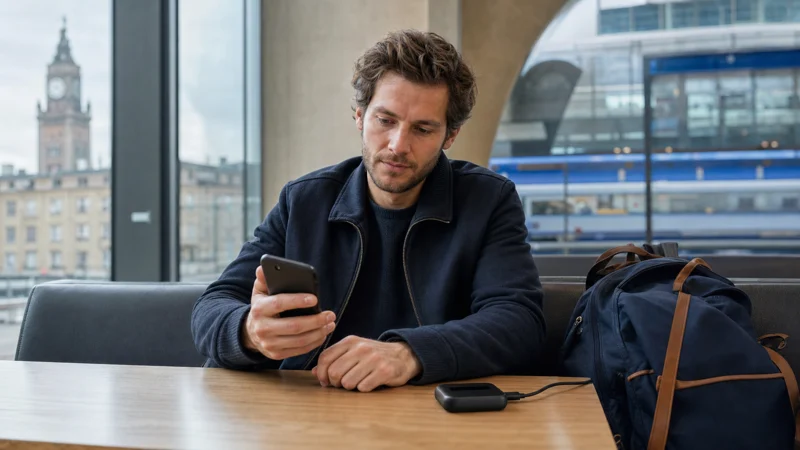

Both an eSIM and a pocket WiFi device will get you online in Poland, but they solve slightly different problems — one is built around a single traveler’s phone, the other around keeping a group connected on one shared device.
Quick answer: An eSIM is cheaper and simpler for solo travelers and couples, since it runs directly on your phone with no extra device to carry or charge. A pocket WiFi device makes more sense for groups or families who want to split the cost of one connection across several phones, tablets, and laptops.
Top Poland eSIMs

Poland eSIM
Fixed
1 GB, 7 days€ 1.792 GB, 15 days€ 3.573 GB, 30 days€ 4.46Unlimited
Unlimited, 1 day€ 2.23Unlimited, 3 days€ 4.91Unlimited, 5 days€ 8.03
Europe Extra eSIM
Fixed
1 GB, 7 days€ 2.232 GB, 15 days€ 3.573 GB, 30 days€ 4.46Unlimited
Unlimited, 1 day€ 2.68Unlimited, 3 days€ 5.36Unlimited, 5 days€ 8.93Europe+ eSIM
Fixed
1 GB, 7 days€ 2.682 GB, 15 days€ 4.023 GB, 30 days€ 5.36Unlimited
Unlimited, 1 day€ 2.68Unlimited, 3 days€ 6.25Unlimited, 5 days€ 10.26How an eSIM works
An eSIM is a digital SIM profile installed on your phone before or after arrival, running on the same Orange, Play, Plus, or T-Mobile networks a physical SIM would use — see the Poland eSIM coverage guide for how this plays out nationally, and the installing an eSIM guide for the setup process. There’s no separate hardware to carry, charge, or return.
How pocket WiFi works
A pocket WiFi (or MiFi) is a small rented router with its own SIM inside, creating a local WiFi network that several devices can join at once. It needs its own daily charging and has to be carried and kept within range of whoever’s using it, but it removes the need for each person in a group to carry a separate data plan.
Cost comparison
For a solo traveler, an eSIM is almost always cheaper per gigabyte than renting a MiFi device, since there’s no hardware rental fee involved. For a group of three or more sharing one device, a pocket WiFi can work out cheaper overall than buying individual eSIMs or SIMs for everyone — the crossover point depends on group size and daily data use.
Coverage and reliability
Since both options ultimately run on Poland’s Orange, Play, Plus, or T-Mobile infrastructure, coverage is essentially identical between them in cities and along main routes. The practical difference in rural or mountain areas, like around the Tatra ski resorts, is that a dropped or out-of-range MiFi device takes everyone offline at once, while individual eSIMs fail independently.
Who each option suits
Solo travelers, couples, and business visitors typically get more value and flexibility from an eSIM, covered in more detail in the local SIM vs eSIM guide. Families and small tour groups traveling together, especially with laptops or tablets that need a connection, often find one shared pocket WiFi device more practical than several separate data plans, particularly for a campervan trip.
FAQ
Is eSIM cheaper than pocket WiFi in Poland?
Usually yes for solo travelers; for groups sharing one device, pocket WiFi can even out or come out ahead.
Do I need to charge a pocket WiFi device separately?
Yes, it has its own battery and needs daily charging, unlike an eSIM which just uses your phone’s battery.
Which has better coverage in rural Poland?
Coverage is the same underlying network either way — the difference is that a MiFi device going out of range takes the whole group offline at once.
Can I rent a pocket WiFi device on arrival in Poland?
Yes, rental counters and online delivery services are available in the main cities.
Can I hotspot my phone’s eSIM data instead of renting a device?
Yes, most eSIM plans support hotspot sharing, which can cover a couple of extra devices — the hotspot guide covers how this works.
Should I use pocket WiFi for a family Poland trip?
Possibly, if you have several devices to connect — though hotspotting from one eSIM often covers a smaller family just as well.
Final Recommendation
Solo travelers and couples will usually do better with an eSIM, while groups of three or more sharing devices may find a pocket WiFi more economical. Either way, see the best eSIM for Poland guide if you’ve decided an eSIM is the way to go.