


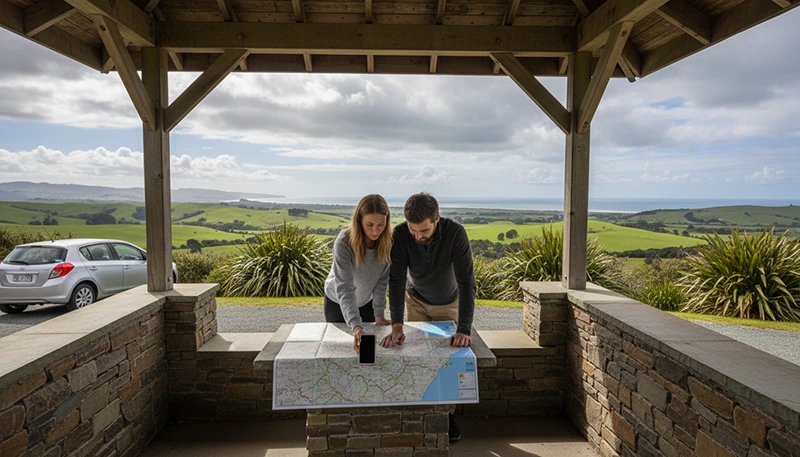

Mobile data can make New Zealand’s scenic driving routes easier to navigate. It helps with maps, weather forecasts, road updates, accommodation messages, attraction bookings and changes to your itinerary.
However, scenic roads often pass through mountain areas, farmland, forests, remote coastlines and sparsely populated regions. Mobile signal may therefore change during the journey, even when your phone and data plan are working correctly.
Quick answer: a travel eSIM is usually the most convenient mobile data option for visitors driving through New Zealand. Install it before departure, select it for Mobile Data after arrival and enable Data Roaming on the travel eSIM. Download every important route before leaving a town because continuous signal cannot be guaranteed on remote scenic roads.
Top New Zealand eSIMs

New Zealand eSIM
Fixed
1 GB, 7 days€ 2.182 GB, 15 days€ 3.933 GB, 30 days€ 5.24Unlimited
Unlimited, 1 day€ 2.62Unlimited, 3 days€ 6.54Unlimited, 5 days€ 10.47
Asia eSIM
Fixed
1 GB, 7 days€ 4.362 GB, 15 days€ 7.853 GB, 30 days€ 10.47Unlimited
Unlimited, 1 day€ 5.67Unlimited, 3 days€ 15.27Unlimited, 5 days€ 24.87Best Mobile Data Options for Scenic Drives
| Option | Best For | Main Consideration |
|---|---|---|
| Travel eSIM | Tourists who want mobile data arranged before travel | Requires an unlocked eSIM-compatible phone |
| Local prepaid SIM | Travellers who also need a New Zealand number | Usually purchased and activated after arrival |
| International roaming | Short trips with a suitable roaming package | May be expensive without an inclusive bundle |
| Pocket WiFi | Groups sharing one connection | Requires another device to carry and charge |
| Public or accommodation WiFi | Downloading maps and large files | Unavailable while driving between locations |
Why Mobile Data Is Useful on Scenic Routes
New Zealand’s most memorable drives often include long distances between towns. Mobile data can help you:
- Follow turn-by-turn directions.
- Check road closures and delays.
- Review weather conditions.
- Find fuel stations or electric vehicle chargers.
- Locate viewpoints, walking tracks and visitor facilities.
- Open accommodation check-in details.
- Confirm tour and activity bookings.
- Find supermarkets, restaurants and pharmacies.
- Contact a rental vehicle provider.
- Use messaging and internet-based calls.
It is also useful when you decide to change the route, add an unscheduled stop or find alternative accommodation.
Travel eSIM for New Zealand Scenic Drives
A travel eSIM is a digital mobile plan installed directly on a compatible smartphone. It can provide mobile data without requiring you to remove your primary SIM.
An eSIM can be especially practical for a self-drive holiday because it may be installed before departure. Once you arrive in New Zealand, you can use it for airport transfers, rental-car collection and navigation towards your first destination.
A travel eSIM may suit you when:
- You want mobile data immediately after arrival.
- You do not need a New Zealand telephone number.
- You prefer not to visit a local mobile shop.
- You want to keep your home SIM installed.
- You mainly use maps, messages and travel applications.
- You plan to drive across several regions.
Browse New Zealand eSIM plans.
When a Local Prepaid SIM May Be Better
A local prepaid SIM may be more suitable when you need a New Zealand number, traditional calls or SMS.
Before purchasing one, check:
- The included mobile data.
- The plan validity.
- Whether calls and SMS are included.
- Whether hotspot sharing is allowed.
- How additional data can be purchased.
- Whether the displayed price includes an active package.
Both prepaid SIMs and travel eSIMs still depend on available mobile infrastructure. Neither can guarantee coverage on every remote or mountainous road.
Compare a local SIM and eSIM for New Zealand.
How Much Data Do You Need?
| Trip Length | Practical Starting Point |
|---|---|
| 3 to 5 days | 3 GB to 5 GB |
| 7 days | 5 GB to 10 GB |
| 10 to 14 days | 10 GB to 20 GB |
| 3 to 4 weeks | 20 GB or more |
| Remote work or regular hotspot use | A larger allowance |
Navigation, messaging and road searches normally use less data than video streaming, cloud backup, social media video and laptop tethering.
Read how much data you need for New Zealand.
Can You Expect Coverage on Every Scenic Route?
No. Mobile service is generally easier to find in cities, towns and populated transport corridors. Signal may weaken or disappear in more isolated landscapes.
Coverage may vary in:
- Mountain passes.
- Deep valleys.
- Dense forest.
- Remote coastal sections.
- National park approaches.
- Large farming regions.
- Roads far from settlements.
Your phone may move between 5G, 4G, a slower connection or no service. This depends on the device, plan, supported frequencies, local network, terrain and current congestion.
A temporary loss of signal does not necessarily indicate a faulty eSIM. Continue towards a more open or populated location before changing advanced settings.
Mobile Data on North Island Scenic Routes
North Island drives can combine cities, farmland, geothermal landscapes, forest roads and coastal areas.
Mobile data is helpful on journeys between Auckland, Hamilton, Rotorua, Taupo and Wellington, but preparation is still important before rural sections.
Before leaving a town:
- Download the complete route.
- Save accommodation details.
- Check weather and road conditions.
- Mark fuel or charging stops.
- Save attraction tickets and meeting points.
See the internet guide for a North Island road trip.
Mobile Data on South Island Scenic Routes
South Island itineraries often involve longer distances, alpine roads, isolated coastlines and rapidly changing weather.
Extra preparation is useful before routes towards:
- Fiordland and Milford Sound.
- Aoraki Mount Cook.
- The West Coast.
- The Catlins.
- Remote parts of Canterbury and Otago.
Download complete routes before leaving larger towns. Save fuel stops, accommodation addresses, activity bookings and alternative directions offline.
Read the internet guide for a South Island road trip.
Why Offline Maps Are Essential
Offline maps are one of the most useful tools for scenic driving. They allow your phone to continue showing the route when mobile signal becomes weak or unavailable.
Before each major drive:
- Download the complete route area.
- Save the final destination.
- Mark planned viewpoints and stops.
- Save fuel or charging locations.
- Download an alternative route where available.
- Take screenshots of important access instructions.
Keep location services enabled. Your phone can often continue showing its position on a downloaded map without mobile data.
Prepare for Road Closures and Weather Changes
New Zealand weather can change quickly, particularly in alpine, coastal and high-rainfall regions. Mobile data can help you check updates, but important decisions should not depend on a connection being available at the last moment.
Before leaving accommodation WiFi:
- Check the latest weather forecast.
- Review road and route conditions.
- Confirm attraction opening times.
- Save your next accommodation address.
- Record an alternative stopping point.
Do not continue on an unsuitable road simply because the navigation application suggests it. Follow official signs, local instructions and rental-vehicle restrictions.
Mobile Data for Rental Cars and Campervans
A reliable connection is useful from the moment you collect the vehicle. You may need it to open the reservation, find the depot exit, contact the rental provider or reach your first overnight stop.
Save the following information offline:
- Rental-company telephone number.
- Roadside assistance details.
- Vehicle return instructions.
- Insurance documents.
- Fuel or charging requirements.
Campervan travellers should also save campsite coordinates, booking confirmations, water refill points and dump-station information.
Read the mobile data guide for New Zealand campervan travel.
Using a Mobile Hotspot
Hotspot sharing may be available depending on the selected eSIM, prepaid SIM or roaming package.
It can help connect:
- A passenger’s phone.
- A tablet.
- A laptop.
- A second navigation device.
A hotspot does not improve coverage. Every connected device loses internet when the main phone has no usable signal.
Before connecting a laptop, disable automatic updates, cloud synchronisation and large background downloads.
How to Reduce Mobile Data Use
- Download maps using WiFi.
- Save music and podcasts offline.
- Pause automatic photo and video backups.
- Disable automatic application updates.
- Turn off automatic video playback.
- Reduce video streaming quality.
- Save tickets and booking confirmations locally.
- Disconnect hotspot users when they finish.
- Monitor usage in the phone settings.
Keep Your Phone Charged
Navigation, photography and repeated network searches can drain the battery quickly. Carry a suitable vehicle charging cable and a charged power bank.
To preserve battery:
- Reduce screen brightness.
- Use downloaded maps.
- Close unnecessary applications.
- Turn off hotspot sharing when not needed.
- Use Airplane Mode during long periods without service when appropriate.
Can You Keep Your Home SIM Active?
Yes. A compatible Dual-SIM phone can use a travel eSIM for mobile data while keeping the primary SIM available for calls, SMS and verification messages.
To reduce accidental roaming costs:
- Select the travel eSIM for Mobile Data.
- Turn off Data Roaming on the primary SIM.
- Disable Automatic Data Switching.
- Check the selected line before making traditional calls.
Your home provider may still charge for calls, voicemail or certain messages while abroad.
How to Check eSIM Compatibility
Check the manufacturer’s specifications for your exact phone model and regional version. The device must also be carrier-unlocked.
You can dial *#06#. An eSIM-compatible device may display an EID together with one or more IMEI numbers.
You may also see Add eSIM, Add Cellular Plan, Add Mobile Plan or SIM Manager in the settings.
Recommended eSIM Settings
| Setting | Recommended Value |
|---|---|
| Travel eSIM | Enabled after arrival |
| Mobile Data | Travel eSIM |
| Data Roaming on travel eSIM | On |
| Data Roaming on primary SIM | Off |
| Automatic Data Switching | Off |
| Network Selection | Automatic |
| APN | data.esim when required |
What If Mobile Data Does Not Work?
- Confirm that the plan includes New Zealand.
- Check that the travel eSIM is enabled.
- Select it for Mobile Data.
- Enable Data Roaming on the travel eSIM.
- Turn off Data Roaming on the primary SIM.
- Disable Automatic Data Switching.
- Leave Network Selection on Automatic.
- Check that the APN is data.esim.
- Turn Airplane Mode on for 30 seconds and turn it off.
- Wait several minutes for network registration.
- Restart the phone if necessary.
When you are on a remote route, weak local signal may be the cause. Check again after reaching a town, open area or more populated road.
Do not delete the eSIM while troubleshooting. The installation QR code may be valid for one installation only.
New Zealand Scenic Route Mobile Data Checklist
- Choose validity covering the complete journey.
- Select enough data for maps and communication.
- Install the eSIM before departure where possible.
- Save the installation instructions offline.
- Download maps before every scenic drive.
- Save accommodation and rental details.
- Mark fuel or charging points.
- Check weather and road conditions.
- Carry a charging cable and power bank.
- Pause automatic backups and updates.
- Do not rely on continuous rural coverage.
- Do not delete the eSIM during troubleshooting.
Related New Zealand Travel Internet Guides
- New Zealand eSIM Plans
- Best eSIM for New Zealand
- Mobile Internet in New Zealand
- Internet for a New Zealand Road Trip
- Mobile Data for a New Zealand Road Trip
- Internet for a North Island Road Trip
- Internet for a South Island Road Trip
- Internet for a New Zealand Campervan Trip
- Internet for Fiordland National Park
- How Much Data Do You Need for New Zealand?
FAQ
Will mobile data work on every scenic route in New Zealand?
No. Signal may vary in mountain, forest, rural and remote coastal areas. Download offline maps before each major drive.
What is the best mobile data option for scenic driving?
A travel eSIM is usually the easiest option for visitors who mainly need mobile data. A local prepaid SIM may be better when you also need a New Zealand number.
How much data do I need for a two-week scenic road trip?
Approximately 10 GB to 20 GB is a useful starting point for maps, messaging, bookings and moderate social media use. Choose more for streaming or hotspot use.
Do offline maps work without mobile signal?
Yes. Download the required areas in advance and keep location services enabled so your position can continue appearing on the map.
Can I use my eSIM as a hotspot?
Hotspot support depends on the selected plan. Check the plan conditions before relying on tethering.
Can I keep my normal SIM active?
Yes. Select the travel eSIM for Mobile Data, disable roaming on the primary SIM and turn off Automatic Data Switching.
What APN should I use for NoveSIM?
Use data.esim when manual APN configuration is required.
Final Recommendation
For most travellers, a travel eSIM is the simplest way to arrange mobile data for New Zealand’s scenic routes. It can be installed before departure and used while keeping the primary SIM inside the phone.
Choose enough validity and data for the entire journey, but do not depend only on live navigation. Download maps, accommodation details, fuel stops and booking confirmations before leaving each town.
Mobile data is a valuable road-trip tool, but offline preparation remains essential on mountain, forest, rural and remote coastal routes.