


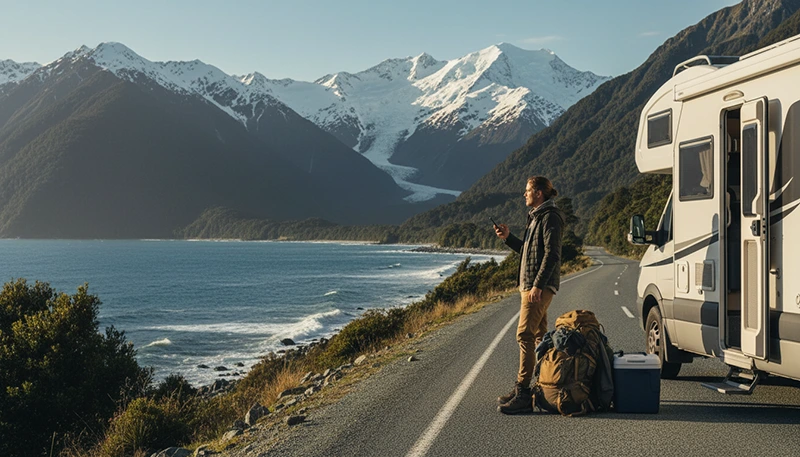

The West Coast of New Zealand’s South Island is one of the most spectacular road trip destinations in the country. The route combines wild beaches, ancient rainforests, mountain landscapes, glaciers and remote towns along one of New Zealand’s most scenic journeys.
Because the West Coast is less populated and much of the route passes through remote areas, mobile connectivity can change from excellent in towns to unavailable in isolated sections.
Quick answer: Internet works well in West Coast towns such as Greymouth, Hokitika and Franz Josef, but some remote roads and mountain areas have limited coverage. A New Zealand travel eSIM combined with offline maps is the best setup for this road trip.
Top New Zealand eSIMs

New Zealand eSIM
Fixed
1 GB, 7 days€ 2.172 GB, 15 days€ 3.903 GB, 30 days€ 5.20Unlimited
Unlimited, 1 day€ 2.60Unlimited, 3 days€ 6.50Unlimited, 5 days€ 10.40
Asia eSIM
Fixed
1 GB, 7 days€ 4.332 GB, 15 days€ 7.803 GB, 30 days€ 10.40Unlimited
Unlimited, 1 day€ 5.63Unlimited, 3 days€ 15.17Unlimited, 5 days€ 24.70Why You Need Internet on the West Coast Road Trip
The West Coast is famous for its remote landscapes and long distances between services. Mobile data helps travellers plan safely and make the most of the journey.
Internet is useful for:
- GPS navigation.
- Checking weather conditions.
- Finding fuel stations.
- Booking accommodation.
- Checking glacier tours.
- Finding restaurants and cafes.
- Discovering attractions along the route.
For campervan travellers, having mobile data provides flexibility when exploring areas far from cities.
Does Mobile Internet Work on New Zealand West Coast?
Yes, but coverage varies significantly depending on location.
You can expect better connectivity in:
- Greymouth.
- Hokitika.
- Franz Josef.
- Fox Glacier.
- Westport.
Coverage may become weaker in:
- Remote coastal roads.
- Mountain passes.
- Rainforest areas.
- Long stretches between towns.
- National park areas.
| Location | Expected Connectivity |
|---|---|
| Greymouth | Good |
| Hokitika | Good |
| Punakaiki | Variable |
| Franz Josef | Good around town |
| Fox Glacier | Good around town |
| Remote highway sections | Limited |
Best Mobile Networks for West Coast New Zealand
New Zealand has three main mobile networks used by travellers:
| Network | Best For |
|---|---|
| Spark | Often preferred for regional coverage |
| One NZ | Cities and tourist destinations |
| 2degrees | Populated areas and towns |
On the West Coast, terrain is often the biggest factor affecting coverage. Mountains and forests can block signals even when travelling on major roads.
Internet Coverage on Popular West Coast Stops
Hokitika
Hokitika is a popular first stop for many travellers arriving on the West Coast. Mobile coverage is reliable, making it a good place to update bookings and download information.
Punakaiki and Pancake Rocks
Punakaiki is a beautiful coastal destination, but connectivity can be more variable because of the remote location.
Before arriving:
- Save directions.
- Download maps.
- Check opening times.
Franz Josef Glacier
Franz Josef is one of the most visited destinations on the West Coast and has good connectivity around the village.
Mobile internet is useful for:
- Checking glacier tours.
- Booking activities.
- Checking weather.
- Planning hikes.
Fox Glacier
Fox Glacier village has mobile connectivity, but surrounding wilderness areas may have limited reception.
Best eSIM for West Coast New Zealand Road Trip
A New Zealand travel eSIM is the easiest option for international travellers exploring the West Coast.
Benefits include:
- Install before arriving.
- No physical SIM card required.
- Keep your main SIM active.
- Use mobile data immediately after landing.
- Access internet wherever coverage exists.
An eSIM provides connectivity through available networks but cannot create signal in areas without coverage.
Offline Maps for West Coast Road Trips
Offline maps are strongly recommended because parts of the West Coast are remote.
Download before leaving a connected area:
- West Coast region.
- Glacier areas.
- Mountain routes.
- Nearby hiking locations.
Useful apps:
- Google Maps offline.
- Organic Maps.
- Maps.me.
- Outdoor navigation apps.
Internet Setup for Campervan Travel
The West Coast is one of the best campervan destinations in New Zealand, but travellers should prepare for areas without signal.
| Tool | Purpose |
|---|---|
| New Zealand eSIM | Internet where coverage exists |
| Offline maps | Navigation without connection |
| Power bank | Keeps devices charged |
| Downloaded bookings | Backup access |
How Much Data Do You Need for West Coast Travel?
| Traveller Type | Recommended Data |
|---|---|
| Basic navigation and messages | 2–3GB |
| South Island road trip | 5–10GB |
| Campervan adventure | 10GB+ |
| Remote work traveller | Larger plan recommended |
What to Do If You Lose Signal on the West Coast
No signal in remote areas is normal.
If your internet stops working:
- Check whether you are in a remote area.
- Use offline maps.
- Save battery power.
- Wait until reaching the next town.
- Check eSIM settings when coverage returns.
Recommended eSIM Settings for New Zealand
| Setting | Recommended |
|---|---|
| Mobile Data | New Zealand eSIM |
| Data Roaming | Enabled on eSIM |
| Main SIM roaming | Disabled |
| Network Selection | Automatic |
| APN | data.esim |
Related New Zealand Road Trip Guides
- Internet for New Zealand Road Trip
- Mobile Data New Zealand Road Trip
- Internet Christchurch to Queenstown Road Trip
- Mobile Coverage Fiordland
- Offline Maps New Zealand Travel
FAQ
Is there internet on the West Coast New Zealand road trip?
Yes, towns have good coverage, but remote sections may have limited or no signal.
Will my eSIM work on the West Coast?
Yes, where partner networks provide coverage. Remote areas may have no service.
Does Franz Josef Glacier have mobile coverage?
Yes, the village has connectivity, but nearby remote areas may have weaker reception.
Do I need offline maps for West Coast New Zealand?
Yes. Offline maps are recommended because of the long distances and remote landscapes.
Which network is best for West Coast New Zealand?
Spark is often preferred by travellers looking for wider regional coverage, but no network covers every remote area.
Final Recommendation
The West Coast New Zealand road trip is one of the most beautiful journeys in the country, but it also passes through some of the least connected areas.
The best setup is a New Zealand eSIM for mobile data, offline maps for remote sections and preparation before leaving larger towns.
With the right connectivity plan, you can enjoy glaciers, rainforests and coastal landscapes while staying connected whenever coverage is available.