


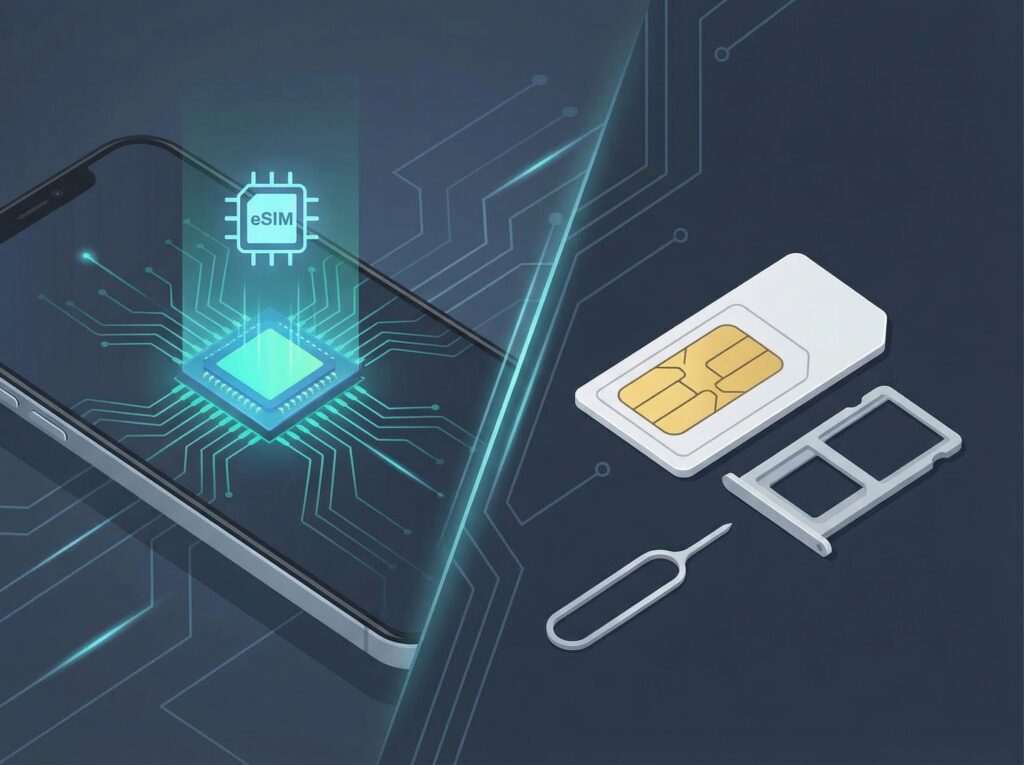
Choosing between an eSIM and a physical SIM card can be confusing, especially for travelers. Both allow you to connect to a mobile network, but they work in very different ways.
This guide explains the key differences so you can decide which option is better for your needs.
What is a physical SIM card?
A physical SIM card is a small plastic chip that you insert into your phone. It stores your subscriber information and connects your device to a mobile network.
To use a physical SIM, you usually need to:
- Visit a store or order it online
- Wait for delivery or pick it up
- Insert or swap the SIM card manually
This process works, but it can be slow and inconvenient when traveling.
What is an eSIM?
An eSIM (embedded SIM) is built directly into your device. Instead of inserting a card, you download a mobile network profile digitally.
You activate an eSIM by:
- Scanning a QR code
- Following a few steps in your phone settings
No physical SIM card is required.
Key differences between eSIM and physical SIM
| Feature | eSIM | Physical SIM |
| Form | Built into the device | Plastic card |
| Installation | Digital (QR code) | Manual insertion |
| Delivery | Instant | Store or shipping |
| Switching plans | Easy, digital | Requires SIM swap |
| Travel use | Ideal | Often inconvenient |
| Roaming fees | Usually avoided | Often expensive |
| Risk of loss | None | Can be lost or damaged |
Which one is better for travel?
For travelers, eSIMs usually offer clear advantages.
Why eSIM is better for travel
- No need to find a local SIM store
- Works immediately after landing
- No roaming fees
- Keep your main SIM active
- Multiple countries, one device
With an eSIM, you can prepare your connection before you even leave home.
Can you use eSIM and physical SIM together?
Most modern smartphones support eSIM, allowing you to use:
- A physical SIM for calls and SMS
- An eSIM for mobile data
This setup is especially useful when traveling, as you stay reachable on your main number while using affordable data abroad.
Is eSIM more secure than a physical SIM?
In many cases, yes.
eSIMs:
- Cannot be physically removed
- Are encrypted
- Reduce the risk of SIM theft or loss
Physical SIM cards can be removed, swapped, or lost more easily.
Are there any downsides to eSIM?
eSIMs are not perfect for every situation.
Possible limitations:
- Not supported on very old devices
- Requires internet access for installation
- Transferring an eSIM between phones can be less straightforward than moving a physical SIM
For most travelers, however, these limitations are minor.
When does a physical SIM still make sense?
A physical SIM can still be useful if:
- Your phone does not support eSIM
- You need a local phone number for long-term use
- You prefer in-store support from a local operator
Final thoughts
Both eSIM and physical SIM cards provide mobile connectivity, but they serve different use cases.
- For everyday use at home, a physical SIM works well.
- For travel, flexibility, and instant connectivity, eSIM is usually the better choice.
Understanding the difference helps you choose the right option for your trip.
Frequently asked questions about eSIM vs physical SIM.
Is eSIM replacing physical SIM cards?
Gradually, yes. Many manufacturers are moving toward eSIM-only devices.
Can I switch back to a physical SIM after using eSIM?
Yes. You can use a physical SIM again at any time.
Does eSIM cost more than a physical SIM?
Not necessarily. For travel, eSIM plans are often cheaper than roaming or local SIM options.
Do all phones support both eSIM and physical SIM?
No. Support depends on the device model and region.