
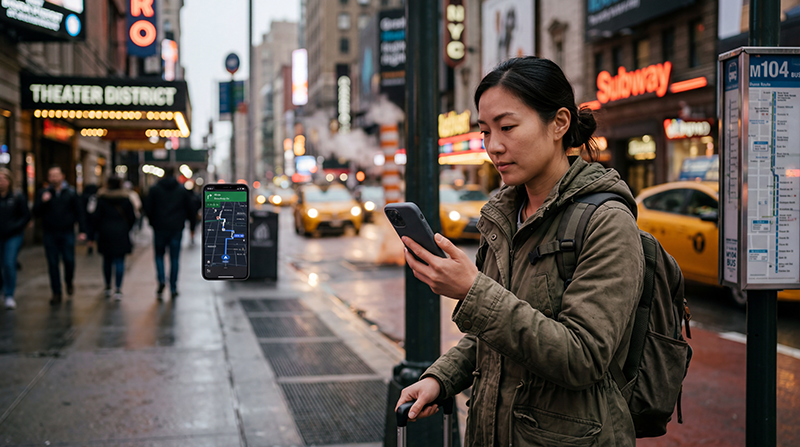

Traveler using mobile internet and navigation on the best network for tourists while visiting the USA.

Best Network in the USA for Tourists in 2026

Choosing the best network in the USA for tourists can make a big difference when you need mobile internet for maps, travel apps, hotel bookings, ride-sharing, road trips, national parks, and everyday communication.

The United States is large, and mobile coverage can vary between cities, airports, highways, rural areas, deserts, mountains, and national parks.

Quick answer: the main mobile networks in the USA are Verizon, AT&T, and T-Mobile. For tourists, the best network depends on where you travel. Verizon and AT&T are often strong for wider road trip and rural coverage, while T-Mobile is often strong in cities, airports, and urban travel areas.

Top United States eSIMs

Main Mobile Networks in the USA

The three main mobile networks in the United States are:

  • Verizon
  • AT&T
  • T-Mobile

Many travel eSIMs, prepaid SIMs, and mobile data plans connect through one or more of these networks. The best choice depends on your destination, route, device, and data needs.

Best Network in the USA for Tourists: Quick Comparison

Network Usually strong for Best tourist use case
Verizon Wide coverage, highways, rural areas Road trips, national parks, remote routes
AT&T Highways, towns, suburbs, broad coverage Multi-state travel and mixed routes
T-Mobile Cities, airports, urban areas, tourist zones City trips, airport arrival, urban travel

Is There One Best Network for the Whole USA?

No single network is best everywhere in the United States.

A network that works very well in New York or Los Angeles may perform differently in a national park, desert road, mountain valley, rural highway, or small town.

For tourists, the best approach is to choose a USA eSIM or mobile data plan that fits your route and travel style. If you are visiting only major cities, urban coverage matters most. If you are driving long distances, wider highway and rural coverage becomes more important.

Verizon for Tourists in the USA

Verizon is often considered a strong choice for wider coverage across the United States, especially for travelers going beyond major cities.

Verizon is usually useful for:

  • Cross-country road trips
  • Remote highways
  • Rural areas
  • National park routes
  • Mountain and desert travel areas
  • Long-distance driving

For tourists planning a USA road trip or national park route, Verizon coverage can be a useful factor to consider.

AT&T for Tourists in the USA

AT&T is another major US network with broad coverage across cities, towns, highways, suburbs, and many travel corridors.

AT&T is usually useful for:

  • Multi-state travel
  • Highway routes
  • Small towns
  • Suburban areas
  • Southern and central USA routes
  • Mixed city and road trip travel

AT&T can be a good option for tourists who plan to move between cities, towns, and road trip areas.

T-Mobile for Tourists in the USA

T-Mobile is often strong in many urban areas, airports, tourist zones, and major cities.

T-Mobile is usually useful for:

  • City trips
  • Airport arrival
  • Urban travel
  • Major tourist areas
  • Hotels, restaurants, shopping areas, and attractions
  • Short trips focused on large cities

For tourists staying mainly in cities such as New York, Los Angeles, Miami, Las Vegas, San Francisco, Chicago, Orlando, or Washington DC, T-Mobile can be a practical network option.

Best Network for USA Road Trips

For road trips, coverage is more important than peak speed.

Road trips often include long highways, rural areas, desert routes, mountains, forests, national parks, and small towns. A network that performs well in cities may not always be the best option for remote travel.

For most USA road trips, choose a plan with strong coverage for your route and download offline maps before entering remote areas.

Read more about internet for USA road trips

Best Network for US National Parks

National parks are one of the most challenging places for mobile coverage in the USA.

Coverage is usually better near park entrances, visitor centers, main roads, lodges, campgrounds, and nearby towns. It can be weak or unavailable in canyons, forests, mountain valleys, desert trails, backcountry areas, and remote viewpoints.

Even with a strong network, offline maps are essential for national park travel.

Read more about eSIM for US national parks

Best Network for Major US Cities

In major US cities, all three main networks can provide useful coverage, but performance may vary by neighborhood, building, crowd levels, and network congestion.

Mobile internet is especially useful in cities for:

  • Google Maps
  • Uber and Lyft
  • Hotel apps
  • Restaurant searches
  • Public transport routes
  • Event tickets
  • Messaging and calls through apps
  • Mobile payments

Best Network for Airport Arrival

Tourists often need mobile data immediately after landing in the USA.

At airports, network performance can be affected by crowding, indoor signal, terminal layout, and congestion. Having your eSIM installed before departure can help you connect faster after arrival.

Mobile data is useful at airports for:

  • Google Maps
  • Uber and Lyft pickup areas
  • Hotel directions
  • Car rental information
  • Flight changes
  • Messaging family or travel partners
  • Checking bookings and travel documents

Best Network for Google Maps in the USA

Google Maps works with any mobile network that provides data coverage. The best network for Google Maps is the one with stable coverage along your route.

For cities, most networks may work well. For road trips and national parks, download offline maps because mobile signal can be weaker outside urban areas.

Read more about using Google Maps in the USA

Best Network for Tourists Using eSIM

Many tourists prefer a USA eSIM because it can be bought online, installed before departure, and used after arrival without buying a physical SIM card.

With a USA eSIM, you can:

  • Use mobile data after landing
  • Avoid airport SIM card queues
  • Keep your regular SIM active
  • Use Google Maps, Uber, Lyft, hotel apps, and travel apps
  • Use WhatsApp and messaging apps
  • Use hotspot if supported by the plan
  • Travel without changing physical SIM cards

Browse USA eSIM plans

Top United States eSIMs

Network Coverage vs Speed: What Matters More?

For tourists, coverage often matters more than maximum speed.

Fast speed is useful for video calls, uploads, streaming, and hotspot. But for travel essentials such as Google Maps, messaging, hotel bookings, ride-sharing, and emergency communication, stable coverage is usually more important.

Travel need What matters most
Google Maps Stable coverage
Ride-sharing apps Stable data connection
Road trips Coverage along the route
National parks Coverage plus offline maps
Video calls Speed and signal quality
Hotspot Speed, data allowance, and signal

How to Choose the Best Network for Your USA Trip

  1. List the cities and states you will visit.
  2. Check whether your trip is city-focused, road-trip focused, or national-park focused.
  3. Choose wider coverage if you will drive long distances.
  4. Choose strong urban coverage if you will stay mainly in major cities.
  5. Download offline maps before remote routes.
  6. Choose enough data for maps, apps, photos, hotspot, and messaging.
  7. Install your eSIM before departure if possible.

How Much Data Do Tourists Need in the USA?

Trip type Suggested data Best for
Short city trip 3GB to 5GB Maps, messaging, rideshare, light browsing
1 week USA trip 10GB to 20GB Daily navigation, bookings, apps, photos
USA road trip 20GB to 50GB Maps, music, uploads, hotspot, route planning
Heavy use or long trip Large or unlimited data Hotspot, remote work, streaming, uploads

Read more about how much data you need for USA travel

Common Mistakes Tourists Make with USA Networks

  • Assuming one network works perfectly everywhere
  • Choosing only based on speed, not coverage
  • Not downloading offline maps before road trips
  • Expecting strong signal in every national park
  • Waiting until airport arrival to buy a SIM card
  • Not checking if their phone supports eSIM
  • Forgetting to enable data roaming for a travel eSIM
  • Choosing too little data for a long trip

Related USA Travel Internet Guides

FAQ: Best Network in the USA for Tourists

What is the best network in the USA for tourists?

The best network depends on your route. Verizon and AT&T are often useful for wider road trip and rural coverage, while T-Mobile is often strong in cities, airports, and tourist areas.

Which network is best for USA road trips?

For road trips, wider route coverage matters most. Verizon and AT&T are often considered strong options for highways, rural areas, and long-distance travel, but coverage can vary by state and route.

Which network is best for US cities?

In major US cities, Verizon, AT&T, and T-Mobile can all work well, but performance depends on the exact location, building, crowding, and congestion.

Which network is best for US national parks?

No network works perfectly in every national park. Coverage is usually better near entrances, visitor centers, main roads, lodges, and nearby towns. Offline maps are strongly recommended.

Does a USA eSIM use Verizon, AT&T, or T-Mobile?

It depends on the eSIM plan. Some USA eSIM plans connect to one network, while others may support multiple partner networks. Check the plan details before buying.

Is coverage or speed more important for tourists?

Coverage is usually more important than maximum speed because tourists need stable internet for maps, messaging, rideshare apps, bookings, and travel planning.

Can I use Google Maps on any USA network?

Yes. Google Maps can work on any USA network that provides mobile data coverage in your location.

Should I download offline maps even with a good network?

Yes. Offline maps are recommended for road trips, national parks, deserts, mountains, rural highways, and places where mobile coverage may be weak.

Final Recommendation

The best network in the USA for tourists in 2026 depends on your travel route. For city trips, strong urban coverage is usually enough. For road trips, national parks, and long-distance travel, wider coverage becomes more important.

For most tourists, the easiest setup is a USA eSIM with enough data, installed before departure, plus offline maps for remote areas.

Browse USA eSIM plans

Scroll to Top