


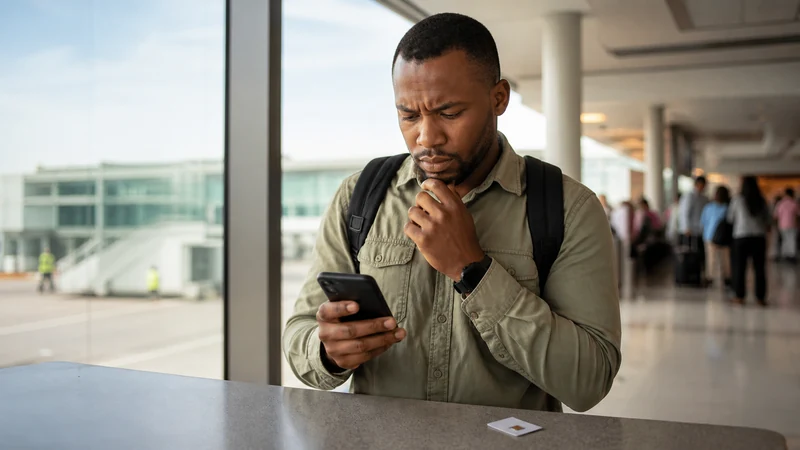

Sir Seretse Khama International Airport, Botswana’s busiest, has SIM kiosks in the arrivals hall from the country’s main carriers — but the hours don’t always match flight schedules, and knowing that before you land matters more than knowing the kiosks exist.
Top Botswana eSIMs

Botswana eSIM
Fixed
1 GB, 7 days€ 11.552 GB, 15 days€ 25.333 GB, 30 days€ 31.10Unlimited
Unlimited, 1 day€ 16.44Unlimited, 3 days€ 46.65Unlimited, 5 days€ 77.31
Which carriers have a presence at the airport
Mascom, Orange, and BTC all sell SIM cards from outlets within the terminal after you clear customs — Orange specifically operates a shop in the Passenger Terminal Building. You can compare data and call packages between them on the spot, though pricing and promotions shift, so treat any specific figure you’ve seen online as a starting point rather than a guarantee.
The hours problem
SIM kiosks at the airport generally operate during standard hours aligned with peak flight times, and don’t reliably stay open late into the night. If you land after midnight or on an unusually timed flight, there’s a real chance the kiosks will be closed. This is a common enough issue that it’s worth planning around rather than assuming you’ll sort out connectivity the moment you land.
What to do if you land and the kiosks are closed
Your options are to wait until the next day and visit a carrier shop in Gaborone proper — Riverwalk, Game City, or Main Mall all have official locations — or, better, avoid the problem entirely by having a travel eSIM installed and ready before you fly. The Botswana eSIM installation guide covers setting this up in advance, which sidesteps the airport timing question completely.
What you’ll need to buy a SIM
Bring your passport — Botswana requires registration for any SIM purchase, no exceptions, and airport kiosks follow the same rule as any carrier shop in town. The process itself is quick once you’re at the counter, but having your passport ready avoids unnecessary delay.
Currency and payment
Botswana Pula (BWP) is the local currency; some airport vendors may accept other currencies or cards, but it’s worth having a small amount of local cash or a working card ready, since payment options at kiosks can be less flexible than in a full carrier shop downtown.
Once you have a SIM, what to expect in Gaborone
Coverage across most of Gaborone’s central areas — the CBD, Riverwalk, Government Enclave — is solid on any of the three networks. The Gaborone connectivity guide covers the city in more detail, including areas where coverage thins out.
A local quirk worth knowing: load-shedding
Power outages in Gaborone can occasionally knock out cell towers and WiFi for a period, alongside the more obvious inconvenience of losing power itself. This isn’t a connectivity problem specific to your new SIM — it’s a broader infrastructure issue worth being aware of, and a charged power bank helps regardless of the cause of an outage.
FAQ
Can I buy a SIM card at Gaborone Airport?
Yes — Mascom, Orange, and BTC all have outlets in the arrivals area, though hours are limited and don’t always match late or unusual flight times.
What if I land late at night?
The kiosks may well be closed. Either wait until the next day to buy a SIM in town, or install an eSIM before you fly to avoid the issue entirely.
Do I need my passport to buy a SIM at the airport?
Yes — registration is mandatory in Botswana regardless of where you buy the SIM.
Is it better to just install an eSIM before flying?
For most travelers, yes — it avoids the kiosk-hours uncertainty entirely and gets you connected the moment you land.
Final Recommendation
Buying a SIM at Gaborone Airport works fine if your flight lands during normal hours, but given the uncertainty around kiosk timing, a pre-installed eSIM removes the risk entirely — worth considering if you don’t want your connectivity plan to depend on exactly when you land.