


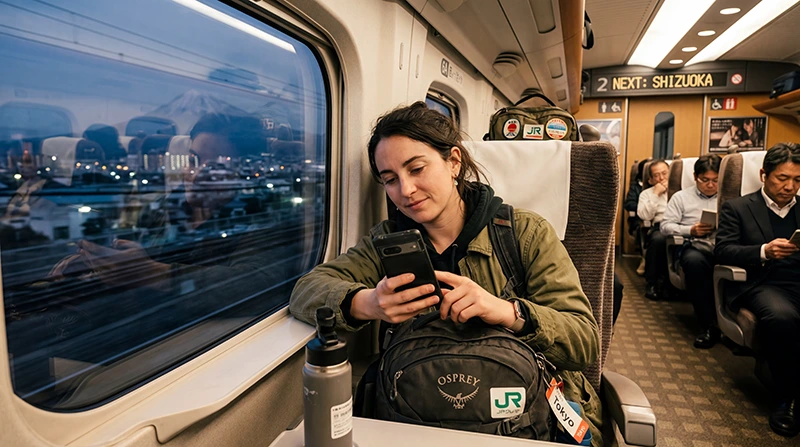

Long-term travel in Japan requires more reliable internet than a short holiday.
Whether you are staying for several weeks, working remotely, studying, slow traveling, or exploring multiple cities by train, mobile internet becomes part of your everyday routine.
Quick answer: for most long-term travelers in Japan, a Japan eSIM with large or unlimited data is usually the easiest option because it provides flexible mobile internet without needing a physical SIM card, airport pickup, or Pocket WiFi device.
Top Japan eSIMs


Why Long-Term Travelers Need Reliable Internet in Japan
Longer stays usually mean heavier and more frequent internet use.
Travelers often need mobile data for:
- Google Maps and train navigation
- Shinkansen and JR route planning
- Translation apps
- Remote work and video calls
- Hotel and apartment bookings
- Cashless payments
- WhatsApp and messaging
- Food delivery and restaurant apps
- Cloud storage, uploads, and backups
Best eSIM Type for Long-Term Japan Travel
| Traveler type | Recommended plan | Best for |
|---|---|---|
| Slow traveler | 20GB–30GB | Maps, messaging, browsing |
| Heavy tourist | 30GB+ | Daily apps and social media |
| Remote worker | Unlimited data | Video calls and hotspot |
| Content creator | Unlimited data | Uploads and streaming |
| Multi-city traveler | Large or unlimited data | Train travel and navigation |
Why eSIM Works Well for Long-Term Japan Trips
With a Japan eSIM, long-term travelers can:
- Install internet before arriving
- Use mobile data immediately after landing
- Avoid airport SIM card queues
- Keep their normal SIM active
- Use hotspot for laptops and tablets
- Stay connected while moving between cities
- Extend or replace plans digitally if needed
Top Japan eSIMs
Unlimited Data vs Large Data Plans
| Plan type | Best for | Main advantage |
|---|---|---|
| 10GB–20GB | Light long-term use | Lower cost |
| 30GB+ | Frequent daily use | More flexibility |
| Unlimited data | Remote work and heavy use | No usage stress |
If you plan to work remotely, stream videos, use hotspot, or upload large files, unlimited data is usually the safest choice.
Read also: Unlimited data eSIM Japan
Does eSIM Coverage Work Well Across Japan?
Yes.
Japan generally has strong mobile coverage across:
- Tokyo
- Kyoto
- Osaka
- Hiroshima
- Fukuoka
- Sapporo
- Nara
- Hakone
- Mount Fuji areas
- Major train routes
Temporary signal drops may still happen in tunnels, underground stations, rural mountains, or remote islands.
Best Networks for Long-Term Travel in Japan
The major Japanese mobile networks include:
- NTT Docomo
- au by KDDI
- SoftBank
- Rakuten Mobile
For long-term travel, networks with strong nationwide and train-route coverage are usually better than networks that only perform well in major cities.
Read also: Best network in Japan for tourists
Can You Use Hotspot During a Long Stay?
Usually yes, depending on the plan.
Hotspot is useful for:
- Working from a laptop
- Connecting a tablet
- Using backup internet in hotels
- Working from cafés or coworking spaces
- Sharing data with another device
If hotspot is important for your trip, choose a plan that clearly supports tethering.
Can You Work Remotely With a Japan eSIM?
Yes.
Many long-term travelers use Japan eSIMs for remote work, especially as a backup connection or mobile hotspot.
A Japan eSIM can help with:
- Video meetings
- Slack and business messaging
- Cloud file access
- VPN connections
- Remote desktop tools
- Travel days between cities
Read also: Remote work internet Japan
Can You Keep Your Main Number Active?
Yes.
Most modern smartphones allow travelers to:
- Keep their primary SIM active
- Receive SMS verification codes
- Use WhatsApp normally
- Use the Japan eSIM for mobile data
This is especially useful for banking apps, two-factor authentication, airline updates, and communication with home contacts.
Best Setup for Long-Term Travel in Japan
| Setting | Recommended option |
|---|---|
| Main SIM | Keep active for calls and SMS if needed |
| Main SIM roaming | Off |
| Japan eSIM | On |
| Japan eSIM roaming | On if required |
| Mobile data line | Japan eSIM |
| Hotspot | On if supported by plan |
Common Problems During Long-Term eSIM Use
- Running out of data earlier than expected
- Slow speeds after heavy usage
- Hotspot limits on some plans
- Wrong mobile data line selected after updates
- APN settings missing or reset
- Signal drops in tunnels or rural areas
If internet stops working, check APN settings, roaming, mobile data selection, and whether your plan still has active data.
Related Japan Travel Guides
- Japan eSIM
- Unlimited data eSIM Japan
- Best eSIM for digital nomads Japan
- Remote work internet Japan
- Best network in Japan for tourists
- How much data do you need for Japan
- APN settings Japan eSIM
FAQ: Long-Term Travel Japan eSIM
Is eSIM good for long-term travel in Japan?
Yes. A Japan eSIM is usually very convenient for long-term travel because it offers flexible mobile internet without needing a physical SIM card.
How much data do I need for a long trip to Japan?
Light users may need 20GB–30GB, while remote workers, heavy social media users, and content creators often prefer unlimited data.
Can I use hotspot with a Japan eSIM?
Many Japan eSIM plans support hotspot, but tethering availability depends on the specific plan.
Can I work remotely with a Japan eSIM?
Yes. Many remote workers use Japan eSIMs for mobile internet, hotspot tethering, backup connectivity, and train travel.
Can I keep my normal number while using a Japan eSIM?
Yes. Most modern phones allow your primary SIM to stay active while the Japan eSIM handles mobile data.
What should I check if my Japan eSIM stops working?
Check that the Japan eSIM is selected for mobile data, roaming is enabled if required, APN settings are correct, and your plan still has active data.
Final Thoughts: Long-Term Travel Japan eSIM
For long-term travelers in Japan, reliable mobile internet is essential for navigation, communication, remote work, bookings, and everyday life.
A Japan eSIM with large or unlimited data is usually one of the easiest and most flexible ways to stay connected for weeks or months while exploring the country.