


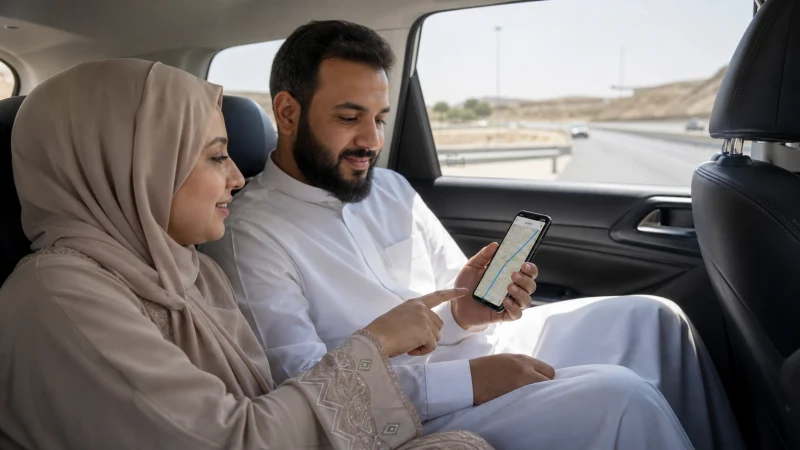

The route between Jeddah and Makkah is one of the most heavily traveled roads in Saudi Arabia, carrying a constant flow of pilgrims arriving for Umrah or Hajj alongside regular commuter and commercial traffic — a relatively short journey that rarely presents any real connectivity challenge, in contrast to some of the country’s longer, more remote intercity drives.
Quick answer: Coverage along the Jeddah-Makkah highway is consistently strong throughout, given how well-developed and heavily used this specific corridor is. You shouldn’t expect any meaningful gaps on this journey, whether traveling by private car, shared taxi, or organized group transport.
Top Saudi Arabia eSIMs


Why this route is so well covered
As the primary corridor connecting Saudi Arabia’s main international gateway to its holiest city, this road carries enough consistent traffic — both pilgrim and commercial — that all three networks maintain dense infrastructure along its length, unlike more remote intercity routes elsewhere in the country.
The Miqat boundary
Travelers on this route pass through a Miqat boundary point, where pilgrims in a state of ihram formally begin their Umrah or Hajj rituals — a significant spiritual milestone on the journey, though one that has no bearing on mobile coverage itself, which remains consistent on both sides of this point.
Non-Muslim travel restrictions
It’s worth noting that Makkah itself is restricted to Muslims only, with checkpoints along this route enforcing this rule — a logistics and travel-planning consideration distinct from connectivity, but relevant to anyone planning this specific journey who isn’t traveling for pilgrimage purposes.
Travel time and options
The journey between the two cities typically takes around an hour by road under normal traffic conditions, making it one of the shorter intercity routes covered in this cluster — group buses, shared taxis, and private transport are all common ways pilgrims make this specific trip. Compare this to the considerably longer Jeddah to Madinah route, which involves a genuinely different scale of journey.
Data needs for this specific trip
Given how short this journey is, a standard data bundle handles it without any special sizing considerations — the how much data guide covers general trip planning, though this particular leg rarely needs extra consideration on its own.
Arriving in Makkah
Once you reach Makkah, coverage patterns shift to the congestion-driven dynamics described in the Makkah mobile internet guide — a different consideration from the open-road coverage on the drive itself, since crowd density around the Grand Mosque affects data speeds more than underlying signal strength.
If you’re setting up connectivity at Jeddah airport first
Most travelers on this route are arriving via Jeddah’s airport, and getting a SIM or eSIM sorted there before setting out — covered in the Jeddah Airport eSIM setup guide or the SIM card guide — means you’re connected for the whole journey rather than needing to think about it again until you reach Makkah.
FAQ
Is there mobile coverage between Jeddah and Makkah?
Yes, consistently strong throughout, given how heavily traveled this corridor is.
How long does the journey take?
Typically around an hour by road under normal traffic conditions.
Does passing the Miqat boundary affect my signal?
No, this is a spiritual and ritual milestone with no bearing on mobile coverage.
Can non-Muslims travel this route?
Makkah itself is restricted to Muslims only, with checkpoints enforcing this — a travel planning consideration distinct from connectivity.
Should I get connected before leaving Jeddah?
Yes, sorting out a SIM or eSIM at the airport means you’re set for the whole journey and your time in Makkah.
Is coverage different once I reach Makkah?
Yes, crowd congestion around the Grand Mosque can affect data speeds, distinct from the open-road coverage on this route.
Final Recommendation
This is one of Saudi Arabia’s most reliably connected intercity routes — get your SIM or eSIM sorted at Jeddah airport and expect no real gaps on the drive itself. See the Makkah mobile internet guide for what changes once you arrive.