


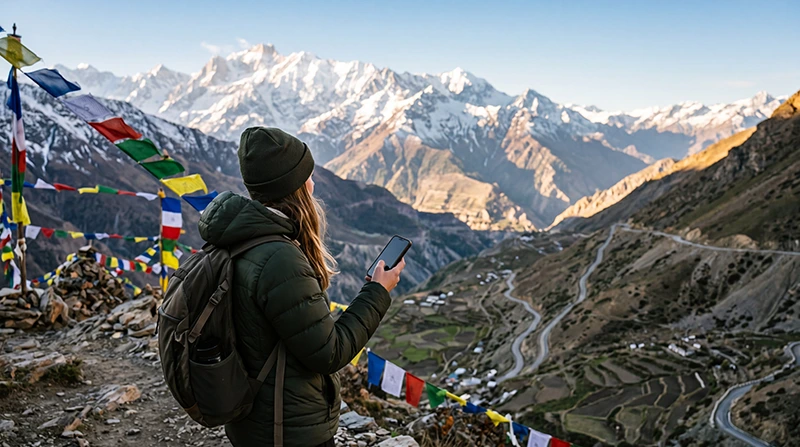

The Indian Himalayas are among the world’s most spectacular travel destinations. Stretching across northern India, they include famous regions such as Himachal Pradesh, Uttarakhand, Ladakh, Jammu & Kashmir and Sikkim. Whether you’re trekking through mountain villages, driving high-altitude passes, exploring Buddhist monasteries or visiting Himalayan national parks, reliable internet makes travelling considerably easier.
Unlike India’s major cities, internet coverage in the Himalayas varies significantly depending on altitude, road access and local infrastructure. Some destinations have excellent 4G and expanding 5G networks, while remote valleys and mountain passes may have little or no signal.
For most international visitors, installing an India eSIM before departure is the simplest way to stay connected throughout the trip. It allows your phone to connect immediately after arriving in India and provides mobile data across most populated Himalayan destinations.
Quick answer: install your India eSIM before travelling, enable Data Roaming after arrival, choose it as your Mobile Data SIM and download offline maps before entering remote mountain regions.
Top India eSIMs


Can You Get Mobile Internet in the Indian Himalayas?
Yes. Mobile internet is available across much of the Indian Himalayas, although coverage depends heavily on the region and altitude. Cities, towns and major tourist centres generally have reliable 4G coverage, while remote trekking routes and mountain passes may experience weak or no signal.
Before travelling into remote areas, always download offline maps, hotel confirmations and travel documents.
Best Ways to Get Internet in the Himalayas
| Option | Best For | Rating |
|---|---|---|
| India eSIM | Most international travellers | ★★★★★ |
| Local prepaid SIM | Long-term travel | ★★★★☆ |
| International roaming | Emergency use | ★★☆☆☆ |
| Hotel WiFi | Backup connection | ★★★☆☆ |
Why an India eSIM Is the Best Choice
- Install before your flight.
- No physical SIM card.
- No airport queues.
- Keep your regular SIM active.
- Works across most populated Himalayan regions.
- Ideal for Dual SIM smartphones.
- Continue using WhatsApp with your existing number.
- No need to swap SIM cards between destinations.
Mobile Coverage by Region
| Region | Coverage |
|---|---|
| Shimla | Excellent |
| Manali | Very Good |
| Dharamshala | Excellent |
| Leh | Very Good |
| Srinagar | Excellent |
| Nainital | Excellent |
| Mussoorie | Excellent |
| Rishikesh | Excellent |
| Gangtok | Very Good |
| Remote trekking routes | Variable |
| High mountain passes | Limited or None |
Internet in Himachal Pradesh
Major destinations such as Shimla, Manali, Dharamshala and Kasol have good mobile coverage. Mountain roads generally remain connected, although signal becomes less reliable at higher elevations and on remote hiking trails.
Internet in Ladakh
Leh has good mobile coverage and internet access, but travelling towards Pangong Lake, Nubra Valley, Tso Moriri or high-altitude passes may result in weaker or unavailable signal.
Internet in Uttarakhand
Popular destinations including Rishikesh, Haridwar, Mussoorie and Nainital enjoy excellent mobile coverage. Remote Himalayan trekking routes can experience significant coverage gaps.
Internet in Kashmir
Srinagar offers excellent connectivity, while coverage remains good across many populated areas of Kashmir. Mountain valleys and remote border regions may have weaker service.
Internet in Sikkim
Gangtok and surrounding towns generally have reliable coverage. Remote mountain roads towards high-altitude lakes and passes may experience interruptions.
Coverage on Mountain Roads
Most highways connecting major tourist destinations have mobile coverage for much of the journey. However, tunnels, steep valleys, dense forests and high mountain passes may temporarily interrupt your connection.
Public WiFi
Hotels, cafés, mountain lodges and guesthouses often provide WiFi, especially in larger towns. Speeds vary depending on location and weather conditions, making mobile data an important backup.
Internet for Trekking
If you’re planning multi-day treks, assume that mobile coverage will become increasingly limited as you gain altitude. Download offline maps, emergency contacts and accommodation details before leaving populated areas.
Recommended Mobile Settings
| Setting | Recommended Value |
|---|---|
| Mobile Data | India eSIM |
| Calls | Primary SIM |
| SMS | Primary SIM |
| Data Roaming | On |
| Automatic Data Switching | Off |
| Network Selection | Automatic |
| Preferred Network | 5G Auto / LTE |
| APN | data.esim |
India eSIM APN Settings
| Field | Value |
|---|---|
| Name | NoveSIM |
| APN | data.esim |
| Username | Leave blank |
| Password | Leave blank |
| Authentication | None |
How Much Data Do You Need?
| Trip Length | Recommended Data |
|---|---|
| 5 days | 5–8 GB |
| 7 days | 8–10 GB |
| 10–14 days | 15–25 GB |
| Remote workers | 30 GB+ |
Useful Apps for the Himalayas
- Google Maps (offline maps recommended)
- Google Translate
- Booking.com
- Indian Railways
- Weather apps
- Altitude and trekking apps
- Emergency SOS apps
Tips Before Entering Remote Areas
- Download offline maps.
- Save hotel confirmations.
- Download boarding passes and train tickets.
- Save emergency contacts.
- Carry a power bank.
- Expect occasional coverage gaps.
- Inform family before long treks.
Related India Guides
- India eSIM
- Mobile Data in India
- Best Network in India
- How to Use an India eSIM
- India APN Settings
- Does WhatsApp Work in India?
- Internet on the Golden Triangle
- Internet in Kerala
FAQ
Does an India eSIM work in the Himalayas?
Yes. It works throughout most populated Himalayan towns and tourist destinations. Coverage becomes more limited in remote mountain areas.
Will I have internet during trekking?
Not always. Multi-day trekking routes often pass through areas with limited or no mobile coverage.
Should I download offline maps?
Yes. Offline maps are strongly recommended before travelling into mountain regions.
Can I keep my regular SIM active?
Yes. Most Dual SIM phones allow your home SIM to remain active while the India eSIM provides mobile data.
What APN should I use?
If manual configuration is required, use data.esim.
Final Recommendation
An India eSIM is the simplest way to stay connected while exploring the Indian Himalayas. Although mobile coverage becomes less predictable at higher elevations, you’ll enjoy reliable connectivity in most cities, towns and tourist destinations without needing a physical SIM card.
Install your eSIM before departure, activate it after arriving in India, download offline maps before entering remote regions and enjoy a safer, more convenient Himalayan adventure.