


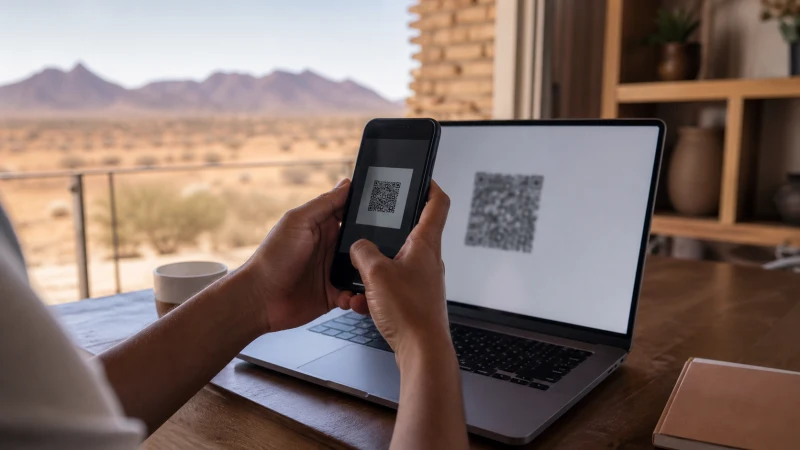

Installing an eSIM for Namibia depends on device compatibility, secure Wi-Fi and activation timing. Check the current plan and actual itinerary because mobile service can change from one stop to the next.
Most travellers need data for a few time-sensitive tasks: an airport transfer, a booking, navigation or a message. Save the fixed details offline before leaving a staffed or well-connected place.
The NoveSIM option provides travel data rather than a Namibian number, carrier calls or SMS. Performance depends on the plan, phone capabilities, partner access and local reception.
Quick answer: Install the eSIM on secure Wi-Fi, follow the plan’s activation rule, then select Travel for Mobile Data and enable Data Roaming on that line. Use data.esim only when manual APN entry is required.
Top Namibia eSIMs


What should travellers check for installing an eSIM for Namibia?
Record the exact phone model, current location, visible SIM labels and plan status before changing anything. Installation, activation and network registration are separate states, and identifying the current state helps avoid removing a valid profile.
Apply the correct travel-line settings
Label the lines Primary and Travel, choose Travel for Mobile Data and enable Data Roaming only on that eSIM. Disable automatic data switching so the home line cannot quietly take over.
Use network selection in the right order
Start with Automatic Network Selection and allow time for registration in Namibia. Try a supported manual network only when the live plan or NoveSIM Support identifies it; a random available operator may reject the profile.
Check APN data.esim without erasing evidence
If the line registers but data does not pass, confirm whether manual APN entry is required. The NoveSIM APN is data.esim with blank username and password. Keep the installed eSIM while completing these checks.
Keep the first transfer independent
Use the Namibia plan listing as the authority when checking device compatibility, secure Wi-Fi and activation timing. Then read Namibia eSIM APN Settings: How to Use data.esim for the related travel preparation.
Before departure, compare the live plan with the needs that matter here: device compatibility, secure Wi-Fi and activation timing. Read the high-speed allowance, validity period, activation rule and hotspot terms together rather than treating one feature in isolation. Confirm that the exact handset is unlocked and eSIM-compatible. Keep the installation details somewhere another device can display them. Current product information is more dependable than an old screenshot, a remembered description or a general promise about nationwide coverage.
- Confirm the exact handset is unlocked and supports eSIM.
- Keep the installation details private and available on another device.
- Download the first route, address and booking reference.
- Carry enough power for the longest planned transfer.
- Pause automatic updates, cloud backup and large media downloads.
Label both lines before changing settings
Compare the device guidance in Does My Phone Support an eSIM for Namibia? with How to Activate Your Namibia eSIM. Clear labels make it easier to keep the home SIM out of the mobile-data path.
- Confirm that the travel eSIM is visible and enabled.
- Select Travel as the Mobile Data line.
- Enable Data Roaming on Travel and keep it off on Primary unless home-carrier costs are understood.
- Disable automatic data switching.
- Allow Automatic Network Selection time to register.
- Use data.esim only when manual NoveSIM APN entry is required.
Use the network state as evidence
The guide Namibia eSIM Not Working? Safe Troubleshooting Steps explains the next safe checks. Record the visible network and active line before restarting the phone or changing another setting.
Keep the order reference, exact phone model and current location ready for Support. Preserve the original settings wherever possible so the cause remains visible.
Test one ordinary travel task
Open an ordinary webpage or travel app that will be needed later and confirm that current information loads. Turn off Wi-Fi temporarily so the result comes from the travel line. A useful test reflects the actual itinerary, including the places where buildings or terrain may weaken service. An offline route remains necessary even after a successful check, and the allowance should still be monitored. If it fails in Namibia, leave the eSIM installed and record the visible network, active line and error for Support.
Related Articles
- How to Select a Network Manually with a Namibia eSIM
- Slow Mobile Data in Namibia? Practical Fixes
- How to Use a Namibia eSIM on iPhone
- How to Use a Namibia eSIM on Android
- Namibia eSIM Coverage: Towns, Highways and Remote Routes
- Mobile Networks in Namibia: A Visitor’s Guide
- Can You Use a Hotspot with a Namibia eSIM?
- Mobile Data in Namibia: What Travellers Need to Know
- Can Tourists Use 3G in Namibia?
FAQ
What is the practical answer?
Install the eSIM on secure Wi-Fi, follow the plan’s activation rule, then select Travel for Mobile Data and enable Data Roaming on that line. Use data.esim only when manual APN entry is required.
Does a Namibia eSIM include a local number?
No. NoveSIM supplies mobile data but no Namibian number, ordinary voice minutes or carrier SMS. Messaging and internet-calling apps use the data connection.
Should Data Roaming be enabled?
Enable Data Roaming on the Namibia travel eSIM when partner access requires it. Keep roaming off on the primary line unless the home carrier’s charges are understood.
Should a non-working eSIM be deleted?
No. Preserve the installed profile and complete only reversible checks. If data still fails, give NoveSIM Support the phone model, location and visible network status.
Final Recommendation
Installing an eSIM for Namibia is best completed on secure Wi-Fi after checking the exact phone and the plan’s activation rule. Keep the installation details private and available on another device.
Prepare the line on dependable Wi-Fi, store essential information offline and test a normal webpage before departure. Reception can still differ between towns, buildings and remote parts of Namibia.
Keep mobile data assigned to Travel and leave roaming disabled on the primary line unless its charges are understood. Safe, recorded troubleshooting protects the eSIM.