


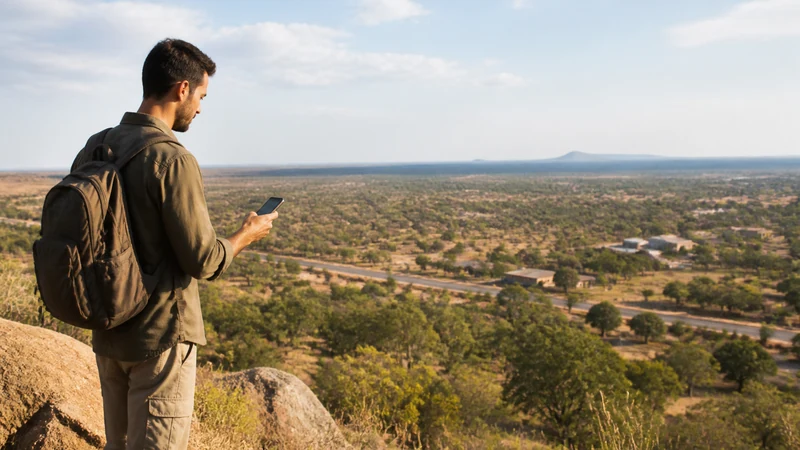

An eSIM’s coverage in Botswana depends entirely on which local network it partners with, but the underlying pattern is the same regardless of provider: solid in towns, largely absent in the wilderness areas that make up much of the country’s tourist appeal.
Top Botswana eSIMs

Botswana eSIM
Fixed
1 GB, 7 days€ 11.552 GB, 15 days€ 25.333 GB, 30 days€ 31.10Unlimited
Unlimited, 1 day€ 16.44Unlimited, 3 days€ 46.65Unlimited, 5 days€ 77.31
Which network your eSIM actually uses
Most travel eSIM providers route through Mascom or Orange’s infrastructure in Botswana, and this partnership matters more than the eSIM brand itself — check which local network your specific plan uses before assuming it automatically gets the best available reach. Mascom-backed plans generally extend furthest into rural and safari-adjacent areas, given Mascom’s wider footprint among the three domestic operators.
Where coverage is reliable
Gaborone, Francistown, Maun, Kasane, and other major towns all have solid 4G from the major networks, generally sufficient for maps, messaging, video calls, and everyday browsing. This covers most of the “connected” portion of a typical Botswana trip — arrival, city stays, and gateway towns before and after a safari.
Where it thins out
On the roads between towns — the Trans-Kalahari Highway, stretches between Nata and Kasane, and similar routes — coverage becomes intermittent, with real gaps that can last for a significant part of a drive. This is normal for the terrain and population density, not a limitation specific to any eSIM provider.
Where it essentially disappears
The Okavango Delta, most of the Central Kalahari Game Reserve, and much of the interior of parks like Moremi have no coverage from any Botswana network, regardless of eSIM provider. This is a genuine infrastructure gap — no eSIM, however well-connected its partner network, will produce a signal where no towers exist. The Botswana safari connectivity guide covers what to prepare for once your trip moves into these areas.
A partial exception: Chobe’s northern edge
Coverage near the northern fringe of Chobe National Park sometimes benefits from cross-border signal reaching in from Namibia, giving that specific area better connectivity than its remoteness would otherwise suggest. This is inconsistent and opportunistic rather than something to rely on, but it’s worth knowing about if your itinerary includes that part of the park — the Chobe connectivity guide covers this in more detail.
Checking coverage for your specific plan
Coverage maps published by eSIM providers show network footprint under generally ideal conditions, and in Botswana specifically, that footprint follows roads, towns, and lodge clusters closely — the parks and wilderness areas you’re actually traveling to see often sit outside it entirely, even when the map’s overall shading looks reassuring. Treat any coverage map as optimistic rather than a guarantee, particularly for safari-area travel.
Setting realistic expectations by destination
Coverage varies enough between Botswana’s individual safari destinations that it’s worth checking each one specifically rather than assuming a blanket “no coverage in safari areas” rule — the Okavango Delta, Chobe, Moremi, and Central Kalahari guides each cover the specific pattern for that location.
FAQ
Will my eSIM work throughout Botswana?
In towns and along main roads, generally yes. In the Okavango Delta, Central Kalahari, and much of the safari interior, no eSIM will have coverage.
Does the eSIM provider matter for coverage?
Indirectly — check which local network (Mascom, Orange, or BTC) your specific plan partners with, since this determines actual reach more than the eSIM brand.
Are coverage maps accurate for safari areas?
Treat them as optimistic — maps show general network footprint, but Botswana’s parks and wilderness areas often fall outside actual coverage even when a map suggests otherwise.
Is there any way to get signal in the Okavango Delta?
Not through any SIM or eSIM — a small number of camps offer their own satellite WiFi, which is a separate system entirely from mobile network coverage.
Final Recommendation
Botswana eSIM coverage follows the same pattern regardless of provider — reliable in towns, patchy on connecting roads, and largely absent across the country’s major safari destinations. Check which local network your plan uses, favor Mascom-backed options if rural reach matters to your itinerary, and treat any coverage map’s shading over wilderness areas with skepticism.