


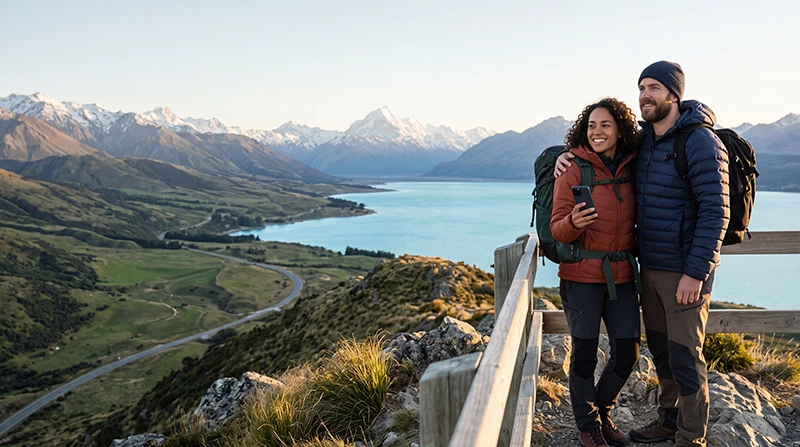

The South Island of New Zealand is famous for some of the world’s most spectacular landscapes, including Queenstown, Milford Sound, Mount Cook, Lake Tekapo, Wanaka and the Southern Alps.
Because many of the most popular attractions are located outside major cities, choosing the right mobile network is important for tourists who rely on mobile data, navigation apps and travel information during their journey.
Quick answer: Spark generally offers the widest coverage for travellers exploring rural South Island areas, while One NZ and 2degrees provide strong connectivity in cities and popular tourist destinations. For most visitors, the best choice is a New Zealand eSIM connected to a reliable nationwide network.
Top New Zealand eSIMs

New Zealand eSIM
Fixed
1 GB, 7 days€ 2.172 GB, 15 days€ 3.903 GB, 30 days€ 5.20Unlimited
Unlimited, 1 day€ 2.60Unlimited, 3 days€ 6.50Unlimited, 5 days€ 10.40
Asia eSIM
Fixed
1 GB, 7 days€ 4.332 GB, 15 days€ 7.803 GB, 30 days€ 10.40Unlimited
Unlimited, 1 day€ 5.63Unlimited, 3 days€ 15.17Unlimited, 5 days€ 24.70What Is the Best Mobile Network in South Island New Zealand?
New Zealand has three main mobile networks used by tourists:
| Network | Best For |
|---|---|
| Spark | Rural travel, highways and wider regional coverage |
| One NZ | Cities and popular tourist destinations |
| 2degrees | Urban areas and budget travellers |
The best network depends on your itinerary. Travellers visiting remote areas should prioritise coverage rather than only maximum speed.
Spark Coverage in South Island
Spark is often considered one of the strongest options for travellers exploring rural parts of the South Island.
It is a good choice for routes including:
- Christchurch to Queenstown.
- Queenstown to Milford Sound.
- West Coast road trips.
- Mount Cook and alpine areas.
- Southern Scenic Route.
Spark’s wider regional coverage makes it popular among campervan travellers and outdoor adventurers.
One NZ Coverage in South Island
One NZ provides strong connectivity in many populated areas and tourist destinations.
Good coverage can be expected around:
- Christchurch.
- Queenstown.
- Wanaka.
- Dunedin.
- Nelson.
- Picton.
For travellers spending more time in towns and tourist areas, One NZ can provide excellent performance.
2degrees Coverage in South Island
2degrees offers good coverage in many populated areas and continues expanding its network.
It can be suitable for tourists visiting:
- Christchurch.
- Dunedin.
- Queenstown.
- Popular coastal destinations.
For remote road trips, travellers may prefer a network with stronger regional reach.
Mobile Coverage in Popular South Island Destinations
| Destination | Expected Coverage |
|---|---|
| Christchurch | Excellent |
| Queenstown | Very good |
| Wanaka | Good |
| Lake Tekapo | Good |
| Mount Cook Village | Limited to good depending on location |
| Milford Sound | Limited |
| Fiordland | Variable |
Best Network for South Island Road Trips
Many tourists explore the South Island by rental car or campervan.
Popular routes include:
- Christchurch → Lake Tekapo → Mount Cook.
- Christchurch → Queenstown.
- Queenstown → Milford Sound.
- Nelson → Abel Tasman.
- West Coast Glacier Road.
For these routes, wider rural coverage is usually more important than having the fastest possible connection.
Best Network for Hiking and National Parks
The South Island has many famous hiking destinations, but mobile coverage can be limited in wilderness areas.
Expect weaker connectivity around:
- Milford Track.
- Routeburn Track.
- Fiordland National Park.
- Remote Mount Cook trails.
- Mountain passes.
Before hiking:
- Download offline maps.
- Save emergency information.
- Check weather conditions.
Does a New Zealand eSIM Work Across South Island?
Yes. A New Zealand travel eSIM works across South Island wherever the connected mobile network has coverage.
Benefits include:
- No physical SIM card needed.
- Install before travelling.
- Use maps immediately after arrival.
- Keep your home SIM active.
- Stay connected during road trips.
4G and 5G Coverage in South Island
| Technology | Availability |
|---|---|
| 4G LTE | Widely available in cities, towns and main routes |
| 5G | Available mainly in populated areas |
For tourists, reliable 4G coverage is usually more valuable than 5G because it reaches more locations.
How Much Data Do You Need in South Island?
| Trip Type | Recommended Data |
|---|---|
| City visit | 3–5GB |
| One week road trip | 5GB |
| Two-week South Island adventure | 5–10GB |
| Campervan exploration | 10GB+ |
Recommended eSIM Settings for South Island
| Setting | Recommended |
|---|---|
| Mobile Data | New Zealand eSIM |
| Data Roaming | Enabled on eSIM |
| Main SIM roaming | Disabled |
| Network Selection | Automatic |
| APN | data.esim |
Tips for Staying Connected in South Island
- Install your eSIM before arriving.
- Download offline maps for remote routes.
- Check coverage before hiking.
- Carry a power bank during long drives.
- Do not rely only on mobile signal in national parks.
Related New Zealand Connectivity Guides
- Mobile Coverage South Island New Zealand
- Best Network New Zealand Tourists
- Best eSIM for New Zealand
- Internet Queenstown to Milford Sound Road Trip
- Mobile Data Remote New Zealand
FAQ
What is the best mobile network in South Island New Zealand?
Spark is often preferred for wider regional coverage, while One NZ and 2degrees perform well in towns and tourist areas.
Does eSIM work in South Island New Zealand?
Yes. A New Zealand eSIM works wherever partner mobile networks provide coverage.
Is there mobile coverage at Milford Sound?
Coverage can be limited in Milford Sound and Fiordland due to the remote mountain environment.
Which network is best for a South Island campervan trip?
A network with stronger regional coverage is usually the best choice for campervan travellers.
Final Recommendation
For tourists exploring the South Island, choosing a network with strong regional coverage is more important than only chasing 5G speeds.
A New Zealand eSIM with reliable nationwide access, combined with offline maps, provides the best setup for exploring cities, scenic roads and remote landscapes across the South Island.