


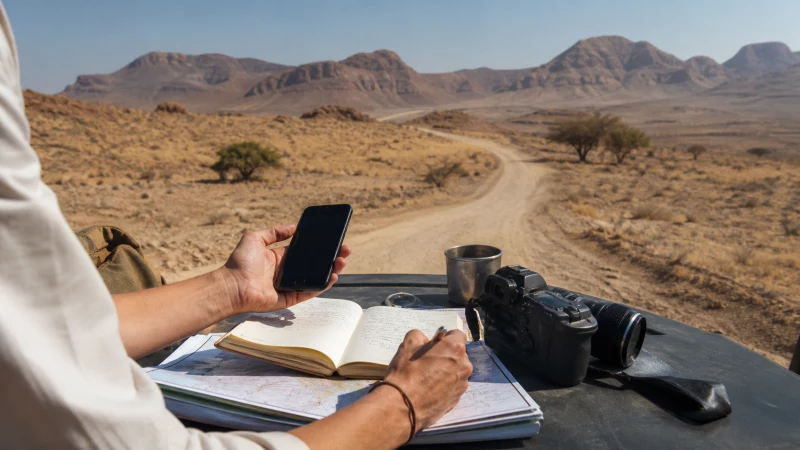

How much data a Namibia trip needs depends on maps, messaging, video, hotspot use and trip length. The phone, travel dates and places where data is genuinely needed determine the most suitable setup.
Maps and messages are useful on the road, but the first address, booking reference and an important contact should not depend on a live login. Check the offline copies before departure.
The NoveSIM option provides travel data rather than a Namibian number, carrier calls or SMS. Performance depends on the plan, phone capabilities, partner access and local reception.
Quick answer: Estimate the allowance from the length of the trip and the heaviest planned activities. Maps and text messages use relatively little data, while video, cloud backup and laptop tethering can use several gigabytes.
Top Namibia eSIMs


A practical guide to how much data a Namibia trip needs
There is no single allowance that suits every traveller. A light user who mainly checks maps and messages needs far less than someone joining video calls, uploading photographs or sharing data with a laptop.
Estimate use by activity, not guesswork
List the tasks expected on a normal travel day and identify the heavy ones. Navigation and text messaging are usually modest, while video streaming, cloud photo backup and operating-system updates can use several gigabytes.
Leave a reserve for remote travel days
Do not spend the entire allowance during the first days in Windhoek or on accommodation Wi-Fi backups. Keep enough mobile data for changed bookings, navigation and messages on the return route.
Check which devices will share the plan
Hotspot use can increase consumption quickly because a connected laptop or tablet may start downloads in the background. Confirm that tethering is permitted, pause automatic updates and review usage after the first work session.
Review the plan before departure
Review the live details on the Namibia eSIM page before making decisions about maps, messaging, video, hotspot use and trip length. The guide to The Best Ways to Get Internet in Namibia While Travelling provides additional context for this itinerary.
Before departure, compare the live plan with the needs that matter here: maps, messaging, video, hotspot use and trip length. Read the high-speed allowance, validity period, activation rule and hotspot terms together rather than treating one feature in isolation. Confirm that the exact handset is unlocked and eSIM-compatible. Keep the installation details somewhere another device can display them. Current product information is more dependable than an old screenshot, a remembered description or a general promise about nationwide coverage.
- Confirm the exact handset is unlocked and supports eSIM.
- Keep the installation details private and available on another device.
- Download the first route, address and booking reference.
- Carry enough power for the longest planned transfer.
- Pause automatic updates, cloud backup and large media downloads.
Prevent unintended home-SIM data
Compare the device guidance in Does My Phone Support an eSIM for Namibia? with How to Install an eSIM for Namibia Before You Travel. Clear labels make it easier to keep the home SIM out of the mobile-data path.
- Confirm that the travel eSIM is visible and enabled.
- Select Travel as the Mobile Data line.
- Enable Data Roaming on Travel and keep it off on Primary unless home-carrier costs are understood.
- Disable automatic data switching.
- Allow Automatic Network Selection time to register.
- Use data.esim only when manual NoveSIM APN entry is required.
Avoid destructive fixes during the trip
The guide Namibia eSIM Not Working? Safe Troubleshooting Steps explains the next safe checks. Record the visible network and active line before restarting the phone or changing another setting.
Keep the order reference, exact phone model and current location ready for Support. Preserve the original settings wherever possible so the cause remains visible.
Test one ordinary travel task
A useful check is something the traveller will actually need, such as retrieving an address or contacting a driver. Run the check on mobile data and verify that the Travel profile is selected. Check the task at its intended location and remember that moving indoors or beyond town can change the connection. Keep essential details outside the live connection and record whether the ordinary task succeeds. A failed result in Namibia should be documented before another setting is changed or the profile is removed.
Related Articles
- Best SIM Card for Namibia: Local SIM or Travel eSIM?
- Local SIM vs eSIM in Namibia: Which Is Better?
- Namibia eSIM vs Pocket Wi-Fi: A Traveller’s Comparison
- Roaming Charges in Namibia: Costs and Better Data Options
- Mobile Data in Namibia: What Travellers Need to Know
- Unlimited Mobile Data in Namibia: What the Limits Mean
- Can You Use a Hotspot with a Namibia eSIM?
- Namibia eSIM Coverage: Towns, Highways and Remote Routes
- Mobile Networks in Namibia: A Visitor’s Guide
FAQ
What is the practical answer?
Estimate the allowance from the length of the trip and the heaviest planned activities. Maps and text messages use relatively little data, while video, cloud backup and laptop tethering can use several gigabytes.
Does a Namibia eSIM include a local number?
No. NoveSIM supplies mobile data but no Namibian number, ordinary voice minutes or carrier SMS. Messaging and internet-calling apps use the data connection.
Should Data Roaming be enabled?
Enable Data Roaming on the Namibia travel eSIM when partner access requires it. Keep roaming off on the primary line unless the home carrier’s charges are understood.
Should a non-working eSIM be deleted?
No. Preserve the installed profile and complete only reversible checks. If data still fails, give NoveSIM Support the phone model, location and visible network status.
Final Recommendation
To decide how much data a Namibia trip needs, start with the length of the journey and the activities that use the most data. Leave a reserve for navigation, changed bookings and messages on remote travel days.
Prepare the line on dependable Wi-Fi, store essential information offline and test a normal webpage before departure. Reception can still differ between towns, buildings and remote parts of Namibia.
Clear SIM labels, controlled roaming and reversible checks reduce avoidable failures. Combined with offline preparation, they provide a realistic setup for Namibia.