


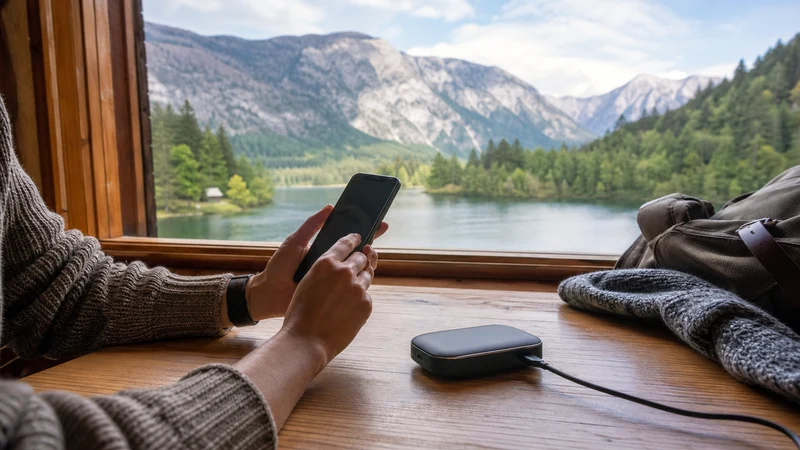

Both an eSIM and a rented pocket WiFi device get you online in Slovenia, but they work differently enough that the right choice depends mostly on how many people and devices need to share one connection.
Quick answer: An eSIM is simpler and cheaper for solo travelers or couples, letting your phone itself provide data and hotspot for a second device if needed. A pocket WiFi device makes more sense for larger groups or families wanting to share one connection across several devices without draining any single phone’s battery.
Top Slovenia eSIMs

Slovenia eSIM
Fixed
1 GB, 7 days€ 2.232 GB, 15 days€ 3.573 GB, 30 days€ 4.46Unlimited
Unlimited, 1 day€ 2.23Unlimited, 3 days€ 5.36Unlimited, 5 days€ 8.03
Balkans eSIM
Fixed
1 GB, 7 days€ 4.462 GB, 15 days€ 7.143 GB, 30 days€ 9.37Unlimited
Unlimited, 1 day€ 4.91Unlimited, 3 days€ 11.16Unlimited, 5 days€ 17.40Europe Extra eSIM
Fixed
1 GB, 7 days€ 2.232 GB, 15 days€ 3.573 GB, 30 days€ 4.46Unlimited
Unlimited, 1 day€ 2.68Unlimited, 3 days€ 5.36Unlimited, 5 days€ 8.93Europe+ eSIM
Fixed
1 GB, 7 days€ 2.682 GB, 15 days€ 4.023 GB, 30 days€ 5.36Unlimited
Unlimited, 1 day€ 2.68Unlimited, 3 days€ 6.25Unlimited, 5 days€ 10.26Europe Lite eSIM
Fixed
1 GB, 7 days€ 2.232 GB, 15 days€ 3.573 GB, 30 days€ 4.46Unlimited
Unlimited, 1 day€ 2.68Unlimited, 3 days€ 5.36Unlimited, 5 days€ 8.93How an eSIM works
An eSIM installs directly on your phone, giving it its own data connection — the installing an eSIM guide covers getting set up before you fly, letting your phone hotspot to a second device if needed.
How a pocket WiFi device works
A pocket WiFi device is a small standalone unit with its own SIM and battery, creating a WiFi network that multiple devices can join — useful for groups where several people need to connect without relying on any one person’s phone.
Cost comparison
For a solo traveler or couple, an eSIM is generally the more cost-effective option since your phone already handles both connectivity and hotspot duties — the mobile data in Slovenia guide covers typical eSIM and SIM pricing.
Battery considerations
Hotspotting from a phone drains its battery faster than normal use, which matters more for a full day of hiking or sightseeing — a dedicated pocket WiFi device with its own battery avoids this trade-off for a group relying on shared data throughout the day.
Coverage
Both options generally run on the same underlying Slovenian networks, so coverage is identical regardless of which device format you choose — the Slovenia eSIM coverage guide covers checking which network powers your specific plan.
When a pocket WiFi device makes more sense
Larger families or groups exploring Triglav National Park or doing a longer road trip together, where several devices need consistent connectivity without depending on one person’s phone, benefit most from a dedicated pocket WiFi device — the family travel guide covers this consideration in more depth.
EU roaming as an alternative
Before choosing either option, EU-based travelers should check whether their home carrier’s roam-like-at-home terms already cover Slovenia — this can make the whole eSIM-versus-pocket-WiFi comparison unnecessary for many visitors.
FAQ
Is eSIM or pocket WiFi better for Slovenia?
eSIM for solo travelers or couples; pocket WiFi for larger groups sharing one connection.
Does pocket WiFi cost more than an eSIM?
Generally yes, though it can work out more economical when split across a larger group.
Does hotspotting from my phone drain the battery?
Yes, noticeably — a pocket WiFi device avoids this by using its own battery.
Is coverage different between the two options?
No, both typically run on the same underlying Slovenian networks.
Should I check my EU roaming plan before choosing either option?
Yes, this could make either purchase unnecessary if your home plan already covers Slovenia.
Should families choose pocket WiFi over individual eSIMs?
Often yes, given how convenient it is to share one device across the group.
Final Recommendation
Check your EU roaming terms first, then choose an eSIM for solo travel or couples, and consider a pocket WiFi device for larger groups. See the local SIM vs eSIM guide for the fuller comparison of connectivity options.