


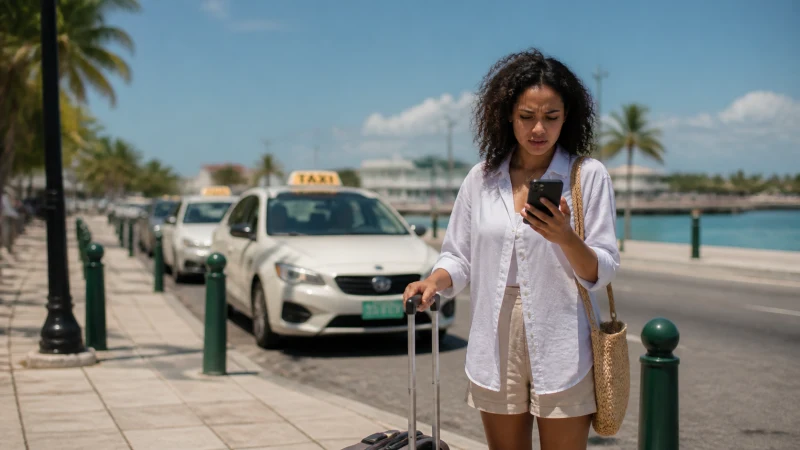

Roaming charges in the Bahamas vary considerably depending on your home carrier, since there’s no regional roaming framework — like the EU’s roam-like-at-home rules — automatically covering the islands at a fixed, predictable rate.
Quick answer: Check your home carrier’s specific international or Caribbean roaming rate for the Bahamas before you fly — some plans, particularly certain US carrier add-ons, include the islands affordably, while others charge premium per-megabyte rates that add up fast. A local SIM or eSIM is usually the more predictable, often cheaper alternative.
Top Bahamas eSIMs

Bahamas eSIM
Fixed
1 GB, 7 days€ 9.332 GB, 15 days€ 16.883 GB, 30 days€ 23.55Unlimited
Unlimited, 1 day€ 12.89Unlimited, 3 days€ 37.77Unlimited, 5 days€ 62.21
Why roaming rates vary so much by carrier
Roaming charges reflect wholesale agreements between your home carrier and BTC or Aliv, and these vary considerably by provider and plan tier — some carriers, especially those serving the large US market that sends the most visitors to the Bahamas, include the islands in broader Caribbean or international day-pass programs, while others treat it as standard international roaming at a much higher rate.
What to check before you fly
Your home carrier’s app or website should list a specific roaming rate or included destinations for the Bahamas — checking this directly, rather than assuming a general international plan covers the islands affordably, avoids an unwelcome surprise on your next bill. The mobile data guide covers what local pricing looks like for comparison.
US carriers and the Bahamas specifically
Given how many visitors arrive from the United States, some US carriers include the Bahamas in Caribbean-focused roaming add-ons or day-pass programs — terms and included destinations vary by carrier and change over time, so confirming your specific plan’s current terms matters more than assuming based on general reputation. The best SIM card guide covers the local alternative if your carrier’s terms don’t look favorable.
The cheaper alternative: local SIM or eSIM
A prepaid local SIM from BTC or Aliv, or a travel eSIM covering the Bahamas, typically costs a fraction of what the same data volume would cost through unclear or premium home-carrier roaming — the local SIM vs eSIM guide compares these options directly.
Roaming for cruise passengers
Cruise passengers face a related but distinct consideration — ship-based cellular roaming while at sea is typically expensive regardless of carrier, while roaming rates apply normally once you’re ashore and within range of Bahamian towers — the Bahamas cruise guide covers this distinction.
Avoiding accidental data use
Even travelers planning to use a local SIM or eSIM sometimes get caught by their home SIM quietly using data in the background before they’ve switched over — disabling data roaming on your home SIM entirely once you’ve got a local option active removes this risk completely, covered further in the local SIM vs eSIM guide.
FAQ
Do all carriers charge the same roaming rate for the Bahamas?
No, rates vary considerably — check your specific carrier’s terms before assuming.
Do US carriers typically cover the Bahamas affordably?
Some do through Caribbean-focused add-ons, but terms vary and change — confirm your specific plan.
Is a local SIM or eSIM cheaper than roaming?
Generally yes, often considerably so compared to premium international roaming rates.
Does ship WiFi count as roaming?
No, that’s a separate, typically expensive satellite-based service distinct from cellular roaming ashore.
Can my home SIM use data without me realizing it?
Yes, background app activity can quietly rack up roaming charges — disabling data roaming once you have a local option prevents this.
Should I check my carrier’s rate before or after arriving?
Before — confirming this while still at home avoids any surprise once you’re already using data on the islands.
Final Recommendation
Check your home carrier’s specific Bahamas roaming rate before you fly, and default to a local SIM or eSIM if it’s unclear or expensive. See the best way to get internet in the Bahamas guide for a full comparison of your connectivity options.