


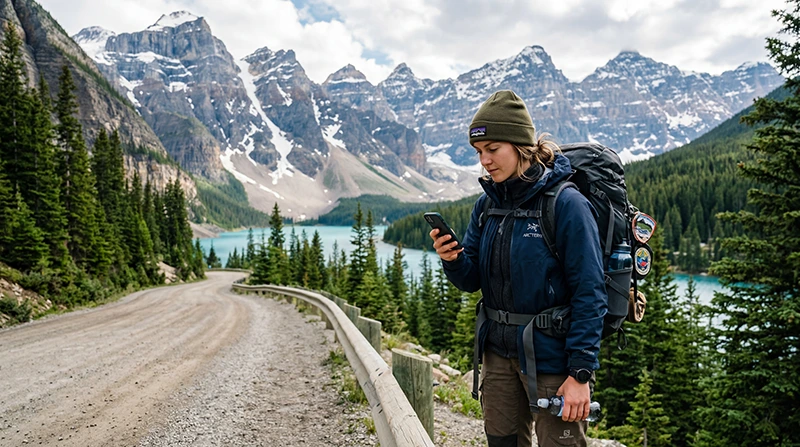

Traveling through the Canadian Rocky Mountains is one of the most popular travel experiences in Canada, especially for roadtrips, hiking, camping, skiing, photography, and national park adventures.
Because the region includes mountains, forests, lakes, valleys, highways, and remote areas, reliable mobile data can be extremely important for maps, weather updates, navigation, accommodation, and emergency communication.
Quick answer: Many travelers now use an eSIM for mobile data in the Rocky Mountains because it allows them to prepare internet access before arriving in Canada without needing to search for SIM card stores during the trip.
Top Canada eSIMs

Canada eSIM
Fixed
1 GB, 7 days€ 4.002 GB, 15 days€ 6.663 GB, 30 days€ 9.78Unlimited
Unlimited, 1 day€ 5.33Unlimited, 3 days€ 15.11Unlimited, 5 days€ 23.55
Why Mobile Data Is Important in the Rocky Mountains
The Rocky Mountains cover large travel areas including Banff, Jasper, Lake Louise, Icefields Parkway, Canmore, and many remote nature destinations.
Mobile internet is useful for:
- Using Google Maps and Apple Maps
- Checking weather and road conditions
- Finding hotels, campgrounds, and gas stations
- Checking hiking routes and trail updates
- Using WhatsApp, Messenger, and email
- Booking tours, shuttles, and activities
- Emergency communication while traveling
Can You Get Mobile Data in the Rocky Mountains?
Yes, mobile data is available in many parts of the Rocky Mountains, especially near towns, highways, tourist areas, hotels, and popular attractions.
However, coverage can vary depending on:
- Mountain terrain
- Road location
- Weather conditions
- Distance from towns
- Remote national park areas
In some mountain regions, coverage may become weaker or unavailable temporarily.
Why Many Travelers Prefer eSIM in the Rocky Mountains
An eSIM is a digital SIM that allows you to activate mobile data without replacing your physical SIM card.
This is especially useful for Rocky Mountains travel because many visitors arrive through Calgary or Vancouver and continue directly toward mountain areas without wanting to stop for SIM card shopping.
With an eSIM, travelers can prepare their mobile internet before departure and use it shortly after arriving in Canada.
Benefits of Using an eSIM in the Rocky Mountains
- Install before departure
- No physical SIM card required
- Keep your regular SIM active
- Use mobile data after arrival
- No need to search for SIM card stores
- Useful for maps, weather, hiking, and roadtrip planning
Internet Options in the Rocky Mountains
| Option | Best For | Main Limitation |
|---|---|---|
| International roaming | Using your existing mobile plan abroad | Can become very expensive |
| Public WiFi | Hotels, cafes, and visitor centers | Limited outside buildings |
| Local SIM card | Travelers wanting a physical SIM | Requires store visit and SIM replacement |
| eSIM | Fast and convenient mobile internet | Requires eSIM-compatible phone |
Important: Coverage Can Vary in Mountain Areas
The Rocky Mountains include remote valleys, forests, mountain passes, lakes, and hiking trails where mobile coverage may vary significantly.
No mobile internet provider can guarantee perfect coverage everywhere in the mountains.
Before traveling into remote areas, it is smart to:
- Download offline maps
- Save accommodation and campground information offline
- Check weather and road conditions before departure
- Keep emergency contacts available
- Prepare routes before entering remote zones
Popular Rocky Mountains Areas Where Travelers Use Mobile Data
- Banff National Park
- Jasper National Park
- Lake Louise
- Moraine Lake
- Icefields Parkway
- Canmore
- Yoho National Park
- Calgary to Banff routes
How to Use an eSIM in the Rocky Mountains
- Choose your Canada eSIM plan before travel.
- Install the eSIM using the QR code or activation link.
- After arriving in Canada, select the eSIM for mobile data.
- Turn on data roaming for the eSIM line.
- Wait for the eSIM to connect to a supported local network.
Your NoveSIM eSIM QR code and setup instructions are sent by email after purchase. You can also access them anytime under My Account → Orders → View → eSIM details.
When Should You Install Your eSIM?
You can install your eSIM before departure while you still have a stable internet connection.
Most travelers prepare their mobile internet before flying to Canada so they can connect shortly after arrival and before heading into mountain regions.
Can You Keep Your Main SIM While Using an eSIM?
Yes. Most modern smartphones support dual SIM functionality, allowing you to keep your regular SIM active while using an eSIM for mobile data.
This is useful for receiving calls, SMS verification codes, or banking messages while traveling through Canada.
Before Traveling to Canada
Before purchasing an eSIM, make sure your phone supports eSIM technology and is carrier unlocked.
Get Connected Before Exploring the Rocky Mountains
Many travelers prepare mobile internet before departure so they can connect after arriving in Canada and continue toward the Rocky Mountains with less stress.
Browse NoveSIM eSIM destinations
More Canada Travel Internet Guides
If you are traveling through the Rocky Mountains or planning a Canada roadtrip, these guides may also help you choose the best internet option for your trip:
- Canada eSIM
- Best eSIM for Canada
- Mobile Internet Canada
- Internet in Canada for Tourists
- Best eSIM for Canada Roadtrip
- Internet for Canada Roadtrip
- Internet in Banff National Park
- Internet in Banff for Tourists
- Internet in Calgary for Tourists
- Internet in Vancouver for Tourists
FAQ: Mobile Data in the Rocky Mountains
Can I get mobile data in the Rocky Mountains?
Yes. Mobile data is available in many travel areas, towns, hotels, highways, and national parks, although coverage can vary in remote mountain regions.
Will mobile internet work everywhere in Banff and Jasper?
No mobile provider can guarantee perfect coverage everywhere in mountain areas, valleys, forests, and remote hiking zones.
Is eSIM good for Rocky Mountains travel?
Yes. Many travelers use eSIM plans for maps, road trips, weather updates, hiking information, bookings, and communication while traveling through the Rockies.
Should I download offline maps before entering remote areas?
Yes. Downloading offline maps is strongly recommended before traveling through remote mountain regions or national parks.
When does my eSIM start working?
Most eSIM plans activate when you arrive in Canada and connect to a supported local network.
Do I need to turn on data roaming for my eSIM?
Yes. In most cases, data roaming must be enabled for the eSIM line to use mobile internet abroad.
Can I keep my normal SIM active while using an eSIM?
Yes. Most modern smartphones support using your regular SIM together with an eSIM.
Final Recommendation
If you only need internet occasionally at hotels, cafes, or visitor centers, public WiFi may help with basic browsing and messaging in the Rocky Mountains.
However, for most travelers exploring Banff, Jasper, Lake Louise, mountain highways, and national parks, using an eSIM is usually the more convenient option because it provides mobile internet while moving between destinations.
With a Canada eSIM, you can prepare your mobile data before departure, avoid expensive roaming charges, and stay connected shortly after arriving in Canada.
This is especially useful for maps, weather updates, road conditions, hiking routes, emergency communication, hotel check-ins, travel planning, and navigating mountain roads more confidently.