


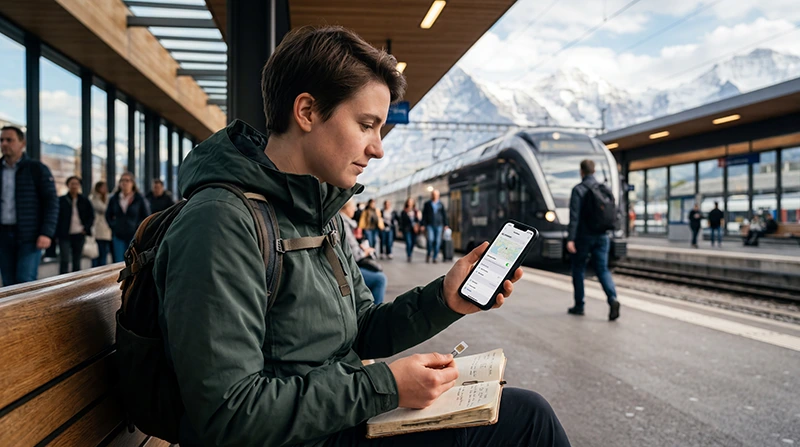

An eSIM is usually the better choice for Switzerland when a traveller wants mobile data ready without visiting a shop. A local SIM is more suitable when a Swiss telephone number or a domestic prepaid offer is essential.
The connection quality is not determined by whether the SIM is embedded or physical. It depends on the selected plan, authorised network, device, location and local coverage.
NoveSIM travel eSIMs are data-only. We do not provide a Swiss number, conventional calls or SMS; internet apps can still use the data connection.
Quick answer: Choose an eSIM for pre-travel installation and keeping the physical SIM slot free. Choose a local SIM for a Swiss number or when the phone lacks eSIM support. Compare registration, validity, data and hotspot terms before deciding.
Top Switzerland eSIMs

Switzerland eSIM
Fixed
1 GB, 7 days€ 2.202 GB, 15 days€ 3.083 GB, 30 days€ 4.40Unlimited
Unlimited, 1 day€ 2.64Unlimited, 3 days€ 5.72Unlimited, 5 days€ 9.25
Europe Extra eSIM
Fixed
1 GB, 7 days€ 2.202 GB, 15 days€ 3.523 GB, 30 days€ 4.40Unlimited
Unlimited, 1 day€ 2.64Unlimited, 3 days€ 5.28Unlimited, 5 days€ 8.81Europe+ eSIM
Fixed
1 GB, 7 days€ 2.642 GB, 15 days€ 3.963 GB, 30 days€ 5.28Unlimited
Unlimited, 1 day€ 2.64Unlimited, 3 days€ 6.16Unlimited, 5 days€ 10.13eSIM and local SIM compared
| Question | Travel eSIM | Local SIM |
|---|---|---|
| When can it be prepared? | Usually before departure | Normally after purchase or delivery |
| Physical slot | Remains available | May replace the home SIM |
| Swiss number | Not included with NoveSIM | May be included |
| Identity checks | Depend on provider and product | Domestic registration may apply |
| Compatibility | eSIM-capable unlocked device | Unlocked device with matching SIM size |
Choose an eSIM when arrival-day data matters
An eSIM avoids searching for a shop after landing and allows the physical home SIM to stay in place. Check the exact device on the compatible-device list, then compare current Switzerland eSIM plans by validity, allowance, hotspot rules and coverage.
Dual SIM can keep the home number available for verification messages, but it does not make home-line roaming free. Select the eSIM for mobile data, disable automatic data switching and keep Data Roaming off on the primary line.
Choose a local SIM when the number is the deciding factor
A local prepaid SIM may suit a longer stay or a traveller who needs ordinary Swiss calls and SMS. Account for shop time, identification requirements, activation and the need to store the home SIM safely. Compare the options in the Switzerland SIM card guide.
Do both options use the same networks?
Not necessarily. A travel eSIM connects only through partners authorised for its plan, while a domestic SIM uses its issuing operator and permitted roaming arrangements. Consult the current product information. The Swiss network guide explains how location and terrain affect reception.
Install without losing access to the home line
- Confirm that the phone is unlocked.
- Install the eSIM on private Wi-Fi or insert the local SIM according to its instructions.
- Label both lines.
- Select the intended line for mobile data.
- Review default voice and message settings separately.
- Test data without deleting either profile.
If an eSIM does not connect, use the safe Switzerland troubleshooting sequence. Never delete an installed eSIM unless NoveSIM Support instructs you to do so.
Related Articles
FAQ
Is an eSIM better than a SIM card in Switzerland?
It is usually more convenient for pre-travel setup, while a local SIM is preferable when a Swiss number is required.
Does eSIM have weaker coverage than a physical SIM?
No. Coverage depends on the plan’s authorised network, device, location and conditions—not the SIM format.
Can I keep my normal number with an eSIM?
Usually yes on a Dual-SIM phone, but calls and SMS on the home line remain subject to its carrier’s charges.
Should I remove my physical SIM?
Usually not. Label both lines, select the travel eSIM for data and protect the home line from roaming.
Final Recommendation
Choose an eSIM for fast preparation and arrival-day data, or a local SIM when a Swiss number is genuinely necessary.
Compare complete cost, registration, validity, hotspot terms and the authorised network rather than assuming one SIM format is faster.
Configure Dual SIM deliberately and keep the installed eSIM in place during troubleshooting.