


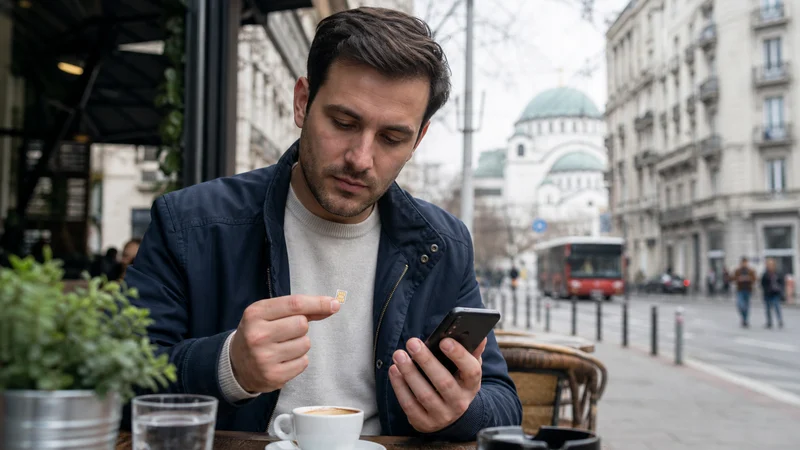

A travel eSIM is usually the simpler choice for a short, data-focused visit to Serbia, while a local SIM can be more suitable for a longer stay that genuinely requires a Serbian phone number. The correct option depends on more than the advertised data allowance.
Travellers should compare setup time, device compatibility, domestic voice requirements and the ability to keep their usual SIM active. The physical or digital format alone does not determine coverage quality.
NoveSIM travel eSIMs provide data only. We do not provide a Serbian number, conventional calls or SMS; internet calling and messaging apps work through mobile data.
Quick answer: Choose a Serbia travel eSIM when you have an unlocked compatible phone and want data ready without visiting a shop. Choose a local prepaid SIM when a Serbian number or domestic mobile service is important enough to justify in-person purchase and the operator’s current activation process.
Top Serbia eSIMs

Serbia eSIM
Fixed
1 GB, 7 days€ 3.112 GB, 15 days€ 4.883 GB, 30 days€ 6.21Unlimited
Unlimited, 1 day€ 3.11Unlimited, 3 days€ 7.54Unlimited, 5 days€ 12.42
Balkans eSIM
Fixed
1 GB, 7 days€ 4.442 GB, 15 days€ 7.103 GB, 30 days€ 9.32Unlimited
Unlimited, 1 day€ 4.88Unlimited, 3 days€ 11.09Unlimited, 5 days€ 17.30Europe Extra eSIM
Fixed
1 GB, 7 days€ 2.222 GB, 15 days€ 3.553 GB, 30 days€ 4.44Unlimited
Unlimited, 1 day€ 2.66Unlimited, 3 days€ 5.32Unlimited, 5 days€ 8.87Europe+ eSIM
Fixed
1 GB, 7 days€ 2.662 GB, 15 days€ 3.993 GB, 30 days€ 5.32Unlimited
Unlimited, 1 day€ 2.66Unlimited, 3 days€ 6.21Unlimited, 5 days€ 10.20Local Serbian SIM and Travel eSIM Compared
| Question | Travel eSIM | Local SIM |
|---|---|---|
| Can it be prepared before arrival? | Usually, when the plan permits advance installation | Normally purchased after arrival |
| Serbian number | No with NoveSIM data-only plans | May be included with the local offer |
| Physical SIM slot | Remains available | Used by the local card unless the phone has another slot |
| Retail activation | Digital order and device installation | Current retailer and operator process applies |
| Best fit | Short visits and data-first travel | Longer stays needing domestic services |
When an eSIM Is the Practical Choice
An eSIM avoids spending arrival time finding a shop, comparing unfamiliar tariffs and swapping a tiny card. It can leave the home SIM installed, which is useful when the traveller still needs banking codes or messages on the original number.
The phone must support eSIM and be network-unlocked. Confirm the exact model and regional variant before purchase, then follow the Serbia eSIM installation guide on dependable WiFi.
When a Local SIM Makes More Sense
A local prepaid product may suit a student, resident or long-stay visitor who needs a Serbian number for domestic calls or local accounts. The customer must follow the operator’s current registration, activation and top-up rules.
Do not assume that a large domestic allowance is automatically better value for a weekend. Include the time needed to reach a retailer, complete setup and understand validity or renewal conditions. The Serbia SIM-card guide explains the local operator decision in more detail.
Does a Local SIM Have Better Coverage?
Not simply because it is physical. Coverage depends on the network used, the exact location, handset radio support and congestion. A travel eSIM connects through the partner network or networks included with its particular plan.
Check the plan rather than making assumptions from the SIM format. The distinction between mts, Yettel, A1 and travel-eSIM access is covered in the Serbia mobile-networks guide.
Keeping Your Main Number
Many compatible phones can keep the primary SIM active while the eSIM handles mobile data. Turn off Data Roaming and automatic data switching for the home line unless you deliberately intend to use the home provider abroad.
Incoming calls or SMS on the primary line may still create roaming charges. A data-only eSIM does not convert those services into free calls; WhatsApp, FaceTime, Signal and similar apps use the travel data separately.
How to Prepare a Serbia Travel eSIM
- Confirm that the exact phone supports eSIM and is unlocked.
- Compare plan validity, allowance, coverage notes and hotspot conditions.
- Install the profile over reliable WiFi when advance installation is permitted.
- Label the home and Serbia lines clearly.
- After arrival, select the Serbia eSIM for mobile data.
- Enable Data Roaming for the travel line and block data switching.
- Test a map and webpage with WiFi turned off.
If the profile does not connect, use the Serbia activation checks and keep the installed eSIM on the phone while troubleshooting.
Trip Length Changes the Decision
For a few days, fast preparation and immediate navigation can matter more than the lowest theoretical cost per gigabyte. For several months, a domestic number and repeat local top-ups can become more useful.
Review the actual itinerary and tasks: maps, bookings and messages need a different arrangement from local employment calls or a permanent Serbian account. For a concise plan-selection workflow, see mobile data for a short Serbia trip.
Related Articles
- Best SIM Card for Serbia
- Serbia eSIM vs Pocket WiFi
- Mobile Data in Serbia
- Mobile Networks in Serbia
- Install an eSIM for Serbia
FAQ
Is an eSIM better than a local SIM for Serbia?
It is usually more convenient for a short data-focused trip. A local SIM may be better for a long stay that requires a Serbian number.
Does a NoveSIM Serbia eSIM include a local number?
No. NoveSIM travel plans are data-only and do not provide conventional calls, SMS or a Serbian number.
Can I keep my normal SIM active with a Serbia eSIM?
Often yes on a compatible dual-SIM phone. Use the eSIM for data and prevent unintended roaming data on the home line.
Is a physical SIM always faster than an eSIM?
No. Speed depends on the plan, available network, device, location and congestion rather than whether the profile is physical or digital.
Final Recommendation
For the local SIM vs eSIM decision in Serbia, start with the need for a local number and the length of the stay.
Use a travel eSIM for convenient data on a compatible unlocked phone; consider a local SIM when domestic services justify the retail setup.
Whichever option you choose, verify the exact plan and keep essential routes and bookings available offline.