
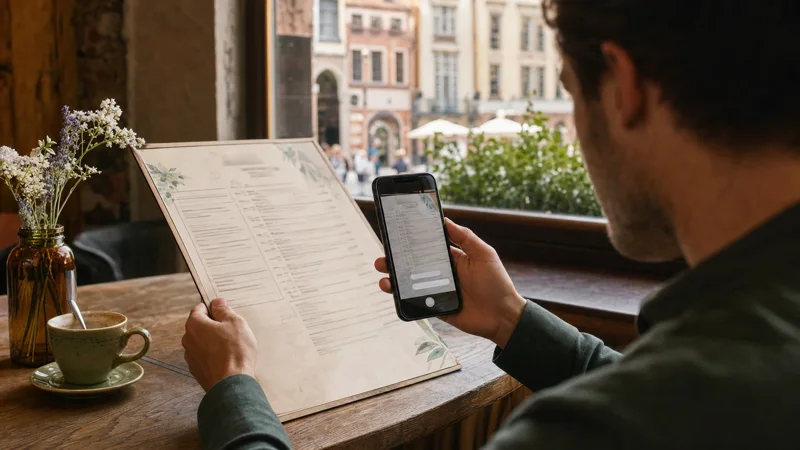

Travellers can get internet in Translation apps in Poland through a Poland eSIM, registered local SIM, suitable home roaming or trusted WiFi. A preinstalled eSIM can provide mobile data after arrival without replacing the physical home SIM.
Independent connectivity supports reading signs, checking menus, preparing phrases and resolving simple travel questions. WiFi helps at selected accommodation and venues but does not follow a moving itinerary.
NoveSIM travel plans are data-only and normally exclude a Polish number, traditional calls and SMS. Internet messaging and calls work through mobile data.
Quick answer: Prepare a Poland eSIM and save downloaded language packs, essential phrases, accommodation address and emergency information before travel; use trusted WiFi for large downloads and mobile data for movement between fixed connections.
Top Poland eSIMs
Prepare translation tools before arriving
Install the chosen application from its official store listing, download Polish language support when the application offers it and test typed, voice and camera translation before travel. Downloading language files on trusted WiFi saves cellular data and creates a fallback where reception is weak.
Use translation carefully
| Use | Practical check |
|---|---|
| Signs and menus | Frame clear text and review the whole context |
| Conversation | Use short sentences and confirm the answer |
| Addresses | Keep the original Polish spelling visible |
| Medical or legal issue | Use a qualified interpreter or official help |
Camera and voice features may send information to a remote service. Avoid scanning passports, bank details or confidential documents without understanding the application’s privacy controls.
Use internet throughout Translation apps in Poland
A visitor may move through stations, restaurants, hotels, shops, museums and smaller destinations across Poland. Mobile data provides continuity between accommodation, transport and attractions, subject to the selected plan and local partner coverage.
Save downloaded language packs, essential phrases, accommodation address and emergency information locally. Use live data for current route, platform, weather or booking changes rather than as the only copy of essential information.
Thick buildings, underground locations, rural routes, congestion and application download requirements can create short variations. Test outdoors before changing settings and keep a power bank available.
Balance convenience, privacy and safety
Verify venue WiFi with staff, avoid sensitive account changes on an open network and forget it afterward. Mobile data is normally the more independent option between fixed connections.
Automated translation can misunderstand context, names or formal instructions; confirm safety-critical, medical, legal and ticketing information with a qualified person.
Main internet options for Translation apps in Poland
| Option | Best use | Main check |
|---|---|---|
| Poland eSIM | Immediate travel data | Compatibility, coverage and validity |
| Local prepaid SIM | Longer stay or local number | Registration and active bundle |
| Home roaming | Suitable included tariff | Fair use and all charges |
| Trusted WiFi | Large downloads at fixed venues | Security and limited reach |
The Poland eSIM product page shows current travel plans. Read the NoveSIM setup overview and compare the best ways to get internet in Poland before departure.
Coverage, 4G and 5G
No network performs identically in every building, valley, beach, forest or hour. Results depend on partner access, device bands, plan, terrain, indoor position, weather and congestion.
4G/LTE is sufficient for routine tourist tasks. 5G availability depends on the device, plan, partner network and location; stable LTE can be more useful than intermittent 5G. The mobile data in Poland guide explains the wider context.
How much data to prepare
| Use pattern | Practical starting range |
|---|---|
| Light weekend | 1–2 GB |
| Three to five days | 2–3 GB |
| One moderate week | 3–5 GB |
| Video or hotspot | 10 GB or more |
| Remote work | Estimate meetings and uploads separately |
These are planning ranges, not guarantees. Compare current allowances in the best eSIM for Poland guide.
Arrival and everyday setup
- Install on trusted WiFi before travel.
- Save the accommodation and first route offline.
- Enable the Poland line after arrival.
- Choose it for cellular data.
- Apply its required roaming setting.
- Keep home-line roaming and automatic switching off.
- Test with WiFi disabled.
Hotspot, calls and messaging
Hotspot can work when the plan and device permit tethering, but laptop updates and video meetings consume data and battery quickly. Use a strong password and disconnect finished clients.
A data-only eSIM does not change an existing messaging account automatically. Home-line calls and SMS remain subject to the home provider’s tariff even when the Poland line carries data.
Troubleshoot the connection
- Turn WiFi off for the test.
- Confirm the Poland profile is enabled and selected for data.
- Check roaming, validity and allowance.
- Toggle Airplane Mode once and restart.
- Leave network selection automatic.
- Test in an open area before changing the APN.
- Contact support before deleting the profile.
Use the NoveSIM FAQ and setup overview for supported guidance.
Save data and battery
- Download maps, tickets and route details on trusted WiFi.
- Pause cloud backup and automatic updates.
- Disable video autoplay.
- Monitor per-app cellular use.
- Forget public WiFi after use.
- Keep activation credentials private.
- Carry a charged power bank.
Prepare before departure
Complete compatibility and installation checks while there is trusted WiFi, enough time and access to another screen. Check the exact device model rather than only the product family, because regional variants can differ. Carrier unlock and eSIM capability are separate requirements.
Read the plan’s activation and validity instructions before scanning. Installation does not always start validity, but the rule depends on the product. Label the new line Poland, store the order reference privately and never share a QR code publicly.
Download the relevant map area, accommodation address, booking confirmation and first route. GPS can still locate the phone without mobile data when the map is stored locally, although live traffic, new searches and current transport changes require a connection.
Verify the line after arrival
Change one setting at a time: enable the profile, choose it for cellular data, apply its required roaming setting and allow automatic partner-network registration. Keep the home line’s data roaming and automatic switching disabled.
Test a simple webpage, a map route and a data-based message with WiFi off. Then review cellular statistics or the active-line indicator. This proves the full data path more reliably than signal bars, which can belong to a line that is not carrying internet traffic.
If registration takes time, move to an open public area before changing advanced settings. Toggle Airplane Mode once, restart the phone and compare the APN with the supplied value. Do not copy settings from a domestic operator unless they belong to the selected product.
Plan for companions and several devices
A hotspot can connect a companion or laptop for a short task when the plan allows tethering. It also increases battery consumption and makes everyone dependent on the host phone’s allowance, location and connection. Use a strong password and disconnect unknown or finished clients.
Separate plans provide more independence when travellers split up. Regardless of the number of connections, every person should know the accommodation address and a meeting point offline. This protects the group if a phone is lost, discharged or temporarily without service.
Protect privacy and account access
Keep file sharing and automatic public-WiFi joining off. Avoid password resets, financial transactions and confidential work on an unverified connection. Use official support channels and share screenshots of settings only after removing personal order or account information.
Dual SIM makes it possible to retain the home number for an expected verification message, but incoming and outgoing calls, SMS and voicemail follow the home provider’s tariff. Disabling data roaming does not make every other home-line service free.
Keep service through the return journey
Arrival and departure are both connectivity days. Check the remaining allowance and validity the evening before returning, save the boarding pass or rail ticket, and download the route to the correct airport or station.
Keep the travel profile installed until the journey is complete. Switch back to the home data line only when its normal tariff is appropriate. Deleting the eSIM early provides no advantage and can prevent later troubleshooting or reuse.
Related Articles
FAQ
What is the easiest internet option for a short Translation apps in Poland trip?
A preinstalled eSIM is usually the most direct option for a compatible unlocked phone because it avoids a physical SIM swap and can be prepared before departure.
Will the phone have service everywhere?
No provider can guarantee identical service everywhere. Terrain, indoor position, device, partner network, congestion and local conditions affect reception.
Do travel eSIMs require data roaming?
They commonly require roaming on the eSIM line. Keep data roaming off on the home line unless its use is intentional.
Can I rely only on public WiFi?
WiFi helps at selected venues but does not provide continuous coverage. Keep offline essentials and an independent mobile option.
Should I delete an eSIM that does not connect?
No. Check supported settings and contact support first because an activated profile may not be reinstallable.
Final Recommendation
Prepare a Poland eSIM and save downloaded language packs, essential phrases, accommodation address and emergency information before travel; use trusted WiFi for large downloads and mobile data for movement between fixed connections.
Prepare offline essentials, monitor data and battery, and verify current transport, route and plan information before the journey.
Use connectivity as a practical travel tool while keeping navigation and safety-critical details available offline.


