


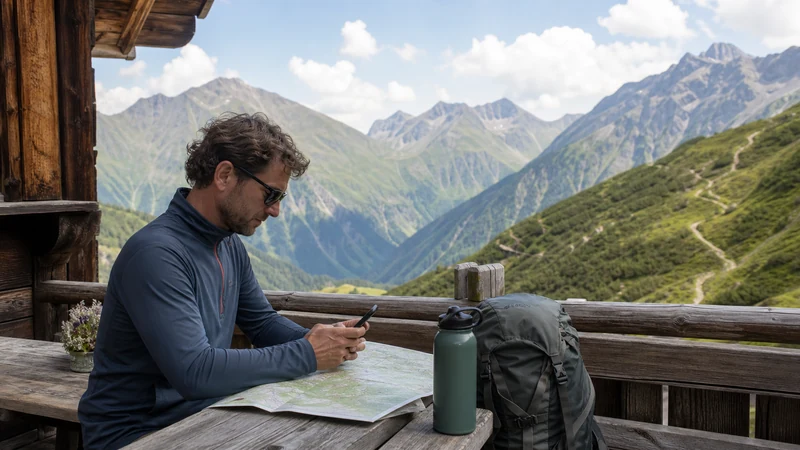

Internet in the Austrian Alps is available in many towns, populated valleys, resorts and transport corridors, but coverage can weaken or disappear in tunnels, deep valleys, remote roads and high terrain. A signal in the village does not guarantee service on the route above it.
Mobile data can support weather checks, maps and accommodation contact, but it must not be treated as an emergency guarantee. Prepare navigation and safety resources that work without a network.
NoveSIM travel eSIMs are data-only and do not provide an Austrian number, traditional calls or SMS. Network and 5G access depend on the plan, device and location.
Quick answer: Choose a plan whose supported Austrian network matches the valleys and resorts on your itinerary, install it before departure and download complete maps, forecasts and booking details. Expect gaps in remote or shielded terrain and carry the independent safety equipment appropriate for the activity.
Top Austria eSIMs

Austria eSIM
Fixed
1 GB, 7 days2.00$2 GB, 15 days3.50$3 GB, 30 days4.50$Unlimited
Unlimited, 1 day2.50$Unlimited, 3 days6.00$Unlimited, 5 days9.50$
Europe Extra eSIM
Fixed
1 GB, 7 days2.50$2 GB, 15 days4.00$3 GB, 30 days5.00$Unlimited
Unlimited, 1 day3.00$Unlimited, 3 days6.00$Unlimited, 5 days10.00$Europe+ eSIM
Fixed
1 GB, 7 days3.00$2 GB, 15 days4.50$3 GB, 30 days6.00$Unlimited
Unlimited, 1 day3.00$Unlimited, 3 days7.00$Unlimited, 5 days11.50$Europe Lite eSIM
Fixed
1 GB, 7 days2.50$2 GB, 15 days4.00$3 GB, 30 days5.00$Unlimited
Unlimited, 1 day3.00$Unlimited, 3 days6.00$Unlimited, 5 days10.00$Where can you expect internet in the Austrian Alps?
| Location | Planning expectation |
|---|---|
| Large resort or valley town | Mobile data and accommodation Wi-Fi are commonly available |
| Main road or railway | Useful service with possible tunnel and terrain gaps |
| Mountain hut | Facilities vary; confirm directly with the property |
| Remote trail or high pass | Intermittent or absent coverage is possible |
Why does mountain terrain change reception?
Radio service depends on a usable path between the phone and network infrastructure. Ridges, rock, forests and changes in elevation can block or weaken it. Indoor construction and heavy visitor demand can also affect resort performance.
Check the operator access included with the plan and consult the Austria network guide. Coverage maps are useful forecasts, not promises at a precise point.
What should you download before leaving coverage?
- The complete offline map area and planned route.
- Accommodation address, check-in instructions and telephone details.
- Transport tickets and timetables.
- Current weather and official warning information.
- Emergency guidance appropriate for the activity.
Do not rely on a screenshot of only one map segment. Keep sufficient battery power and a suitable power bank protected from cold.
Which mobile option is practical?
A travel eSIM is convenient for an unlocked compatible phone, while a local SIM may suit someone requiring an Austrian number. Pocket WiFi can serve a group but is useful only to people who remain near the router.
Compare the options in the Austria internet guide and calculate an allowance with the data-planning guide. Coverage matters more than a huge allowance where no network is available.
How should you troubleshoot in a mountain area?
Move to a safer open location or a populated valley before changing settings. Confirm the plan status, selected data line and required roaming. Use data.esim if manual NoveSIM APN entry is necessary.
Keep the installed eSIM and do not delete it unless NoveSIM support instructs you to do so. The Austria troubleshooting guide helps distinguish a configuration fault from a local coverage gap.
Related Articles
- Best eSIM for Austria
- Austria Road-Trip Internet
- Austria eSIM vs Pocket WiFi
- Install an Austria eSIM
FAQ
Is there mobile coverage throughout the Austrian Alps?
No. Service is often useful in populated valleys and resorts but may disappear in remote or shielded terrain.
Can a travel eSIM improve mountain signal?
It provides access only to its supported partner network. It cannot create coverage where that network has no usable signal.
Is a phone enough for Alpine emergencies?
No. Do not depend on mobile service as an emergency guarantee; carry the navigation and safety resources appropriate for the trip.
Does cold weather affect the connection?
Cold can reduce battery performance, which may end access even where signal exists. Keep the phone protected and charged.
Final Recommendation
Plan internet in the Austrian Alps around the exact valleys, resorts and transport corridors rather than national coverage alone.
Download complete routes and essential information before leaving dependable service.
Use mobile data as a useful travel tool, not as a replacement for offline navigation or proper mountain safety preparation.