


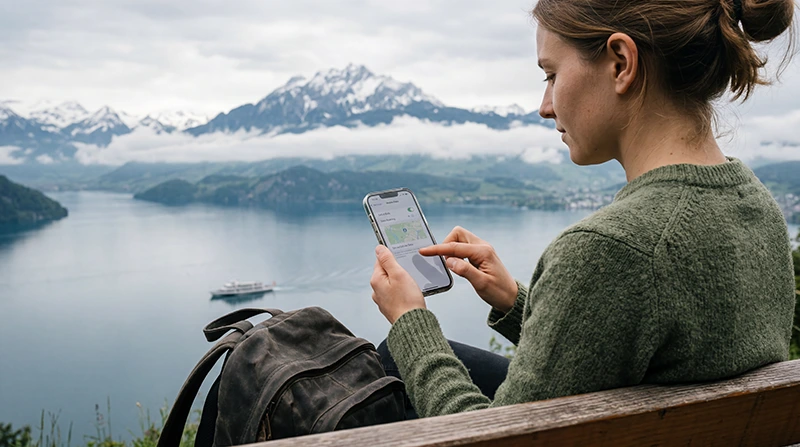

Reliable internet is essential when traveling in Switzerland, especially for train travel, navigation, hotel bookings, messaging apps, remote work, and staying connected across cities and mountain regions.
Switzerland is famous for premium tourism, alpine railways, ski resorts, scenic villages, and excellent infrastructure — including some of Europe’s strongest mobile networks.
Quick answer: many travelers now use Switzerland eSIMs because they provide instant activation, reliable 4G and 5G connectivity, and help avoid expensive roaming charges.
Top Switzerland eSIMs

Switzerland eSIM
Fixed
1 GB, 7 days€ 2.162 GB, 15 days€ 3.033 GB, 30 days€ 4.33Unlimited
Unlimited, 1 day€ 2.60Unlimited, 3 days€ 5.62Unlimited, 5 days€ 9.09
Europe Extra eSIM
Fixed
1 GB, 7 days€ 2.162 GB, 15 days€ 3.463 GB, 30 days€ 4.33Unlimited
Unlimited, 1 day€ 2.60Unlimited, 3 days€ 5.19Unlimited, 5 days€ 8.65Europe+ eSIM
Fixed
1 GB, 7 days€ 2.602 GB, 15 days€ 3.893 GB, 30 days€ 5.19Unlimited
Unlimited, 1 day€ 2.60Unlimited, 3 days€ 6.06Unlimited, 5 days€ 9.95What Are the Main Internet Options in Switzerland?
Travelers usually choose between:
- Carrier roaming
- Local Swiss SIM cards
- Travel eSIMs
- Public WiFi
- Pocket WiFi devices
Why Roaming in Switzerland Can Be Expensive
Switzerland is not officially part of the EU roaming framework.
Because of this, many travelers may still face roaming charges depending on their mobile provider.
Many tourists specifically use eSIMs or local SIM cards to avoid:
- High roaming fees
- Unexpected mobile bills
- Limited roaming allowances
- Slow roaming speeds
Read our Switzerland roaming guide
Why Many Travelers Prefer eSIMs
Many tourists now prefer eSIMs because they provide:
- Instant online activation
- No airport SIM queues
- Easy QR-code setup
- No physical SIM swapping
- Immediate internet access after landing
- Dual SIM functionality
Top Switzerland eSIMs
Switzerland eSIM
Fixed
1 GB, 7 days€ 2.162 GB, 15 days€ 3.033 GB, 30 days€ 4.33Unlimited
Unlimited, 1 day€ 2.60Unlimited, 3 days€ 5.62Unlimited, 5 days€ 9.09Europe Extra eSIM
Fixed
1 GB, 7 days€ 2.162 GB, 15 days€ 3.463 GB, 30 days€ 4.33Unlimited
Unlimited, 1 day€ 2.60Unlimited, 3 days€ 5.19Unlimited, 5 days€ 8.65Europe+ eSIM
Fixed
1 GB, 7 days€ 2.602 GB, 15 days€ 3.893 GB, 30 days€ 5.19Unlimited
Unlimited, 1 day€ 2.60Unlimited, 3 days€ 6.06Unlimited, 5 days€ 9.95How to Get Internet with an eSIM
- Purchase the Switzerland eSIM plan.
- Receive the QR code by email.
- Connect your phone to WiFi.
- Open Mobile Data or SIM settings.
- Select Add eSIM.
- Scan the QR code.
- Follow the installation instructions.
- Select the eSIM for Mobile Data.
- Enable Data Roaming if required.
How to Get Internet with a Local SIM Card
Travelers can also buy physical SIM cards from Swiss telecom providers.
Popular providers include:
- Swisscom
- Sunrise
- Salt
SIM cards are usually available at:
- Zurich Airport
- Geneva Airport
- Train stations
- Telecom stores
- Electronics stores
Passport registration may be required for physical SIM cards.
Which Swiss Network Is Best?
Swisscom
Swisscom is often considered one of the strongest networks in Switzerland.
- Excellent nationwide coverage
- Strong mountain connectivity
- Reliable train coverage
- Fast urban speeds
- Strong 5G rollout
Sunrise
Sunrise provides strong tourist-area coverage throughout Switzerland.
- Reliable city performance
- Strong transport connectivity
- Good tourist-area speeds
Salt
Salt is another popular Swiss mobile network used by prepaid providers and tourists.
- Good urban coverage
- Competitive pricing
- 5G support
How Good Is Mobile Internet in Switzerland?
Switzerland generally offers some of Europe’s strongest mobile internet infrastructure.
Coverage is usually reliable across:
- Zurich
- Geneva
- Lucerne
- Interlaken
- Zermatt
- Train routes
- Mountain tourist regions
- Airports
Switzerland consistently ranks among Europe’s strongest countries for mobile network quality and speeds.
Can Travelers Use Internet on Swiss Trains?
Yes. Many travelers use mobile internet while traveling on Switzerland’s scenic train routes.
Mobile internet is often more reliable than onboard train WiFi.
Popular routes include:
- Glacier Express
- Bernina Express
- GoldenPass Line
- Intercity routes
What About Public WiFi?
Public WiFi is widely available in Switzerland, especially in:
- Hotels
- Cafés
- Restaurants
- Airports
- Train stations
- Shopping centers
However, many travelers still prefer mobile internet because it provides:
- Constant connectivity
- Better security
- Navigation access outdoors
- Reliable transport connectivity
How Much Data Do Travelers Usually Need?
| Usage type | Recommended data |
|---|---|
| Light travel usage | 5GB to 10GB |
| Maps and social media | 10GB to 20GB |
| Remote work and hotspot | 20GB+ |
| Heavy daily usage | Unlimited-style plans |
Can Travelers Use Hotspot?
Yes. Many travelers use hotspot functionality to connect:
- Laptops
- Tablets
- Secondary phones
- Remote work devices
Heavy hotspot users often prefer larger or unlimited-style plans.
Can Travelers Keep Their Original SIM Active?
Yes. Most modern smartphones support dual SIM functionality using a physical SIM together with an eSIM.
This allows travelers to:
- Keep their regular number active
- Receive SMS verification codes
- Use Swiss mobile data through eSIM
- Continue using banking apps
- Stay reachable while traveling
What Is the NoveSIM APN?
Most NoveSIM eSIMs automatically configure APN settings.
If internet does not work correctly, travelers may manually enter:
| APN | data.esim |
| Username | Leave empty |
| Password | Leave empty |
Tips for Getting Internet in Switzerland
- Install the eSIM before departure
- Download offline maps
- Save train tickets offline
- Carry a power bank
- Monitor roaming settings
- Use WiFi for large downloads
Related Switzerland Travel Internet Guides
- Switzerland eSIM
- Best eSIM for Switzerland
- Buy eSIM Switzerland
- Mobile Internet Switzerland
- Switzerland Roaming Charges
- Local SIM vs eSIM Switzerland
FAQ: How to Get Internet in Switzerland
What is the easiest way to get internet in Switzerland?
Many travelers now use eSIMs because they provide instant activation and avoid physical SIM card swapping.
Is roaming expensive in Switzerland?
Yes. Switzerland is outside the EU roaming framework for many providers, which may result in additional roaming charges.
Can tourists buy local SIM cards in Switzerland?
Yes. SIM cards are available at airports, telecom stores, train stations, and electronics shops.
Which Swiss network is strongest?
Many travelers consider Swisscom one of the strongest networks because of its nationwide and mountain coverage.
Can travelers use hotspot with Switzerland eSIMs?
Yes. Many travelers use hotspot functionality for laptops and remote work devices.
What is the NoveSIM APN?
The correct NoveSIM APN is data.esim.
Final Recommendation
Reliable internet is essential for modern travel in Switzerland, especially for train travel, navigation, mountain tourism, hotel bookings, and staying connected throughout the trip.
For the smoothest experience, many travelers now install a Switzerland eSIM before departure so they can use maps, train apps, WhatsApp, hotspot sharing, and mobile internet immediately after arriving.