
 Български

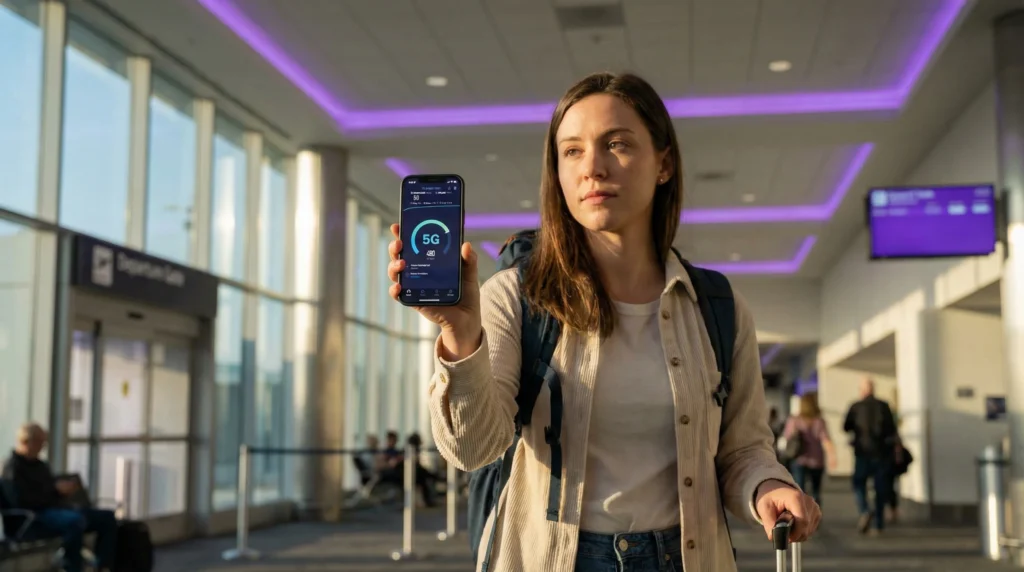
When choosing a travel eSIM, speed matters more than most travelers expect.
Slow internet abroad can cause:
- Maps not loading
- Video calls freezing
- Slow uploads
- Buffering
So many travelers ask: Which eSIM is the fastest?
The real answer: Speed depends more on network priority and carrier access than the eSIM provider itself.
This guide explains what actually determines eSIM speed and how to choose the fastest option for your trip.
What affects eSIM speed?
Speed depends on 5 technical factors:
- 1. Local carrier network quality
- 2. Network priority level
- 3. Supported frequency bands
- 4. Signal strength
- 5. Congestion levels
Not all plans have the same priority on networks.
Priority levels explained
Mobile networks assign priority tiers.
| Priority Level | Speed |
| Premium | fastest |
| Standard | moderate |
| Low priority | slow during congestion |
Higher-priority plans usually cost more but deliver faster speeds.
Fastest type of eSIM plans
- Multi-network plans → fastest overall
They can switch between carriers automatically and connect to the strongest signal.
Best for:
- Travelers
- Remote workers
- Rural travel
- Local network plans → fastest in cities
If you stay in one country, local plans can be extremely fast because they use native carrier routing.
- Global plans → balanced speed
Global plans may route traffic internationally, which can slightly increase latency but still provide stable speeds.
Speed comparison by scenario
| Scenario | Fastest Choice |
| City travel | Local network plan |
| Multi-country trip | Multi-network plan |
| Remote regions | Multi-network plan |
| Business travel | Premium routing plan |
| Streaming | High data + premium priority |
Biggest myth about eSIM speed
- Myth -> eSIM is slower than physical SIM.
- Reality -> Speed depends on network access and priority, not SIM type.
A physical SIM and eSIM on the same network perform identically.
How to choose the fastest eSIM (quick method)
Follow this order:
- 1. Choose destination
- 2. Check available networks
- 3. Pick plan with multiple carriers
- 4. Avoid lowest-tier pricing
This usually guarantees fastest connection.
Signs your eSIM speed is limited
You may be on a low-priority connection if:
- Speeds drop during busy hours
- Video buffers frequently
- Downloads slow in cities
- Speed improves after network switch
Fix guide: 👉 https://novesim.com/esim-not-working/
Speed tips while traveling
To maximize speed abroad:
- Switch networks manually
- Stay near windows indoors
- Avoid congested hotspots
- Restart phone if speed drops
These small adjustments can improve performance instantly.
Real traveler example
- Traveler in Tokyo using standard plan → slow speeds in crowded area.
- Switches network → speed doubles.
- Reason: better signal + less congestion.
Fastest eSIM decision shortcut
If speed is your priority:
- Choose multi-network plan
- Choose mid or premium tier
- Avoid cheapest plans
Final verdict
The fastest eSIM is not determined by brand.
It’s determined by:
- Network access
- Priority level
- Coverage quality
Choose based on performance — not price. Check high-speed plans for your destination: 👉 https://novesim.com/destinations/
Frequently asked questions
Which eSIM is the fastest?
The fastest eSIM is one that connects to strong local networks with high priority access.
Is eSIM slower than physical SIM?
No. Speed depends on network quality and priority level, not SIM type.
How can I make my eSIM faster?
Switch networks manually, restart your device, and connect to the strongest carrier available.
Do cheaper eSIM plans have slower speeds
Often yes. Lower-cost plans may have lower priority on networks, which can reduce speeds.