


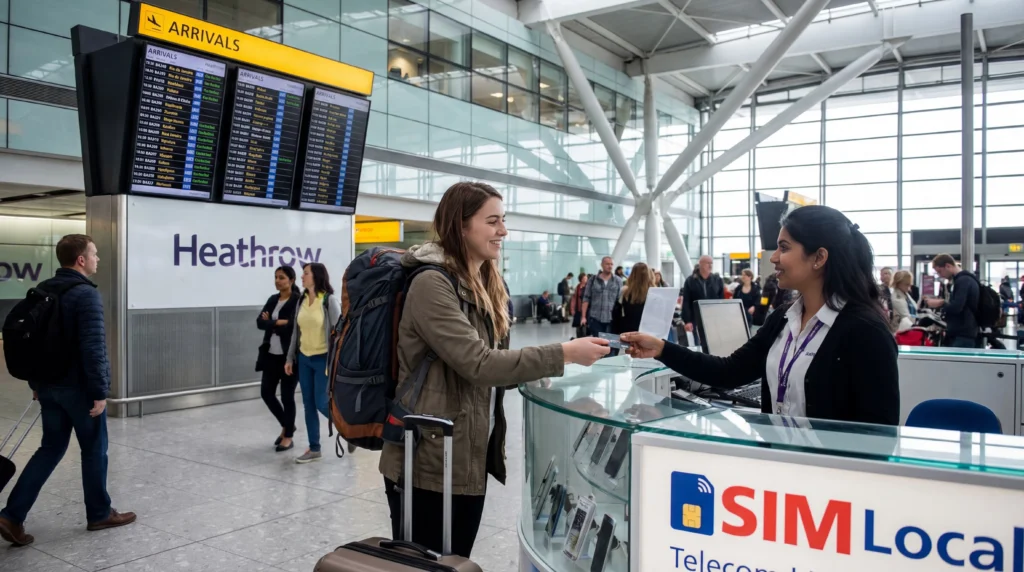

The best SIM card for a UK trip depends on whether you need a British phone number or simply want mobile data. A local prepaid SIM can include UK calls, texts and a local number. A travel eSIM is usually faster to arrange when data for maps, messaging and bookings is the priority.
Quick answer: Choose a UK prepaid SIM if you specifically need a local number or conventional calls and SMS. Choose a travel eSIM if you mainly need data and want to connect without visiting a shop after arrival. In either case, check coverage for your route, plan validity, hotspot rules and whether the offer includes roaming outside the UK.
Top United Kingdom eSIMs

United Kingdom eSIM
Fixed
1 GB, 7 days€ 2.202 GB, 15 days€ 3.083 GB, 30 days€ 4.40Unlimited
Unlimited, 1 day€ 2.64Unlimited, 3 days€ 5.72Unlimited, 5 days€ 9.25
Europe Extra eSIM
Fixed
1 GB, 7 days€ 2.202 GB, 15 days€ 3.523 GB, 30 days€ 4.40Unlimited
Unlimited, 1 day€ 2.64Unlimited, 3 days€ 5.28Unlimited, 5 days€ 8.81Europe+ eSIM
Fixed
1 GB, 7 days€ 2.642 GB, 15 days€ 3.963 GB, 30 days€ 5.28Unlimited
Unlimited, 1 day€ 2.64Unlimited, 3 days€ 6.16Unlimited, 5 days€ 10.13Which SIM option is best for a UK tourist?
There is no single winner for every visitor. Start by deciding what the connection must do:
- Data only: navigation, WhatsApp, email, tickets and bookings;
- UK number: local calls, carrier SMS or services that require a British number;
- Hotspot: sharing data with a laptop, tablet or another traveller;
- Multi-country travel: continued use in Ireland or continental Europe;
- Long stay: a larger allowance or a renewable local plan.
A short-term visitor who already uses internet calling and messaging normally does not need a UK number. A student, temporary worker or traveller coordinating frequently with local businesses may find a local prepaid number more useful.
UK prepaid SIM versus travel eSIM
A physical prepaid SIM is purchased from a mobile operator, supermarket, convenience store or phone retailer. You insert it into the phone, activate the plan and receive a UK number when the product includes one.
A travel eSIM is installed digitally. It leaves the physical SIM slot free and can be prepared before departure. NoveSIM travel eSIMs are data-only: we do not provide a UK number, conventional calls or carrier SMS.
| Need | UK prepaid SIM | Travel eSIM |
|---|---|---|
| Local UK number | Often included | Not included with NoveSIM data-only plans |
| Purchase before arrival | Sometimes | Yes |
| Physical SIM slot | Usually required | Not required |
| Calls and SMS | Depends on the bundle | Internet-based apps use mobile data |
| Setup time | Purchase and activation required | Install digitally on a compatible phone |
Where to buy a prepaid SIM in the UK
Prepaid SIMs are widely sold in city-centre phone shops, supermarkets and convenience stores. Buying in a staffed operator shop can be useful when you want help choosing a bundle or activating the line.
Airport availability is convenient but can be more limited. A vending machine or small retailer may stock only a few packages, and the staff may not provide detailed setup support. If you need connectivity immediately after landing, prepare an eSIM before departure or use airport Wi-Fi temporarily and buy a local SIM after reaching the city.
Travellers arriving in London can review the options in the Heathrow Airport internet guide.
Do tourists need identification to buy a UK SIM?
Ordinary prepaid SIM purchases in the UK are generally straightforward, but a seller can apply its own payment, age or account checks. Contract plans normally involve more information and may require a UK address, payment method or credit assessment.
Requirements can change by product and sales channel. Check the current terms before relying on a particular airport kiosk, online delivery service or monthly contract.
Choosing between UK mobile networks
UK offers are commonly sold on EE, O2, Vodafone and Three network coverage, as well as through many virtual operators that use one of those networks. Vodafone and Three formed VodafoneThree in 2025, but network integration is gradual and coverage can still differ by location and product.
Do not choose from a national headline alone. Check the places where you will actually stay and travel. Central London performance does not predict service on a rural road in Scotland, a coastal path in Wales or inside a thick-walled hotel.
Use an operator coverage checker for your accommodation and important routes. The UK network guide for tourists explains how to compare practical coverage without assuming that one network is strongest everywhere.
4G, 5G and phone compatibility
The UK’s main operators have completed their 3G switch-offs. A modern 4G- and VoLTE-compatible phone is therefore important, especially when using a local SIM for calls. An older imported handset may support some UK frequency bands but not others.
Before buying:
- confirm that the phone is carrier-unlocked;
- check that the exact model supports the required UK bands;
- verify eSIM support if choosing a digital plan;
- do not assume that a 5G phone will receive 5G on every plan or in every location.
How much data should you buy?
Maps, messaging and ordinary browsing use far less data than video streaming, cloud backup and hotspot work. Estimate the full trip rather than choosing a bundle from its name.
- Light use: maps, messages, email and occasional browsing;
- Regular use: social media, photo sharing and frequent route planning;
- Heavy use: video calls, streaming, cloud uploads or laptop tethering.
Download offline maps and media over Wi-Fi, and disable automatic photo backup on mobile data. For a more detailed estimate, use the UK travel data guide.
Check hotspot and fair-use rules
A large or “unlimited” allowance does not automatically guarantee unrestricted tethering at maximum speed. Some prepaid and travel plans apply fair-use limits, daily high-speed allowances or hotspot restrictions.
If you need to work from a laptop, confirm the tethering policy before purchase. Also keep essential files available offline because mobile service can slow down in busy venues, trains and crowded city centres.
UK SIM roaming in Europe after Brexit
Do not assume that a UK prepaid bundle includes roaming across the European Union at no extra cost. Roaming policies vary by provider and plan, and fair-use limits may apply even when European roaming is included.
If the trip continues outside the UK, compare:
- the exact country list;
- the roaming data allowance;
- daily fees or add-ons;
- the validity period;
- whether one regional eSIM would be simpler.
See the UK roaming charges guide before relying on a domestic prepaid bundle abroad.
Using a travel eSIM with your primary SIM
On a dual-SIM phone, select the travel eSIM for cellular data and keep the primary line enabled only if you need its existing number. Turn off data roaming on the primary line to reduce the risk of unintended home-carrier data charges.
Disable cellular data switching if you do not want the phone to fall back to the primary SIM. Calls and SMS on the home line can still incur roaming charges even when its data roaming is off.
Related Articles
- Best eSIM for UK travel
- Mobile internet in the UK
- Best UK mobile network for tourists
- UK eSIM troubleshooting
FAQ
What is the best SIM card for a tourist in the UK?
The best option matches your route and communication needs. Choose a prepaid SIM when you need a UK number. Choose a travel eSIM when data and quick digital setup matter more than conventional calls or SMS.
Can I buy a UK SIM card at the airport?
SIMs may be available from airport retailers or vending machines, but the choice and support can be limited. Compare the bundle carefully or arrange an eSIM before departure.
Does a UK prepaid SIM work in Europe?
It depends on the provider and package. European roaming, fair-use limits and daily charges vary, so check the current country list and roaming terms for the exact plan.
Do NoveSIM UK eSIMs include a British phone number?
No. NoveSIM travel eSIMs are data-only. They support internet access for apps but do not include a UK number, conventional calls or carrier SMS.
Final Recommendation
Buy a UK prepaid SIM when a British number and local calls are essential. For maps, messaging, bookings and general travel data, a compatible travel eSIM is usually the simpler option because it can be prepared before arrival. Whichever format you choose, verify coverage for the actual route, hotspot rules, data allowance and European roaming terms before paying.