


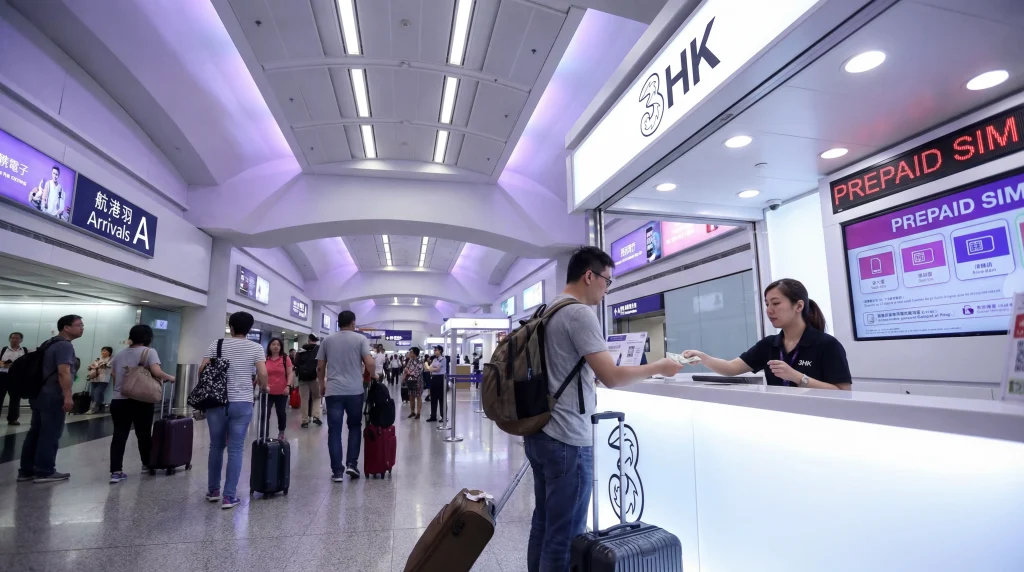

The best SIM card for Hong Kong is usually a local prepaid SIM when you need a Hong Kong number, or a travel eSIM when you only need data and want to prepare before departure. Both can support maps, transport apps and messaging, but the purchase and registration process is different.
A locally issued prepaid SIM must complete Hong Kong’s real-name registration process before activation. A travel eSIM avoids the airport shop and physical card swap, but a data-only plan cannot provide ordinary local calls or SMS.
NoveSIM travel eSIMs are data-only. We do not provide a Hong Kong telephone number or conventional calls and SMS. A compatible dual-SIM phone can keep the primary number active separately under the home carrier’s terms.
Quick answer: Buy a registered Hong Kong tourist SIM from an official seller if a local number is essential. Choose a travel eSIM if immediate data, advance setup and keeping the physical SIM slot free matter more. For a trip continuing to Macau or mainland China, confirm every destination in the plan rather than assuming Hong Kong coverage extends across the route.
Top Hong Kong (Special Administrative Region of China) eSIMs

Hong Kong (Special Administrative Region of China) eSIM
Fixed
1 GB, 7 days4.00$2 GB, 15 days6.50$3 GB, 30 days9.00$Unlimited
Unlimited, 1 day4.50$Unlimited, 3 days11.50$Unlimited, 5 days18.50$
Which option fits your Hong Kong trip?
| Traveller need | Better starting choice | Verify before purchase |
|---|---|---|
| Maps, MTR apps and messaging | Travel eSIM | Allowance, validity and phone compatibility |
| Hong Kong telephone number | Local prepaid SIM | Included calls/SMS and real-name registration |
| Connection immediately after landing | Pre-installed eSIM | Activation timing and supported network |
| Long stay with local services | Local SIM | Domestic bundle and renewal rules |
| Hong Kong, Macau and mainland China | Named regional plan | All destinations and any separate allowance |
What real-name registration means for tourists
Hong Kong requires locally issued prepaid SIM cards to be registered before use. Visitors can use an eligible travel document under the current process, but the registration must be completed with the traveller’s own identity details.
Use an operator’s official registration channel or ask for help in an authorised shop. Avoid cards advertised as already registered to another person. Keep the package and ICCID until the line is working in case the provider needs to check the activation.
Where should you buy a Hong Kong SIM?
An official operator shop is the safest choice when you need registration support, a local number or help selecting a domestic package. Airport counters are convenient but depend on the terminal, retailer and arrival time. Convenience stores may stock prepaid products without providing the same activation assistance.
If buying after landing, read the Hong Kong Airport SIM guide. If your priority is to walk off the aircraft with data already prepared, compare the current plans on the Hong Kong eSIM product page.
Which networks serve Hong Kong?
Hong Kong’s principal mobile network operators include HKT, Hutchison, China Mobile Hong Kong and SmarTone. Prepaid brands and plans can appear under names such as csl or 3 Hong Kong, so identify the actual operator and package rather than buying from the logo alone.
Urban coverage is only part of the decision. Check the accommodation interior, country-park route, beach or outlying island that matters to the trip. Reception can vary with terrain, building materials, congestion and the phone’s supported bands.
Will the same SIM work in Macau or mainland China?
Only if the product explicitly includes those destinations. A domestic Hong Kong allowance may stop at the border or require a roaming add-on. A regional label should be checked against the current destination list and terms.
For multi-stop travel, confirm whether one allowance is shared, how the validity starts and which networks are available in each place. This is more important than the advertised maximum amount of data.
Local number, WhatsApp and verification messages
A local prepaid SIM may include a Hong Kong number, but calls and SMS must still be included in the selected package. A travel eSIM supplies internet for WhatsApp, FaceTime and similar apps without changing the number already registered to them.
Keeping the primary SIM active can preserve access to ordinary verification messages. Select the travel eSIM for mobile data, disable data roaming on the primary line and turn off automatic data switching. Calls, voicemail and SMS on the home line may still create roaming charges.
How much data should you buy?
A short visit using maps, transport, messages and light browsing needs far less data than daily video, cloud uploads or laptop tethering. Check whether the plan permits hotspot use and whether an “unlimited” offer has a daily high-speed threshold.
Use the travel data guide to estimate the complete trip. Choose validity that covers the final travel day rather than simply buying the largest allowance.
Prepare the phone before departure
- Confirm that the exact phone variant is unlocked and eSIM-compatible if choosing an eSIM.
- Decide whether a Hong Kong number is genuinely required.
- Check the plan’s network, allowance, hotspot terms and activation rule.
- Save the accommodation address and first transport route offline.
- Install the eSIM on reliable Wi-Fi when the instructions permit it.
After arrival, select the eSIM for mobile data and enable data roaming on that line when required. Start with automatic network selection. For NoveSIM, use data.esim only if manual APN entry is needed, and do not delete the installed profile unless Support instructs you to do so.
Related Articles
- Hong Kong eSIM Plans
- Local SIM vs eSIM in Hong Kong
- SIM Card at Hong Kong Airport
- Best eSIM for Hong Kong Travel
- Check eSIM-Compatible Devices
FAQ
What is the best SIM card for Hong Kong tourists?
Choose a local prepaid SIM when a Hong Kong number is necessary. Choose a travel eSIM when you mainly need data and want to prepare before arrival.
Do tourists have to register a Hong Kong prepaid SIM?
Yes. Locally issued prepaid SIM cards require real-name registration before activation using the traveller’s eligible identity document.
Can one Hong Kong SIM cover Macau and mainland China?
Only when the specific plan lists those destinations. Check coverage, allowance and roaming terms for each place.
Does a NoveSIM Hong Kong eSIM include a local number?
No. NoveSIM travel eSIMs provide data without a Hong Kong number, conventional calls or SMS.
Final Recommendation
The best SIM card for Hong Kong is a properly registered local SIM when a domestic number is essential, and a travel eSIM when advance setup and mobile data are the priority.
Buy local service through an official channel, or verify eSIM compatibility, allowance, validity and partner network before departure.
For Macau or mainland China, check every destination explicitly and keep the first address and transport route offline.