


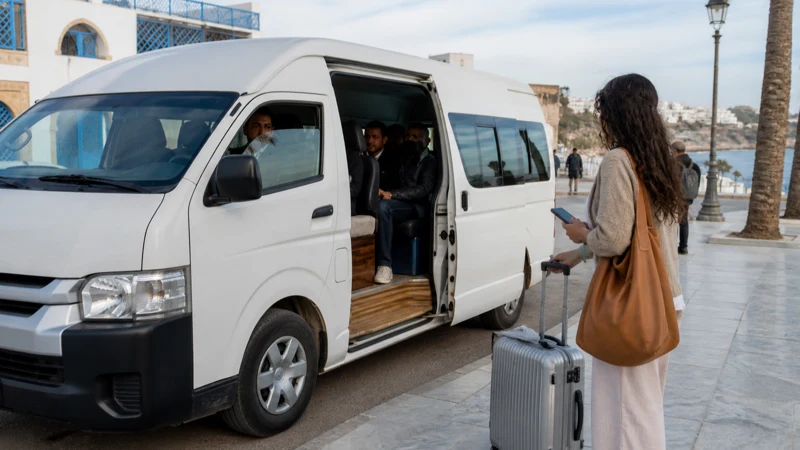

Mobile internet in the Tunis–Hammamet Route is easiest when travellers prepare an unlocked, eSIM-compatible phone, install the plan on reliable Wi-Fi and keep essential journey information offline.
This guide covers eSIM use, trusted Wi-Fi, data planning and realistic connectivity for road transfers, louage services, buses, occasional rail connections and local transfers.
NoveSIM Tunisia travel plans are data-only. They do not include a local telephone number, traditional calls or SMS, although messaging and internet-calling apps can use the data connection where service is available.
Quick answer: Choose a plan that explicitly includes Tunisia, install it before the journey, select it for mobile data after arrival and enable Data Roaming on the travel line.
Top Tunisia eSIMs

Tunisia eSIM
Fixed
1 GB, 7 days€ 2.602 GB, 15 days€ 3.893 GB, 30 days€ 5.19Unlimited
Unlimited, 1 day€ 3.46Unlimited, 3 days€ 8.65Unlimited, 5 days€ 13.41
Start with the Tunisia eSIM plans, review how NoveSIM works and confirm the exact handset on the eSIM-compatible devices page.
What Travellers Should Know about Mobile Internet in the Tunis–Hammamet Route
Tunis and Hammamet are two major Tunisian visitor hubs, but travelling between them is a common journey of roughly 65 kilometres that still crosses several serving areas. The connectivity plan should match whether the traveller uses a private transfer, louage, bus, rail connection or rental car.
Tunis and Hammamet city centres are distinct from the roads and transport stops between them. During a bus, louage, rail or road transfer, travellers should expect performance to change throughout the journey.
Save both city addresses, ticket details and the final local transfer before leaving. Before departure, download entertainment and work files first and avoid spending the mobile allowance on content that does not require a live connection.
Route-Specific Preparation
Choose the connection strategy by transport. Air passengers should prepare the arrival route while still online at the departure point. Train passengers benefit from offline media, a charged power bank and low expectations for uninterrupted calls. Drivers need a full offline map and planned service stops. In every case, preserve enough data for the final station or transport hub transfer.
Which Connection Options Work in the Tunis–Hammamet Route?
| Option | Best use | Important limitation |
|---|---|---|
| Travel eSIM | Arrival, maps, messages and movement | Requires a compatible unlocked device and selected-plan coverage |
| Local SIM | Longer stays that may require a local number | Purchase and registration conditions must be checked locally |
| Home roaming | Keeping an existing line active | Price and allowances depend on the home carrier |
| Hotel or café Wi-Fi | Large downloads and backup access | Quality and security vary by venue |
There is no universally best option. Compare the complete price, validity, data allowance, hotspot needs and whether a Tunisian number is actually necessary. The guide to choosing a travel eSIM explains the main decision factors, while the NoveSIM destinations page shows available country choices.
Check Compatibility and Phone Lock Status
An eSIM works only when the exact device variant supports eSIM and is not restricted to another carrier. Regional versions of the same model can differ, so verify the handset rather than relying on the brand name or release year.
- Open the phone’s mobile network or SIM settings.
- Look for Add eSIM, Add Mobile Plan or a similar option.
- Confirm the exact model using the guide to checking eSIM support.
- Ask the original carrier whether the handset is unlocked if its status is uncertain.
- Complete these checks before buying because a QR code cannot add eSIM capability to unsupported hardware.
Install the Tunisia eSIM before Travel
Install the profile while a stable private connection and the purchase email are available. Installation places the eSIM on the device; it is not always the same event as plan activation or the start of validity, so follow the instructions supplied with the selected plan.
- Connect to reliable Wi-Fi and update the phone if an update is required.
- Open the eSIM installation option in Settings.
- Scan the supplied QR code from a second screen or use the manual details provided.
- Label the new line Tunisia eSIM so it remains easy to identify.
- Keep the primary line as the default for calls if required, but do not select it for roaming data.
- Wait for installation to finish and keep the purchase instructions available offline.
Device menus vary by software version. Use the separate instructions for installing an eSIM on iPhone or installing an eSIM on Android.
Use the Correct Settings after Arrival
| Setting | Recommended value |
|---|---|
| Mobile Data | Tunisia eSIM |
| Data Roaming on travel eSIM | On |
| Data Roaming on primary line | Off |
| Allow Mobile Data Switching | Off |
| Network Selection | Automatic first |
| APN if manual entry is required | data.esim |
Travel eSIMs commonly connect through partner-network roaming, which is why Data Roaming usually needs to be enabled on the eSIM itself. Read the explanation of using Data Roaming for an eSIM. Keeping data switching off reduces the risk that the primary line silently supplies expensive roaming data.
How Much Data Is Practical in the Tunis–Hammamet Route?
Estimate data from behaviour rather than trip length alone. Navigation, messages and booking apps are relatively modest; video, social uploads, cloud photo backup, operating-system downloads and laptop tethering can consume a plan quickly.
- Download offline maps, language packs, music and entertainment before travel.
- Disable automatic photo backup and large app updates on mobile data.
- Use trusted accommodation Wi-Fi for large transfers where practical.
- Check per-app consumption every few days on a longer stay.
- Reserve part of the allowance for the transport hub or station return journey.
Hotspot availability and performance depend on the selected plan, phone, partner network and local conditions. Confirm tethering before treating the eSIM as a laptop connection, and remember that hotspot use increases both data and battery consumption.
Coverage, Speed and 5G Expectations
No article can promise one speed throughout the Tunis–Hammamet Route. Performance depends on the selected plan, compatible device, serving partner network, indoor construction, terrain, congestion and exact position. A handset may use 4G where 5G is unavailable, and a network indicator does not guarantee a particular application speed.
Urban experience should not be projected onto every regional route. Save maps and booking details before leaving a stable connection, especially for road transfers, louage services, buses, occasional rail connections and local transfers. If the plan permits manual selection and automatic selection fails, test only networks named in the current plan instructions.
Keep a Primary Number without Using Roaming Data
On a dual-SIM phone, the home line can often remain enabled for calls or incoming messages while the Tunisia eSIM supplies data. Carrier charges can still apply to the primary line, so confirm its tariff and disable its Data Roaming setting. The support guide on keeping a primary number with a data eSIM covers the arrangement.
Internet calling and messaging apps use the data plan, but they do not turn a data-only eSIM into a local telephone service. For banking codes or identity checks, confirm how the home operator handles incoming SMS abroad before departure.
Use Public Wi-Fi Carefully
Venue Wi-Fi can be a useful backup but should not be the only connection plan. Confirm the exact network name with staff, avoid unexpected certificate warnings, keep device sharing disabled and use organisation-approved security controls for sensitive work. A convincing network name does not prove that an access point is operated by the venue.
Do not expose passports, payment information or confidential documents on an untrusted connection merely to save mobile data. When Wi-Fi is slow, use it for non-sensitive downloads and retain the eSIM for navigation, communication and time-critical bookings.
Troubleshoot Mobile Data Safely
- Confirm that the Tunisia eSIM is switched on.
- Select it as the phone’s Mobile Data line.
- Enable Data Roaming on that eSIM and disable data switching.
- Toggle Airplane Mode on for about 30 seconds, then turn it off.
- Restart the phone and allow several minutes for network registration.
- Check that the NoveSIM APN is data.esim if manual entry is required; leave username and password blank.
- Try an approved partner network manually only when the plan instructions allow it.
The guide to eSIM APN settings explains when manual entry may help. For arrival problems, follow troubleshooting after landing. Do not delete the installed eSIM unless NoveSIM support specifically instructs you to do so, because the same profile may not be reinstallable.
Related Articles
- Tunisia eSIM plans
- Mobile internet in Tunisia
- Tunisia eSIM troubleshooting
- Tunisia data planning
- Tunisia road-trip mobile internet
- Tunis to Sousse mobile internet
- Sousse to Monastir mobile internet
- Djerba–Tataouine route mobile internet
- Mobile internet in remote Tunisia
- Internet on Tunisia train journeys
- Tunisia–Carthage area mobile internet
- Tunisia–Algeria border mobile internet
- Tunisia–Sahara desert mobile internet
FAQ
Can tourists use an eSIM in the Tunis–Hammamet Route?
Yes, when the unlocked phone supports eSIM and the selected plan explicitly includes Tunisia. Install on reliable Wi-Fi and follow the plan’s activation instructions.
What APN should I use for NoveSIM in the Tunis–Hammamet Route?
Use data.esim if manual APN entry is required. Leave username and password blank unless current NoveSIM instructions state otherwise.
Does a Tunisia travel eSIM include a local number?
No. NoveSIM Tunisia travel plans are data-only and do not include a local number, traditional calls or SMS. Data-based communication apps can work where service is available.
Will mobile data work everywhere around the Tunis–Hammamet Route?
No provider can guarantee identical service everywhere. Coverage and speed vary with the plan, device, partner network, terrain, buildings, congestion and the exact route.
Final Recommendation
For mobile internet in the Tunis–Hammamet Route, confirm phone compatibility, unlocked status, Tunisia coverage, validity and sufficient data before purchase, then install the eSIM on reliable Wi-Fi.
After arrival, select the travel eSIM for mobile data, enable Data Roaming on that line, keep primary-line roaming off and use data.esim only if manual APN configuration is required.
Combine the eSIM with trusted Wi-Fi and offline route information, especially for road transfers, louage services, buses, occasional rail connections and local transfers, so the journey remains workable when signal or speed changes.