


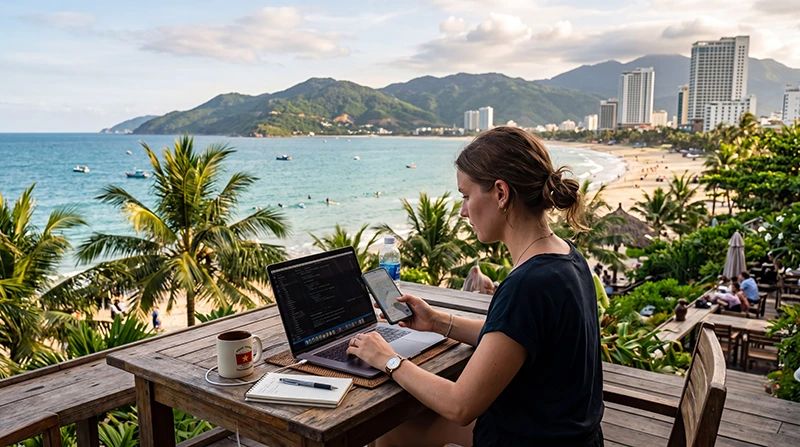

Vietnam is one of the most rewarding countries in Asia for long-term travel.
Many visitors arrive expecting to stay for a week or two and end up spending months exploring the country’s mountains, beaches, cities, islands and remote regions.
From the rice terraces of Sapa and the mountain roads of Ha Giang to the beaches of Da Nang and the cafés of Ho Chi Minh City, Vietnam offers enough diversity to keep travelers busy for months.
However, the longer you stay, the more important internet connectivity becomes.
Reliable mobile internet helps travelers navigate unfamiliar destinations, book accommodation, communicate with family, work remotely, access banking services and stay connected while moving between cities.
Quick answer: For long-term travel in Vietnam, an eSIM is often the most convenient solution because it provides immediate connectivity, works across multiple destinations and eliminates the need to repeatedly purchase local SIM cards during your trip.
Top Vietnam eSIMs

Vietnam eSIM
Fixed
1 GB, 7 days€ 3.052 GB, 15 days€ 4.363 GB, 30 days€ 5.67Unlimited
Unlimited, 1 day€ 3.05Unlimited, 3 days€ 6.98Unlimited, 5 days€ 10.91
Why Long-Term Travelers Need Reliable Internet
Short-term tourists often use mobile data primarily for navigation and messaging.
Long-term travelers typically rely on internet for much more.
Common activities include:
- Booking accommodation
- Transportation planning
- Flight management
- Travel research
- Banking
- Two-factor authentication
- WhatsApp communication
- Remote work
- Video calls
- Social media
- Travel content creation
- Translation tools
Because these tasks occur daily, reliable connectivity becomes essential.
Why eSIM Is Ideal for Long-Term Travel
Traditional SIM cards can work well, but they often require:
- Finding a store
- Presenting identification
- Waiting for activation
- Physical SIM replacement
- Managing multiple SIM cards
An eSIM simplifies the process.
Benefits include:
- Instant activation
- No physical SIM card
- Online purchase
- Easy installation
- Nationwide coverage
- Dual-SIM support
- Ability to keep your home SIM active
How Long Do Most Travelers Stay in Vietnam?
Vietnam attracts several different types of long-term visitors.
| Traveler Type | Typical Stay |
|---|---|
| Vacation Traveler | 1–2 Weeks |
| Backpacker | 3–8 Weeks |
| Digital Nomad | 1–6 Months |
| Remote Worker | Several Months |
| Gap Year Traveler | Several Months |
Longer stays generally require larger mobile data allowances.
How Much Data Do Long-Term Travelers Need?
The answer depends on how you travel.
| Usage Style | Recommended Data |
|---|---|
| Light Traveler | 10GB – 20GB Monthly |
| Average Traveler | 20GB – 40GB Monthly |
| Backpacker | 30GB – 50GB Monthly |
| Digital Nomad | 30GB – 60GB Monthly |
| Content Creator | Unlimited Preferred |
Most travelers use significantly more data than expected during long trips.
Typical Long-Term Travel Route in Vietnam
Many travelers follow a route covering multiple regions.
- Hanoi
- Sapa
- Ha Giang
- Ninh Binh
- Ha Long Bay
- Phong Nha
- Hue
- Da Nang
- Hoi An
- Nha Trang
- Dalat
- Ho Chi Minh City
- Phu Quoc
A nationwide eSIM ensures connectivity throughout the entire journey.
Best Cities for Long-Term Travelers
Da Nang
Da Nang has become one of Vietnam’s most popular long-term travel destinations.
Advantages include:
- Beach lifestyle
- Affordable apartments
- Reliable internet
- Coworking spaces
- International airport
- Growing expat community
Ho Chi Minh City
Vietnam’s largest city offers:
- Modern infrastructure
- International community
- Business opportunities
- Excellent transportation
- Strong mobile coverage
Hanoi
Hanoi remains a favorite among travelers interested in:
- History
- Culture
- Food
- Café culture
- Northern Vietnam exploration
Internet Challenges During Long-Term Travel
Long-term travelers often face connectivity challenges that short-term tourists never encounter.
Examples include:
- Changing accommodation frequently
- Traveling between cities
- Mountain destinations
- Island travel
- Remote regions
- Unreliable public WiFi
An eSIM provides continuity regardless of location.
Using eSIM as Your Primary Internet Connection
Many long-term travelers use an eSIM as their primary source of connectivity.
This approach works particularly well for:
- Backpackers
- Digital nomads
- Remote workers
- Slow travelers
- Adventure travelers
It allows internet access without depending entirely on local WiFi.
Using eSIM as a Backup Connection
Other travelers use apartment or coworking WiFi as their primary connection and keep an eSIM as a backup.
This approach provides:
- Additional reliability
- Emergency connectivity
- Travel-day internet
- Hotspot capability
- Meeting protection
Can You Use an eSIM as a Hotspot?
Yes.
Hotspot functionality is particularly useful for:
- Laptops
- Tablets
- Remote work
- Backup internet
- Shared connections
Many long-term travelers use mobile hotspots regularly.
Can You Keep Your Home SIM Active?
Yes.
Most modern smartphones support dual-SIM functionality.
This allows:
- Vietnam eSIM for data
- Primary SIM for SMS
- Two-factor authentication
- Bank verification codes
- Calls from home
Best Network Coverage in Vietnam
Vietnam’s major operators include:
- Viettel
- Vinaphone
- Mobifone
Among these, Viettel is generally considered the strongest choice for nationwide coverage, especially for travelers exploring remote areas and mountain regions.
Internet in Remote Areas
Many long-term travelers eventually leave major cities.
Popular destinations include:
- Ha Giang
- Sapa
- Cao Bang
- Phong Nha
- Mekong Delta
- Phu Quoc
Coverage is generally good, although speeds may vary depending on location.
Internet for Digital Nomads
Many long-term travelers also work remotely.
Typical activities include:
- Zoom meetings
- Cloud storage
- AI tools
- Content creation
- Software development
- Online businesses
For these users, larger data plans are usually recommended.
How Much Data Does a Long-Term Traveler Use?
| Activity | Data Usage |
|---|---|
| Google Maps | Low |
| Low | |
| Medium | |
| TikTok | High |
| YouTube | Very High |
| Video Calls | High |
| Hotspot Usage | Very High |
Streaming and hotspot usage are usually the largest sources of consumption.
Do You Need Data Roaming Enabled?
Yes.
| Setting | Status |
|---|---|
| Vietnam eSIM | Data Roaming ON |
| Primary SIM | Data Roaming OFF |
APN Settings for Vietnam eSIM
| Setting | Value |
|---|---|
| APN | data.esim |
| Username | Leave Blank |
| Password | Leave Blank |
Related Vietnam Travel Guides
- Best eSIM for Digital Nomads Vietnam
- Internet for Remote Work Vietnam
- How Much Data Do You Need for Vietnam?
- Best Data Plan Vietnam
- Mobile Internet Vietnam
- Best Network in Vietnam for Tourists
- Best eSIM for Vietnam
FAQ: Long-Term Travel Vietnam eSIM
Is an eSIM good for long-term travel in Vietnam?
Yes. eSIMs provide convenient connectivity without requiring physical SIM card changes and work well across multiple destinations.
How much data do long-term travelers need?
Most long-term travelers use between 20GB and 50GB monthly depending on their travel style and internet usage.
Can I use my eSIM for several months?
Yes. Many travelers use eSIM plans continuously throughout extended stays in Vietnam.
Can I keep my home SIM active?
Yes. Most dual-SIM phones allow simultaneous use of a Vietnam eSIM and your regular SIM card.
Can I use an eSIM as a hotspot?
Yes. Most travel eSIMs support hotspot functionality.
Which network is best in Vietnam?
Viettel is generally considered the strongest nationwide network, especially in remote regions.
Do I need Data Roaming enabled?
Yes. Most travel eSIMs require Data Roaming to be enabled.
What APN should I use?
If manual setup is required, use data.esim.
Can I work remotely while traveling in Vietnam?
Yes. Vietnam offers excellent infrastructure for remote work, particularly in major cities and digital nomad hubs.
Is public WiFi enough for long-term travel?
Public WiFi can be useful, but most experienced travelers prefer having mobile data available at all times.
Final Recommendation
For long-term travel in Vietnam, an eSIM offers one of the easiest and most flexible ways to stay connected. Whether you are backpacking across the country, working remotely from Da Nang or spending months exploring different regions, a reliable eSIM helps ensure uninterrupted internet access throughout your journey.
Most long-term travelers benefit from larger data plans that provide enough capacity for navigation, communication, bookings, remote work and everyday travel needs without constantly worrying about connectivity.