


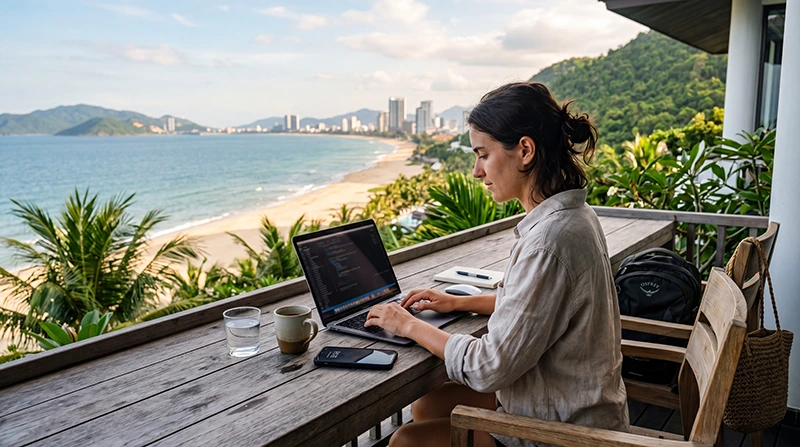

Vietnam has become one of the most attractive remote work destinations in Asia.
Over the last few years, thousands of freelancers, entrepreneurs, startup founders, software developers, marketers, consultants, designers and fully remote employees have chosen Vietnam as their temporary or long-term base.
The combination of affordable living costs, excellent food, modern infrastructure, beautiful destinations and reliable internet connectivity makes Vietnam particularly appealing.
However, remote work success depends heavily on one thing:
Reliable internet access.
If you depend on Zoom calls, cloud applications, client meetings, file uploads, AI tools or project management platforms, internet quality becomes one of the most important factors when choosing where to live and work.
Quick answer: Vietnam offers excellent internet infrastructure for remote workers. Most professionals combine apartment WiFi, coworking spaces and a travel eSIM with mobile data to ensure reliable connectivity throughout the country.
Top Vietnam eSIMs

Vietnam eSIM
Fixed
1 GB, 7 days€ 3.032 GB, 15 days€ 4.333 GB, 30 days€ 5.62Unlimited
Unlimited, 1 day€ 3.03Unlimited, 3 days€ 6.92Unlimited, 5 days€ 10.82
Why Vietnam Is Popular Among Remote Workers
Vietnam continues attracting remote professionals because it offers a rare combination of affordability and infrastructure.
Benefits include:
- Low living costs
- Fast internet
- Modern cities
- Large expat communities
- Coworking spaces
- International airports
- Strong café culture
- Excellent food
- Beautiful beaches
- Mountain destinations
- Year-round travel opportunities
Many remote workers discover they can significantly reduce living expenses while maintaining productivity.
Do You Need an eSIM for Remote Work?
Technically, no.
Practically, yes.
Many new remote workers assume apartment WiFi is sufficient.
Experienced digital nomads know that relying on a single internet connection can be risky.
An eSIM provides:
- Backup connectivity
- Internet during travel days
- Hotspot functionality
- Emergency access
- Connectivity outside coworking spaces
- Internet during outages
For many professionals, a Vietnam eSIM acts as a business continuity solution.
How Remote Workers Typically Use Internet
Remote work generates significantly more data consumption than typical tourism.
Common activities include:
- Zoom meetings
- Google Meet calls
- Microsoft Teams
- Slack communication
- Cloud storage
- Dropbox
- Google Drive
- VPN access
- GitHub
- AI tools
- Remote desktop applications
These activities require both stable connections and sufficient bandwidth.
Best Internet Options for Remote Work
| Internet Source | Reliability | Recommended |
|---|---|---|
| Apartment WiFi | High | Yes |
| Coworking Internet | High | Yes |
| Travel eSIM | High | Yes |
| Café WiFi | Moderate | Sometimes |
| Airport WiFi | Moderate | Temporary Only |
The best setup combines multiple options rather than relying on a single connection.
Why Remote Workers Need Backup Internet
Internet interruptions happen everywhere.
Even excellent apartments and coworking spaces occasionally experience:
- Router failures
- ISP outages
- Power interruptions
- Network congestion
- Maintenance work
A backup mobile connection can save an important client meeting or project deadline.
Best Cities in Vietnam for Remote Work
Da Nang
Da Nang has become one of Asia’s fastest-growing digital nomad hubs.
Advantages include:
- Excellent internet
- Beach lifestyle
- Affordable apartments
- Strong coworking scene
- International airport
- Large remote work community
Many professionals consider Da Nang the most balanced remote work destination in Vietnam.
Ho Chi Minh City
Vietnam’s business capital offers:
- Modern infrastructure
- Networking opportunities
- Startup ecosystem
- International companies
- Premium coworking spaces
- Strong business environment
This city is particularly attractive for entrepreneurs and startup founders.
Hanoi
Hanoi appeals to remote workers looking for:
- Culture
- History
- Café workspaces
- Affordable living
- Access to northern Vietnam
The city combines productivity with a unique cultural atmosphere.
Hoi An
Hoi An attracts remote workers who prefer a slower lifestyle.
Benefits include:
- Relaxed environment
- Beach access
- Good internet
- Strong community
- Short distance to Da Nang
Internet Speeds Across Vietnam
Internet quality is generally excellent in major cities.
| Location | Remote Work Suitability |
|---|---|
| Da Nang | Excellent |
| Ho Chi Minh City | Excellent |
| Hanoi | Excellent |
| Hoi An | Very Good |
| Nha Trang | Very Good |
| Phu Quoc | Very Good |
| Sapa | Good |
| Ha Giang | Good |
Most professionals can comfortably work from any major destination.
Internet for Video Meetings
Video conferencing is one of the most demanding remote work activities.
Vietnam generally provides excellent support for:
- Zoom
- Google Meet
- Microsoft Teams
- Webex
- Slack Calls
Most remote workers conduct daily meetings without issues.
Internet for Software Developers
Developers frequently depend on:
- GitHub
- GitLab
- Cloud infrastructure
- Remote servers
- Container platforms
- Development environments
Vietnam’s internet infrastructure generally supports development workflows very well.
Internet for Designers
Designers often work with:
- Figma
- Adobe Creative Cloud
- Photoshop
- Large media files
- Cloud storage
Reliable upload speeds become especially important.
Internet for Content Creators
Content creators typically consume the most data.
Activities include:
- YouTube uploads
- Video editing
- Cloud backups
- Large media transfers
- Live streaming
Many creators prefer larger eSIM plans or unlimited packages.
Internet for AI Professionals
AI-powered workflows continue growing rapidly.
Common tools include:
- ChatGPT
- Claude
- Gemini
- Cursor
- Cloud AI services
Stable internet remains essential for AI-assisted work.
How Much Data Do Remote Workers Need?
| Usage Type | Recommended Data |
|---|---|
| Light Remote Work | 20GB – 30GB |
| Regular Remote Work | 30GB – 50GB |
| Heavy Remote Work | 50GB+ |
| Content Creators | Unlimited Preferred |
Video conferencing and hotspot usage can significantly increase consumption.
Can You Use a Vietnam eSIM as a Hotspot?
Yes.
This is one of the most valuable features for remote workers.
Hotspot support allows:
- Laptop connectivity
- Tablet connectivity
- Backup internet
- Travel-day productivity
- Working outside traditional offices
Best Internet Setup for Remote Workers
Experienced digital nomads often use a layered approach.
| Connection | Purpose |
|---|---|
| Apartment WiFi | Primary Internet |
| Coworking Space | Alternative Workspace |
| eSIM Mobile Data | Backup Connection |
This setup minimizes downtime and maximizes reliability.
Internet While Traveling Between Cities
Many remote workers combine business and travel.
Popular routes include:
- Hanoi to Da Nang
- Da Nang to Hoi An
- Ho Chi Minh City to Nha Trang
- Northern Vietnam road trips
- Ha Giang adventures
An eSIM ensures uninterrupted connectivity during transit.
Can You Keep Your Home SIM Active?
Yes.
Most dual-SIM devices allow:
- Vietnam eSIM for data
- Primary SIM for SMS
- Two-factor authentication
- Business calls
- Bank verification codes
Do You Need Data Roaming Enabled?
Yes.
| Setting | Status |
|---|---|
| Vietnam eSIM | Data Roaming ON |
| Primary SIM | Data Roaming OFF |
APN Settings for Vietnam eSIM
| Setting | Value |
|---|---|
| APN | data.esim |
| Username | Leave Blank |
| Password | Leave Blank |
Related Vietnam Internet Guides
- Remote Work Vietnam Internet
- Best eSIM for Digital Nomads Vietnam
- How Much Data Do You Need for Vietnam?
- Mobile Internet Vietnam
- Best Mobile Data Vietnam
- Best Network in Vietnam for Tourists
- Best eSIM for Vietnam
FAQ: Internet for Remote Work in Vietnam
Is Vietnam good for remote work?
Yes. Vietnam offers excellent internet infrastructure, affordable living costs and strong digital nomad communities.
Do remote workers need an eSIM?
While not mandatory, an eSIM is highly recommended as a backup connection and for productivity while traveling.
Which city is best for remote work?
Da Nang, Ho Chi Minh City and Hanoi are generally considered the strongest choices.
How much data do remote workers need?
Most remote workers use between 30GB and 50GB monthly depending on meetings, cloud usage and hotspot activity.
Can I use my eSIM as a hotspot?
Yes. Most travel eSIMs support hotspot functionality.
Is apartment WiFi enough?
Usually yes, but experienced remote workers still maintain a mobile data backup.
Which network is best in Vietnam?
Viettel is generally considered the strongest nationwide network.
Do I need Data Roaming enabled?
Yes. Most travel eSIMs require Data Roaming to be enabled.
What APN should I use?
If manual setup is required, use data.esim.
Can I keep my primary SIM active?
Yes. Most dual-SIM devices support simultaneous use of your home SIM and Vietnam eSIM.
Final Recommendation
Vietnam offers one of the best remote work environments in Asia, combining affordable living with strong internet infrastructure.
For maximum reliability, use a combination of apartment WiFi, coworking spaces and a Vietnam eSIM with generous mobile data. This setup ensures you can remain productive whether you are working from Da Nang, Hanoi, Ho Chi Minh City or traveling between destinations.