


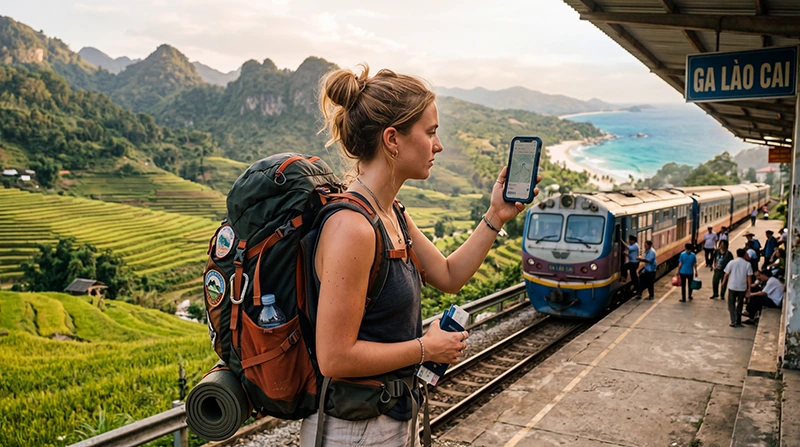

Vietnam is one of the world’s most popular backpacking destinations.
From the mountains of Sapa and Ha Giang to the beaches of Da Nang, Nha Trang and Phu Quoc, Vietnam offers an incredible mix of culture, adventure, food and affordability.
Most backpackers spend weeks or even months moving between destinations, often crossing the entire country from north to south.
During that journey, reliable internet access becomes one of the most important travel tools.
Quick answer: For most backpackers traveling around Vietnam in 2026, an eSIM is the easiest and most convenient internet solution. It can be installed before departure, activated after arrival and provides connectivity across cities, mountains, beaches and islands without requiring a physical SIM card.
Top Vietnam eSIMs

Vietnam eSIM
Fixed
1 GB, 7 days€ 3.052 GB, 15 days€ 4.363 GB, 30 days€ 5.66Unlimited
Unlimited, 1 day€ 3.05Unlimited, 3 days€ 6.97Unlimited, 5 days€ 10.89
Do Backpackers Really Need Internet in Vietnam?
Absolutely.
Modern backpacking is heavily dependent on mobile internet.
Most travelers use internet access dozens of times every day.
Internet is useful for:
- Google Maps navigation
- Hostel bookings
- Train tickets
- Bus tickets
- Flight reservations
- Grab transportation
- WhatsApp messaging
- Translation apps
- Travel planning
- Photography uploads
Without reliable mobile internet, traveling across Vietnam becomes significantly more difficult.
Best Ways to Get Internet While Backpacking Vietnam
Travelers generally have four main options.
| Option | Convenience | Best For |
|---|---|---|
| eSIM | Excellent | Most backpackers |
| Local SIM Card | Good | Phones without eSIM support |
| Hostel WiFi | Moderate | Supplementary use |
| International Roaming | Low | Very short visits |
For most travelers, eSIM offers the simplest and most flexible solution.
Why eSIM Is Perfect for Backpackers
Backpackers rarely stay in one place for long.
They often move between cities, regions and transportation hubs every few days.
An eSIM provides several advantages:
- Install before departure
- No physical SIM card required
- No airport queues
- Internet immediately after arrival
- Keep your home SIM active
- No need to visit mobile stores
- Useful for multi-country Southeast Asia trips
- Easy QR code installation
For travelers constantly on the move, convenience matters.
Typical Backpacking Route Through Vietnam
Most backpackers follow a route that covers Vietnam from north to south.
Popular destinations include:
- Hanoi
- Sapa
- Ha Giang
- Ha Long Bay
- Ninh Binh
- Phong Nha
- Hue
- Da Nang
- Hoi An
- Nha Trang
- Mui Ne
- Ho Chi Minh City
- Phu Quoc
Reliable internet becomes especially important when constantly moving between destinations.
Internet in Hanoi
Vietnam’s capital offers excellent connectivity.
Backpackers use internet for:
- Hostel bookings
- Transportation
- Food recommendations
- Walking tours
- Museum visits
Coverage is generally excellent throughout the city.
Internet in Sapa
Sapa is famous for mountain trekking and rice terraces.
Internet access helps with:
- Trail navigation
- Weather forecasts
- Guide communication
- Transportation bookings
- Emergency contact
Coverage remains surprisingly good throughout most tourist areas.
Internet on the Ha Giang Loop
The Ha Giang Loop is one of Southeast Asia’s most famous motorcycle routes.
Mobile internet is useful for:
- Navigation
- Accommodation bookings
- Weather updates
- Route planning
- Emergency communication
Coverage can vary in remote mountain regions, making strong network infrastructure particularly important.
Internet in Central Vietnam
Central Vietnam is one of the most visited regions in the country.
Popular backpacker destinations include:
- Hue
- Da Nang
- Hoi An
- Phong Nha
Coverage is generally excellent throughout the region.
Internet on Vietnam’s Beaches
Many backpackers eventually head to Vietnam’s coast.
Popular beach destinations include:
- Da Nang
- Nha Trang
- Mui Ne
- Phu Quoc
Mobile internet is useful for:
- Transportation
- Beach recommendations
- Tour bookings
- Restaurant searches
- Photography uploads
Internet on Vietnam Islands
Many backpackers include islands in their itinerary.
Popular island destinations include:
- Phu Quoc
- Cat Ba Island
- Con Dao
- Cham Islands
Modern mobile networks provide good coverage throughout most tourist areas.
Internet on Overnight Trains and Buses
Backpackers frequently travel long distances using:
- Sleeper trains
- Night buses
- Long-distance coaches
Mobile internet allows travelers to remain connected throughout their journey.
Can You Rely Only on Hostel WiFi?
Not always.
Most hostels provide WiFi, but quality varies considerably.
Common issues include:
- Slow speeds
- Crowded networks
- Power outages
- Weak signals
- Limited coverage in rooms
This is why many backpackers prefer having mobile internet available at all times.
Internet for Digital Nomads
Many backpackers eventually extend their stay and begin working remotely.
Popular digital nomad destinations include:
- Da Nang
- Hoi An
- Ho Chi Minh City
- Hanoi
- Nha Trang
Mobile internet often serves as a backup connection for video meetings and productivity work.
How Much Data Do Backpackers Need?
| Travel Style | Recommended Data |
|---|---|
| Light Usage | 5–10 GB |
| Average Backpacker | 10–20 GB |
| Heavy Social Media User | 20–50 GB |
| Digital Nomad | 30–100 GB |
Most backpackers traveling around Vietnam for two to three weeks use between 10GB and 20GB of mobile data.
Can You Keep Your Home SIM Active?
Yes.
Most modern smartphones support dual-SIM functionality.
This allows travelers to:
- Use the eSIM for data
- Keep their primary SIM active
- Receive SMS verification codes
- Access banking applications
- Receive important calls
Does WhatsApp Work in Vietnam?
Yes.
WhatsApp works normally using WiFi, mobile internet and eSIM connections.
Your existing WhatsApp account remains linked to your current phone number.
Do You Need Data Roaming Enabled?
Yes.
Most travel eSIMs require Data Roaming to be enabled on the eSIM profile.
- Vietnam eSIM Data Roaming → ON
- Primary SIM Data Roaming → OFF
APN Settings for Vietnam eSIM
If manual configuration is required, use:
| Setting | Value |
|---|---|
| APN | data.esim |
| Username | Leave blank |
| Password | Leave blank |
Related Vietnam Travel Guides
- Best eSIM for Backpacking Vietnam
- Mobile Internet Vietnam
- Internet for Tourists in Sapa
- Internet on Vietnam Islands
- Best eSIM for Vietnam Beaches
- Internet for Tourists in Da Nang
- Internet for Tourists in Phu Quoc
FAQ: Internet for Backpacking Vietnam
Do backpackers need mobile internet in Vietnam?
Yes. Mobile internet is essential for navigation, bookings, transportation and communication.
Is eSIM better than a local SIM card?
For most travelers, yes. eSIM is more convenient because it can be installed before arrival.
Does internet work in remote areas like Sapa and Ha Giang?
Yes. Coverage is generally available throughout major tourist regions, although some remote mountain areas may have weaker signals.
Can I use an eSIM throughout Vietnam?
Yes. Most travel eSIMs provide coverage across the entire country.
Can I install my eSIM before traveling?
Yes. Most travelers install their eSIM before departure while connected to WiFi.
Do I need Data Roaming enabled?
Yes. Most travel eSIMs require Data Roaming to be enabled on the eSIM profile.
What APN should I use?
If manual setup is required, use data.esim.
How much data do backpackers usually need?
Most backpackers use between 10GB and 20GB during a typical two to three week trip.
Final Recommendation
Backpacking Vietnam is easier, safer and more enjoyable when you have reliable internet access available throughout your journey.
For most travelers, an eSIM provides the best balance of convenience, flexibility and nationwide coverage.
Installing your eSIM before departure allows you to arrive in Vietnam fully connected and ready to explore from day one.