


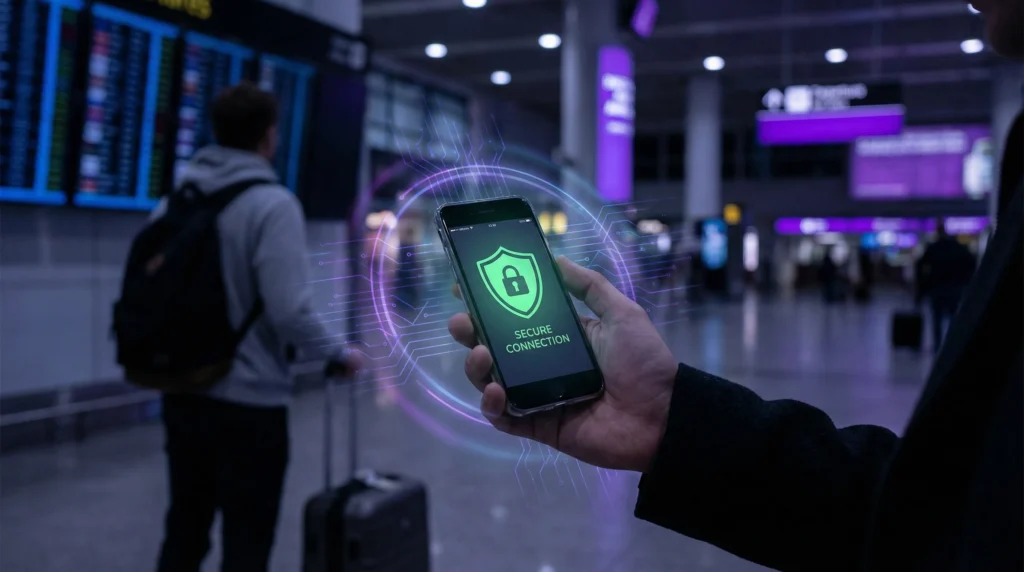

Can an eSIM be tracked? An eSIM is not invisible, but it is not uniquely trackable simply because it is digital. When a phone connects to a cellular network, the network handles identifiers and approximate location information whether the subscription uses an eSIM or physical SIM.
Apps and the phone’s location services are a separate source of information. GPS, Wi-Fi scanning, Bluetooth, advertising identifiers and account activity can reveal location independently of the SIM format.
A data-only travel eSIM changes how the mobile plan is stored, not the privacy model of the phone or internet services.
Quick answer: Yes, activity associated with an eSIM-connected phone can create network, device, account and app records. Replacing a physical SIM with an eSIM does not prevent lawful network operation or app-based location collection.
Top eSIMs

What can a mobile network know?
A cellular network must identify and authenticate the subscription and connect the device through network infrastructure. That process can associate the service with network sites and connection records.
The precision, retention and permitted use of those records depend on technology, provider practices and applicable law. An eSIM does not remove the network’s operational need to manage the connection. The guide to what happens during eSIM activation explains how the profile becomes usable without turning the phone into an anonymous device.
Is eSIM tracking different from physical SIM tracking?
The removable card and embedded profile store subscription credentials in different formats. Once connected, both allow the device to use a cellular network and generate ordinary network records.
An eSIM can be harder to remove casually from the phone, but that does not make it a secret or anonymous connection. The account, device and network still matter. Security against profile theft is a separate question covered in Can an eSIM Be Hacked?
Can apps track location without using the SIM?
Yes. An app may receive precise or approximate location through device permissions, and services can infer location from IP address, Wi-Fi, Bluetooth or account activity. This can happen on mobile data or Wi-Fi.
Review permission settings and give location access only when it supports a real feature. “Allow once” or “while using” can be more appropriate than permanent background access.
Does turning off the eSIM stop all tracking?
Turning off the eSIM stops that profile from providing cellular service, but the phone may remain connected through Wi-Fi, another SIM or nearby-device features. Apps can also retain information already collected.
Airplane mode, Wi-Fi controls and app permissions affect different radios and data flows. No single SIM toggle is a universal privacy switch.
Can Find My or Find Hub locate the phone?
Device-finding services are controlled by the phone and its signed-in account, not by the eSIM format alone. Apple Find My and Google’s Find Hub can help an authorised account owner locate, secure or erase a lost device when the required settings and connectivity conditions are met.
Some supported devices can also participate in an offline finding network. That means disabling or removing one mobile plan should not be treated as proof that the device cannot be found. Review the finding-service settings directly in the Apple or Google account and protect that account with strong authentication.
What should you do if a phone with an eSIM is lost?
- Use the official Apple Find My or Google Find Hub service from a trusted device.
- Mark the phone as lost or secure it remotely when that option is available.
- Contact the eSIM provider and the primary mobile carrier to protect the associated services.
- Change important account passwords if there is a risk that the unlocked phone was accessed.
- Use remote erase only after considering whether it will end your ability to locate the device.
- Report theft to the appropriate local authority and provide the device identifier when requested.
Do not publish the IMEI, EID, ICCID, activation code or order credentials while asking for help. Share sensitive identifiers only through a verified private support or authority channel.
How should eSIM credentials be protected?
Keep QR codes, activation codes and order details private. Someone who obtains reusable activation information may attempt to download or interfere with a profile, depending on provider controls.
Use a device passcode, enable account security and redact credentials from screenshots. If the phone is lost, contact the eSIM provider and relevant account providers rather than relying only on remote device tools.
Which privacy controls should you review?
Privacy settings work in layers. Changing one permission does not automatically change the others:
- App permissions: review which apps can use precise location and whether they need access always, only while in use or once.
- Location sharing: check who can see a live or recent location through Apple, Google, maps, messaging and family services.
- Device finding: decide whether Find My or Find Hub should remain enabled for loss protection.
- Advertising and analytics: review tracking, personalisation and diagnostic-sharing choices separately.
- Account security: use a strong unique password, multi-factor authentication and an accurate recovery method.
- Radio settings: understand that cellular, Wi-Fi, Bluetooth and location services have different controls.
Practical privacy checks before travel
- Review which apps can access precise and background location.
- Stop location sharing with people or services that no longer need it.
- Protect the phone and provider account with strong authentication.
- Keep eSIM installation credentials private.
- Use trusted Wi-Fi and encrypted websites for sensitive activity.
- Confirm how to access the official device-finding service before departure.
The eSIM credential safety guide explains why activation details should never be exposed publicly.
Related Articles
- NoveSIM Security and Privacy FAQ
- Can an eSIM Be Hacked?
- What Happens During eSIM Activation?
- Protect and Troubleshoot an eSIM QR Code
FAQ
Can someone see my exact location because I use an eSIM?
An eSIM alone does not give every person your location. Networks, authorised services and apps may process location-related information under their technical access and applicable rules.
Is an eSIM more private than a physical SIM?
Not automatically. Both use cellular networks and can be associated with device, account and connection records.
Will disabling location permission stop network location?
No. App permission controls device location access for that app; it does not stop the cellular network from operating the connection.
Does airplane mode make a phone untrackable?
Do not treat it as a guarantee. Radio settings, Wi-Fi, other device features, stored records and emergency functions are separate considerations.
Final Recommendation
An eSIM can be tracked through the same broad network, device and account mechanisms that apply when a phone uses a physical SIM; the embedded format does not make cellular activity anonymous.
Use permission controls and strong account security, and protect activation credentials as carefully as other sensitive login information.
Review app permissions, location sharing and Find My or Find Hub separately. Each controls a different privacy or recovery function, so no single eSIM switch can replace a complete device-security check.