
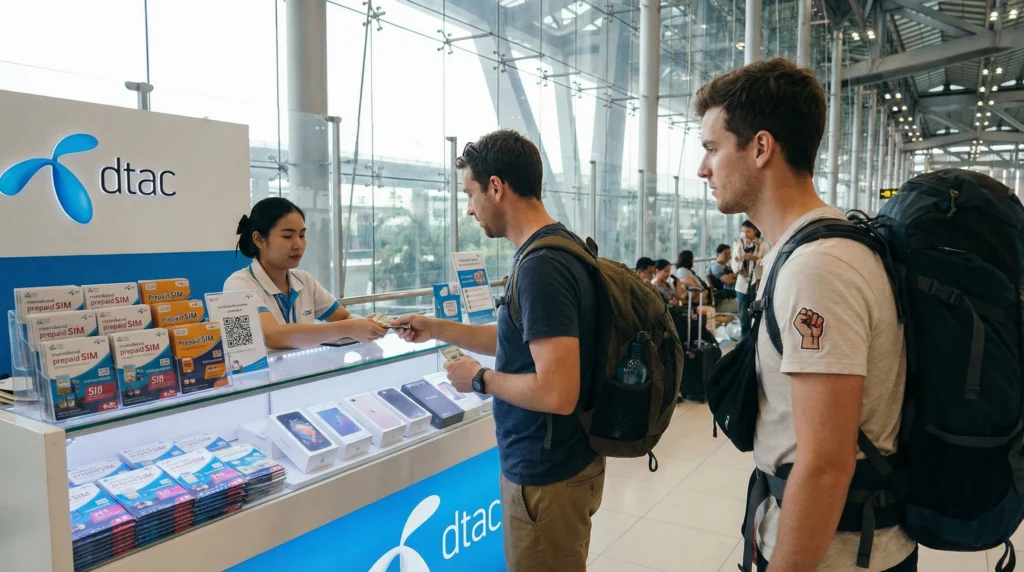

Choosing the best SIM card for Thailand is one of the easiest ways to stay connected during your trip.
Whether you are visiting Bangkok, Phuket, Chiang Mai, Krabi, Koh Samui, Pattaya, Thai islands, night markets, temples, beaches, or national parks, mobile internet helps with maps, ride-hailing apps, hotel bookings, translation, messaging, payments, and travel planning.
Quick answer: for most travelers visiting Thailand in 2026, a Thailand eSIM is usually easier than buying a physical SIM card because it can be purchased online, installed before arrival, and used for mobile data without waiting at an airport SIM counter.
Top Thailand eSIMs
Best SIM Card Options for Thailand Travel
| Option | Best for | Main advantage |
|---|---|---|
| Thailand eSIM | Most modern phones and tourists | Fast digital setup before arrival |
| Physical tourist SIM card | Older phones without eSIM | Can include local calls and SMS |
| Airport SIM card | Travelers who prefer buying in person | Available after landing |
| International roaming | Very short trips | No separate setup |
| Pocket WiFi | Groups | Shared connection |
Thailand eSIM vs Physical SIM Card
| Feature | Thailand eSIM | Physical SIM card |
|---|---|---|
| Setup | Digital installation | Requires physical card |
| Purchase | Online before travel | Airport, mobile shop, kiosk, or delivery |
| Arrival convenience | Can be ready before landing | May require queues or registration |
| Best for | Modern eSIM-compatible phones | Older phones without eSIM |
| Regular SIM | Can often stay active | May need to remove your regular SIM |
| Travel flexibility | High | Medium |
Why a Thailand eSIM Is Usually the Best Choice
A Thailand eSIM is usually the most convenient option for tourists who need mobile data without buying a physical SIM card after arrival.
With a Thailand eSIM, travelers can:
- Buy mobile data before the trip
- Install the eSIM while connected to WiFi
- Use internet shortly after arrival
- Avoid airport SIM card queues
- Keep their regular SIM active
- Use Google Maps, Grab, Bolt, hotel apps, and travel apps
- Use hotspot if supported by the plan
- Travel without swapping physical SIM cards
Top Thailand eSIMs
When a Physical SIM Card May Be Better
A physical Thailand SIM card may be better if your phone does not support eSIM or if you specifically need a local Thai phone number with calls and SMS.
Physical SIM cards may also make sense for some longer stays, local services, or travelers who prefer buying mobile service in person after arrival.
Before buying a physical SIM card, make sure your phone is unlocked and compatible with Thai mobile networks.
Buying a SIM Card at Thailand Airports
Many tourists buy SIM cards after landing at major airports such as Bangkok Suvarnabhumi, Bangkok Don Mueang, Phuket, Chiang Mai, or Krabi.
Airport SIM cards can be convenient if you want in-person help, but they may involve queues, plan comparisons, registration, and setup time after a long flight.
If you want mobile data ready sooner, installing a Thailand eSIM before departure is usually easier.
Best SIM Card for Bangkok
In Bangkok, mobile internet is useful for airport arrival, hotel directions, BTS and MRT routes, taxis, Grab, Bolt, restaurants, shopping malls, temples, and night markets.
A Thailand eSIM helps you use maps and travel apps without first searching for a SIM card counter or mobile shop.
Best SIM Card for Phuket
In Phuket, mobile data helps with hotel transfers, beach navigation, restaurant searches, tours, ride-hailing apps, island trips, weather updates, and messaging.
If you arrive tired after a flight, a pre-installed eSIM can make the first day easier.
Best SIM Card for Chiang Mai
Chiang Mai travelers often need mobile internet for temples, cafés, digital nomad work, night markets, mountain trips, day tours, maps, ride-hailing, and translation.
A Thailand eSIM is useful for city travel and day trips, while offline maps can help in more remote mountain areas.
Best SIM Card for Thai Islands
If you are visiting islands such as Koh Samui, Koh Phangan, Koh Tao, Phi Phi Islands, Koh Lanta, or other beach destinations, mobile internet is useful for ferries, hotel transfers, maps, weather, restaurant searches, and communication.
Coverage can vary by island, beach, resort area, and remote location, so it is smart to download offline maps before travel days.
How Much Data Do You Need in Thailand?
| Trip type | Suggested data | Best for |
|---|---|---|
| Short city trip | 3GB to 5GB | Maps, messaging, ride-hailing, light browsing |
| 1 week Thailand trip | 10GB to 20GB | Daily maps, hotel apps, photos, travel apps |
| Island hopping trip | 20GB to 50GB | Maps, ferry info, uploads, hotspot, travel planning |
| Long stay or heavy use | Large or unlimited data | Remote work, hotspot, streaming, uploads |
Thailand SIM Card vs International Roaming
International roaming can be convenient for very short trips, but it may be expensive depending on your home provider.
A Thailand eSIM or local SIM card is usually better for travelers who need regular mobile data for maps, apps, messaging, travel bookings, and ride-hailing during the trip.
Thailand SIM Card vs Pocket WiFi
| Feature | Thailand eSIM or SIM | Pocket WiFi |
|---|---|---|
| Extra device | No | Yes |
| Battery management | No separate router battery | Needs charging |
| Works directly on phone | Yes | Phone connects to router |
| Pickup or return | No for eSIM, sometimes for physical SIM delivery | May be required |
| Best for | Most tourists | Groups sharing one connection |
Can You Use Hotspot with a Thailand SIM or eSIM?
Hotspot depends on your plan and device.
If hotspot tethering is supported, you can share your mobile data with another phone, tablet, or laptop.
Hotspot is useful for:
- Remote work
- Hotel WiFi backup
- Sharing data with travel partners
- Using a laptop in cafés or hotels
- Connecting tablets during travel days
When Should You Install a Thailand eSIM?
Install your Thailand eSIM before departure or while connected to stable WiFi.
After purchase, your eSIM QR code and installation instructions are sent by email. You can also find your eSIM details in your NoveSIM account under your order details.
After arrival in Thailand, select the eSIM for mobile data and enable data roaming if required.
How to Use a Thailand eSIM
- Choose a Thailand eSIM plan before your trip.
- Check that your phone supports eSIM.
- Install the eSIM while connected to stable WiFi.
- Keep your regular SIM active if you need your normal number.
- Arrive in Thailand.
- Select the Thailand eSIM for mobile data.
- Enable data roaming for the eSIM if required.
- Use mobile data for maps, apps, bookings, messages, and travel planning.
Check if your phone supports eSIM
Best Thailand Travel Apps to Use with Mobile Data
- Google Maps
- Apple Maps
- Grab
- Bolt
- Hotel booking apps
- Airline apps
- Translation apps
- Weather apps
- WhatsApp and Messenger
- Ferry or tour booking apps
Common SIM Card Mistakes in Thailand
- Buying a SIM or eSIM without checking phone compatibility
- Waiting until airport arrival and losing time in queues
- Choosing too little data for island hopping or long stays
- Relying only on hotel WiFi
- Forgetting to select the eSIM for mobile data
- Forgetting to enable data roaming if required
- Removing your regular SIM when you still need your normal number
- Not downloading offline maps for islands or remote areas
Related Thailand and Travel eSIM Guides
- Best eSIM for Thailand
- Thailand eSIM Plans
- eSIM Compatible Devices
- What Is an eSIM and How Does It Work?
- eSIM vs Roaming
- eSIM vs Pocket WiFi
- How Much Data Do I Need for Travel?
FAQ: Best SIM Card for Thailand
What is the best SIM card for Thailand?
For most modern phone users, a Thailand eSIM is usually the best option because it can be purchased online, installed before arrival, and used without waiting at an airport SIM counter.
Is eSIM better than a SIM card in Thailand?
For most tourists with eSIM-compatible phones, eSIM is easier because it is digital, can be prepared before travel, and does not require swapping physical SIM cards.
Can I buy a SIM card at Bangkok airport?
Yes. SIM cards are commonly available at major Thailand airports, but buying after arrival may involve queues, registration, and setup time.
Do I need a local Thai phone number?
Most tourists do not need a local Thai phone number if they mainly use mobile data for maps, apps, WhatsApp, bookings, and travel planning.
Can I keep my regular SIM active with a Thailand eSIM?
Yes. In most cases, you can keep your regular SIM active for calls or messages and use the Thailand eSIM for mobile data.
How much data do I need for Thailand?
For a short city trip, 3GB to 5GB may be enough. For one week, 10GB to 20GB is safer. For island hopping, remote work, hotspot, or heavy social media, 20GB to 50GB or large data is usually better.
Does a Thailand eSIM work in Phuket and islands?
A Thailand eSIM can work in Phuket and many island areas where mobile coverage is available. Coverage may vary by island, beach, resort, and remote location.
When should I install my Thailand eSIM?
Install your Thailand eSIM before departure or while connected to stable WiFi. Then select it for mobile data after arriving in Thailand.
Final Recommendation
For most travelers visiting Thailand in 2026, a Thailand eSIM is the easiest alternative to a physical SIM card. It saves time after arrival and gives you mobile data for maps, ride-hailing apps, hotel bookings, messaging, translation, island travel, and everyday internet.
If your phone does not support eSIM or you need local calls and SMS, a physical tourist SIM card can still be useful.


